01Gold first, skiing second, and the town that kept its bones
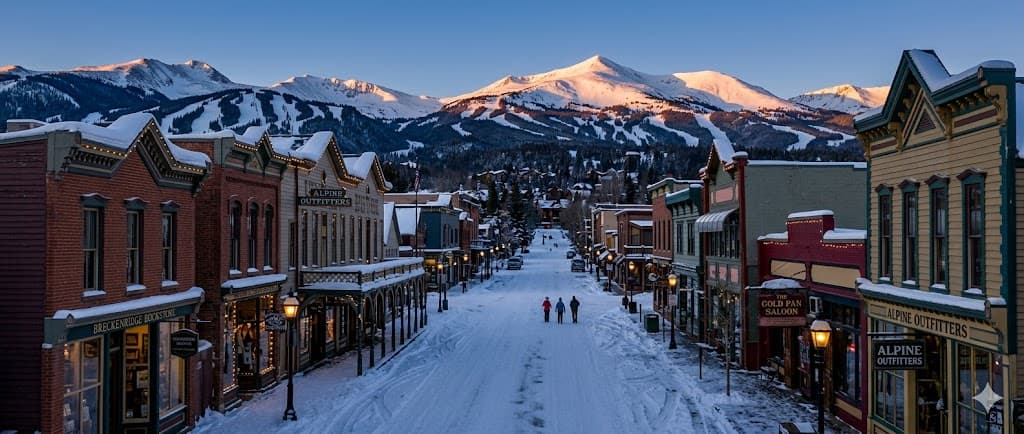
Breckenridge was a real place long before it was a resort. Gold came out of the Blue River diggings in 1859, the town organized that November, and for the better part of a century mining paid the bills — first the placer camps, then the great dredge boats that chewed the river valleys until the last one went silent in 1942. The town nearly emptied after that; a few hundred people held on through the 1950s. Skiing arrived in 1961 on Peak 8, and everything since — the peaks added one by one, the gondola connecting downtown to the bases, the resort's place among the most-visited mountains in the country — is the second act. What makes Breckenridge unusual among major resorts is that the first act is still standing: the historic district, on the National Register since 1980, preserves one of the state's largest collections of Victorian-era buildings, and the town's design standards keep Main Street authentic rather than themed. For sellers, that history is a live market force. Buyers here are choosing a town with a real past over purpose-built resort villages elsewhere — and a listing that understands what it's part of sells the difference instead of merely benefiting from it.
02The absentee majority: what it means that most owners are elsewhere
Roughly two-thirds of Breckenridge homes are second homes or vacation rentals — a fact worth sitting with, because it defines how this market actually works. The typical seller is managing the sale from another city; the typical buyer is acquiring a property they'll occupy in slices; and the typical transaction happens with neither party standing in the living room. This changes the practical shape of a sale. Preparation runs through vendors and scheduled windows rather than weekend projects. Presentation carries more weight than anywhere on the Front Range, because the first showing is almost always digital and often the decisive one. Timelines stretch around access and time zones unless someone actively compresses them. And the settlement itself — HOA packages, license verification, financing documentation — needs a local hand while the principals stay remote. None of this is exotic once a practice is built for it; all of it goes wrong when a sale designed for owner-occupants gets applied to a town where the owner is in Dallas. The absentee majority isn't Breckenridge's complication. It's Breckenridge's structure, and your sale should be native to it.
03Zones, caps, and the license that ends at the sale
No single regulation shapes Breckenridge selling strategy more than the town's short-term-rental framework. The town licenses rentals by geography: a resort-area zone where licenses run uncapped, and neighborhood zones where caps apply, waitlists have formed, and — the fact every seller must plan around — licenses are non-transferable. In a capped zone, your active license ends when the property changes hands, and your buyer starts over behind everyone already waiting. The strategic consequences are direct. A resort-zone property carries rental optionality as part of its value: document the history, verify the license class, and market to the full pool, investors included. A capped-zone property should be sold to the buyers who never needed the license — the second-home family, the future full-timer — because courting investors with an asset that evaporates at signing day wastes your launch on the wrong audience. And in every zone, precision beats hope: the rules have been amended repeatedly, so we verify your property's current status against the town's own records before a single word of marketing is written. Guessing here doesn't just misprice a home. It aims the entire sale at the wrong people.
04Six Breckenridges, and which one you're selling
The historic district sells provenance — Victorian blocks, design standards, and a buyer who wants the genuine article and accepts stewardship as part of the purchase. The Peak 7 and 8 bases sell proximity in its purest resort form — condominium lodges where value tracks steps-to-lift, rental performance, and building reputation, and where financing rules (many are condo-hotels) quietly govern the buyer pool. Warriors Mark sells balance: timber homes and townhomes in the trees, near both the Peak 9 base and the walk to town — the practical heart of the owner-user market. Wellington sells year-round life — the New Urbanist cottages in French Gulch where full-time families concentrate, with a buyer pool that skews local and motivated. The Highlands sells space — custom homes on large lots along the golf course, where the comparison set is other estates and the buyer usually arrives having sold something else first. Peak 9 and the Village sell the original resort formula — established condominium complexes around Maggie Pond, priced on condition, HOA health, and rental math. Each of these is a different sale, to a different buyer, on different evidence. The first strategic act is knowing which one your property is — the rest of the plan follows from it.
05The weekend window: selling to a buyer with a drive home
Breckenridge sits closer to the Front Range than any comparable resort market, and its buyer flow shows it: a large share of demand arrives Friday evening and leaves Sunday afternoon, with the purchase decision made somewhere inside that window or not at all. Selling into that rhythm is a discipline. The listing must be complete online — full photography, floor plans, rental and HOA documentation ready — because the weekend visit is a confirmation exercise, and any question that can't be answered on the spot survives until Monday only as doubt. Showings must flex to the buyer's calendar, including the Saturday-afternoon request that materializes from a chairlift conversation. Launch timing matters more than sellers expect: live by Thursday catches the weekend wave; live on Monday means five days of staleness before the audience arrives. And negotiations benefit from momentum — an offer written Sunday night should meet a seller prepared to respond before the buyer's commitment cools on the drive down the hill. None of this requires gimmicks. It requires a sale engineered around when your buyers actually exist.
06Condo-hotels and the financing that decides your buyer pool
Several of Breckenridge's most prominent base-area buildings are condo-hotels — residences that operate substantially as lodging — and the major mortgage agencies generally decline to finance them. The practical effect for a seller in those buildings: your true buyer pool is cash plus portfolio-loan borrowers, and any offer built on a conventional mortgage carries a structural risk of dying in underwriting no matter how sincere the buyer. Handled passively, this produces the market's most demoralizing pattern — a strong contract, weeks of waiting, and a collapse that returns the listing to market stale. Handled actively, it becomes an advantage. Because my practice includes the mortgage brokerage itself, I know which lenders actually finance which buildings before we launch, I can pre-screen offers for financing reality rather than optimism, and I can hand a promising buyer a viable lending path instead of watching them discover the problem alone. In the condo-hotel segment, the agent who understands the financing isn't offering a nice extra. They're controlling the variable that decides whether your sale completes on the first contract or the third.
07Commissions here: paying for reach into two worlds
Breckenridge demand lives in two distinct worlds, and your commission structure should be judged by how well it reaches both. The first world is the Front Range: weekenders and second-home shoppers within driving distance, reached through Denver-metro brokerages, their agents, and marketing aimed down the hill. The second is the destination market: out-of-state buyers who arrive through the resort's national gravity, relocation networks, and online search from several states away. Since the industry's 2024 changes, every term — your listing side, and any compensation offered to cooperating agents — is set by you when you endorse the listing agreement, and each deserves the two-worlds test. Cooperative compensation influences the Front Range channel meaningfully, where represented buyers tour many properties in a weekend; it matters differently in the destination channel, where buyers often arrive less tethered to a local agent. Your listing side should visibly fund what this market actually requires: presentation strong enough to sell remotely, zone and financing homework done before launch, and negotiation built for compressed windows. Structure follows strategy — and both get written down before you commit to either.
08Held by one hand
Breckenridge exits rarely end at the settlement statement. The proceeds are usually going somewhere — a right-sized place in the same mountains, a primary home upgrade back where you live, the next chapter's balance sheet — and the exit itself often has moving parts: a license to verify, a building's financing to manage, a calendar spread across states. My practice holds all of it. The broker's license runs the sale, built natively for absentee owners; the mortgage license structures whatever comes next — the purchase or the bridge. I serve Colorado statewide from my base in Edwards, and the absentee mountain sale is the work I know best. The consult is free, it fits in a phone call from wherever you are, and it ends with your spreadsheet finally having every number it was missing.