01How to actually sell a home in Evergreen
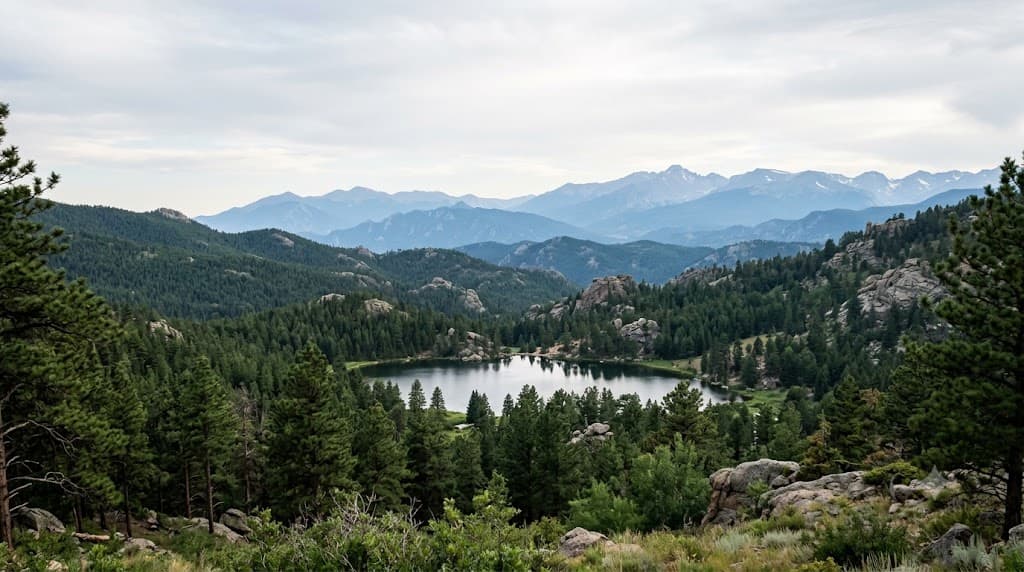
Evergreen isn't a suburb with pine trees — it's an unincorporated mountain community high above the metro, governed by Jefferson County, where every neighborhood sells on different terms. A golf-course contemporary in Hiwan, an estate parcel in Soda Creek, and a forested two-story up Bear Mountain attract three different buyers with three different fears and three different dreams. Selling well here starts with naming your buyer before we touch the listing: the club family who wants pavement and district water, the equestrian buyer counting stalls and acres, or the city couple making the leap to the trees. From there, the plan writes itself — what to prepare, how to price so your actual buyer pool competes, and how to present the property so the leap feels safe. I hold both the real estate license and the mortgage license, so I'm also reading your sale the way the buyer's lender will — on a mountain property, that's where transactions quietly live or die.
02Unincorporated, and proud of it — what that means for your sale
Evergreen has no city hall. It's unincorporated Jefferson County, which shapes a sale in ways town sellers never think about. Services vary street by street: parts of north Evergreen and the central corridor are served by district water and sewer, while much of the rest of the community runs on private wells and septic systems. Roads may be county-maintained or association-maintained. Covenants exist in some subdivisions — Evergreen Highlands runs on them — and not in others. None of this is a problem; all of it is disclosure. Buyers coming from the city will ask about every piece, and the seller whose answers are documented and ready reads as trustworthy, while the seller who shrugs reads as risky. Part of my preparation process is building that answer file before the first showing, so your listing carries the confidence of a property that has nothing to hide.
03Wells, septic, and driveways: win the inspection before it happens
Mountain transactions rarely fall apart over paint colors. They fall apart over systems — a well test that surprises everyone, a septic inspection that turns into a repair negotiation, a driveway a lender's appraiser flags in the first photo. Every one of those is predictable, which means every one of them is manageable before you list instead of during a contract, when you have the least preparation and the least patience. My pre-listing walk covers the systems a buyer's team will scrutinize: water, septic, access, roof, defensible space. What's worth addressing, we address; what's fine, we document. The goal isn't perfection — it's control. When the inspection report lands and it confirms what your listing already said, the transaction keeps its momentum, and momentum is worth real money to a seller.
04The insurance conversation nobody wants — and every foothills seller needs
Colorado's foothills carry real wildfire exposure, and insurance has become part of every mountain transaction whether we like it or not. A buyer can't complete a purchase without coverage they can actually get, so your home's insurability is now part of your marketing whether it appears in the listing or not. This cuts both ways, and the smart seller uses it: documented mitigation — defensible space, tree work, a maintained roof, addressed recommendations — turns a buyer's biggest anxiety into a reason to pick your property over the one down the road that can't show the same file. I'll walk your property with this lens before we list and be direct with you about how it presents. Evergreen sellers who treat mitigation as marketing consistently have smoother transactions than those who treat it as somebody else's problem.
05Elk on the fairway, skaters on the lake: selling the Evergreen life
Buyers don't move to Evergreen for square footage — they move for a life they've been picturing, and your marketing should feed that picture with specifics, not adjectives. This is the town where the elk herd stops traffic on Highway 74, where Evergreen Lake becomes one of the country's great outdoor rinks in winter and fills with paddleboards in summer, where downtown still has a wooden boardwalk and live music at Little Bear, and where Elk Meadow and Alderfer/Three Sisters put trailheads minutes from your door. When I market an Evergreen home, the property's connection to that life is drawn plainly — which trailhead is closest, what the commute to the lake or the club actually is, what the seasons look like from the deck. The buyer who can picture their Saturday here is the buyer who writes the strong offer.
06The 2024 commission changes, mountain edition
When the 2024 rules made buyer-agent compensation an explicit, sale-by-sale decision, thin markets like Evergreen's felt it differently than the city did. Your buyer pool up here is smaller, the agents who work it are fewer, and every one of them chooses daily which mountain listings are worth their clients' drive. How you handle compensation interacts with your price, your property type, and how hard your listing needs to work to reach the right buyers. There's no single right answer — an estate parcel in Soda Creek and a condo at the Lodges call for different strategies. What you should expect from any listing agent is the conversation itself: the options, the trade-offs, and what each path actually nets you — in writing, before you endorse the listing agreement. If an agent can't walk you through that clearly, that tells you something about how the rest of the sale will go.
07Selling to the commuter: your buyer probably works in Denver
Evergreen sits an easy drive from Denver by way of Evergreen Parkway and I-70 — close enough for a daily commute, far enough that the buyer is making a deliberate lifestyle choice. That's your core buyer: someone leaving Lakewood, Golden, Arvada, or Denver for trees and elevation without giving up the paycheck. Selling to that buyer means answering the questions they're quietly asking. What's the drive really like in January? Which neighborhoods have district water versus wells? Where do the kids go to school — Evergreen-feeder or Conifer-feeder — and what does that boundary mean for this address? I structure every listing to answer those questions before they're asked, because the commuter buyer who gets clear answers early is the one who comes back for the second showing with a lender letter in hand — and thanks to the dual license, if your own next move needs financing, that's already my job too.
08How lenders read mountain properties — and why that should shape your listing
Here's the part of a mountain sale most sellers never see coming: your buyer's lender underwrites the property, not just the borrower, and mountain properties raise questions town homes never face. Private road access and who maintains it. Well documentation. Septic condition and capacity. Outbuildings and how the appraiser treats them. Acreage that comparable sales don't quite match. None of these kill transactions when they're anticipated; all of them can stall one that's already under contract, because a stalled underwriter is a nervous buyer. Holding the mortgage license means I review your property through that lens before we ever list — assembling what the lender will want, flagging what the appraiser will question, and pricing with an eye on what financed buyers can actually execute. Cash buyers exist in Evergreen, but you don't want a plan that only works if one shows up. A listing that's ready for financing is ready for the whole market, and in the foothills that readiness is a genuine competitive edge most sellers never think to build.