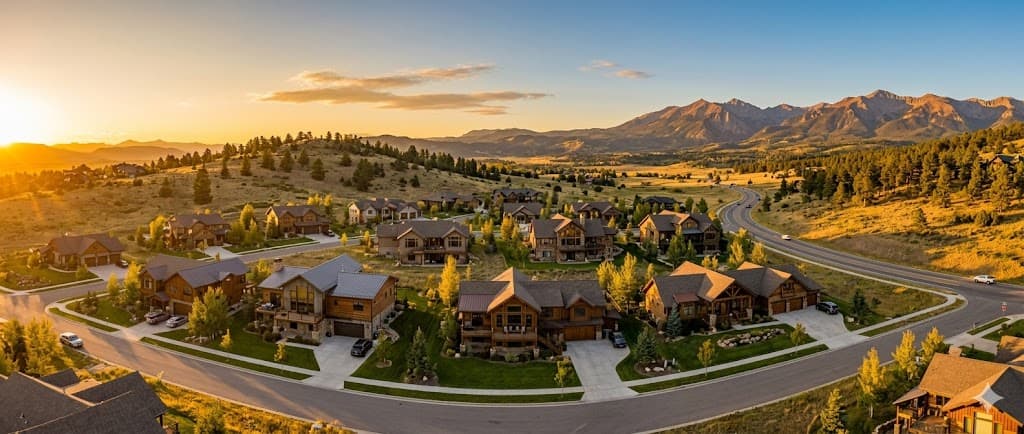
Beautiful Colorado home with mountain backdrop
Colorado's Hardest Insurance Market · 30+ Carriers · 250+ Five-Star Reviews

Your Colorado Insurance Premium Just Jumped. We Can Fix That.

Colorado homeowners are seeing 20–40% premium increases, non-renewal letters, and carriers leaving entire ZIP codes. You're not imagining it — and you're not stuck with it. Our insurance team compares 30+ carriers to find coverage that actually fits your home and your budget.

Powered by Direct Insurance Services · No obligation

250+ Five-Star ReviewsOur Insurance Team at Direct Insurance Services
CO Home Equity BBB Business Review
You're Not Alone

Colorado Homeowners Are Getting Crushed on Insurance. These Stories Prove It.

These are real scenarios from Colorado homeowners we've helped.

THE RENEWAL SHOCK

Lisa in Highlands Ranch opened her renewal letter in January. Her premium jumped from $3,200 to $4,800 — a 50% increase. No claims. No changes to her home. No explanation beyond "market conditions." She'd been with the same carrier for 11 years. We ran her profile across 30+ carriers and found the same coverage for $3,400. She saved $1,400 per year and got a carrier that actually wanted her business.

— Lisa, Highlands Ranch CO

THE NON-RENEWAL LETTER

The Martinez family in Evergreen got a letter they never expected: their carrier was non-renewing their policy. They had 30 days to find new coverage or their mortgage company would force-place insurance at triple the cost. Two carriers declined them because of their WUI zone. We found a specialty carrier that writes in high-risk areas — same coverage, $5,200 per year instead of the $14,000 force-placed policy their bank was threatening.

— The Martinez Family, Evergreen CO

THE HAIL DEDUCTIBLE TRAP

Ryan in Arvada filed a hail claim after a June storm. His roof had $22,000 in damage. Then he found out his policy had a 2% hail deductible on his $580,000 home — that's $11,600 out of pocket before insurance paid a dollar. He thought his deductible was $1,000. Nobody ever explained the difference. We moved him to a carrier with a flat $2,500 hail deductible. He'll never get surprised like that again.

— Ryan, Arvada CO

THE HELOC INSURANCE DELAY

Jennifer in Castle Rock was 3 days from closing on a $175,000 HELOC for her daughter's college and a kitchen renovation. Her lender flagged her insurance — dwelling coverage was $120,000 below replacement cost because she hadn't updated since 2019. We got her a new policy with correct coverage in 48 hours. The HELOC funded on time.

— Jennifer, Castle Rock CO

Why Now?

Why Your Premium Skyrocketed — And What You Can Do About It

Your Home Is Worth More. Your Policy Probably Isn't.

Colorado home values surged 30–60% since 2020. If your dwelling coverage reflects your purchase price, you could be $100,000–$300,000 underinsured. After a total loss, your carrier pays what the policy says — not what rebuilding costs.

Premiums Jumped 20–40%. But Not at Every Carrier.

Your carrier raised rates because of their loss experience in Colorado. That doesn't mean every carrier raised the same. We regularly find $400–$800 per year in savings by switching to a carrier with lower Colorado exposure. Same coverage, different price.

Hail, Wildfire, Wind — Colorado's Triple Threat

Colorado ranks #1 nationally for hail claims. The Marshall Fire proved wildfire isn't just a mountain problem. If your policy has a percentage-based hail deductible, one storm could mean $8,000–$15,000 out of pocket on a $600K home.

Your HELOC Requires It

Every HELOC and home equity loan requires 100% replacement cost coverage before funding. If your policy falls short, it delays everything. Our team catches this before it becomes a problem.

See It In Action

Watch Patrick Review a Real Colorado Policy

See exactly what a coverage review looks like — gaps identified, better carriers found, real savings calculated.

The Process

Stop Overpaying in 3 Simple Steps

1

Get Your Quote

Fill out a short form with your property details. No credit check. No commitment.

2

We Compare 30+ Carriers

Our insurance team runs your profile against 30+ national, regional, and specialty carriers — including ones that write in high-risk areas where the big names won't.

3

Patrick Walks You Through It

You receive a personalized video review showing what each carrier offers, what it costs, and where your current policy has gaps. You decide — no pressure.

30+
Carriers Compared
National, regional & specialty
$400–$800
Avg Annual Savings
Colorado homeowners
15–25%
Multi-Policy Discount
Home + Auto bundle
250+
Five-Star Reviews
Direct Insurance Services

Carriers We Compare

TravelersSafecoNationwideHartfordProgressiveChubbAuto-OwnersWestfieldEncompassKemperAmerican FamilyForemostand more
Deep Dive

Colorado's Insurance Crisis: What Every Homeowner Needs to Understand

Why Colorado Premiums Are Rising Faster Than Any Other State

I talk to Colorado homeowners every week who are in shock at their renewal notices. Here's what's actually happening behind the scenes.

Colorado sits at the intersection of every natural disaster that insurance carriers fear most. The Front Range is ground zero for hail — we're literally #1 in the nation. The foothills and mountains are expanding wildfire zones. And every spring brings wind events that rip roofs off homes from Pueblo to Fort Collins.

Carriers price risk based on their loss data. When a single hailstorm causes $2 billion in claims across the Denver metro — which has happened multiple times in the last decade — every carrier adjusts. Some raise rates 15%. Some raise 40%. Some leave Colorado entirely.

The result: homeowners who've been with the same carrier for 10–15 years are getting punished for loyalty. Your carrier raised YOUR rate based on THEIR losses across the entire state. That doesn't mean every carrier had the same losses or raised the same amount.

That gap between carriers is where the savings are. On the exact same home with the exact same coverage, we routinely see $800–$1,500 differences between the cheapest and most expensive carrier quotes. That's not a typo. Same home. Same coverage. Completely different price.

The Marshall Fire Changed Everything for Front Range Homeowners

Before December 30, 2021, most people along the Front Range thought wildfire was a mountain problem. Then the Marshall Fire burned through Superior and Louisville — suburban neighborhoods with HOAs and sidewalks, not remote mountain cabins.

Over 1,000 homes destroyed. $2 billion+ in insured losses. And the insurance industry's entire risk model for Colorado changed overnight.

Carriers that previously wrote policies in foothill communities and Front Range suburbs started non-renewing. ZIP codes that were considered low-risk were reclassified. Replacement cost estimates were revised sharply upward as rebuilding costs surged.

If you live anywhere along the Front Range foothills — Evergreen, Conifer, Golden, Morrison, Boulder County, Larimer County — your insurance market has fundamentally changed. Even if you haven't been directly affected, your carrier is pricing in the risk that you could be.

An independent agency that compares 30+ carriers is no longer a nice-to-have in these areas. It's the only way to find coverage at a price that doesn't wreck your budget.

The Hail Deductible Trap That's Costing Colorado Homeowners Thousands

Here's something that catches people completely off guard: your hail deductible might not be what you think it is.

Most Colorado policies have switched from flat deductibles ($1,000 or $2,500) to percentage-based hail deductibles. A 2% hail deductible on a $600,000 home means $12,000 out of pocket before insurance pays anything.

Read that again. $12,000 out of your pocket after a hailstorm — on a home you're paying $4,000–$6,000 per year to insure.

Ryan in Arvada learned this the hard way when he filed a claim for $22,000 in roof damage and found out he owed $11,600 before his carrier picked up a dollar.

Not every carrier uses percentage-based hail deductibles in Colorado. Some still offer flat deductibles of $1,000–$2,500. But you won't find them by auto-renewing with whoever you've had for the last 5 years. You find them by comparing — which is exactly what we do.

Non-Renewal Letters: What to Do When Your Carrier Drops You

Getting a non-renewal letter feels like getting fired by your insurance company. You've paid premiums on time for years, maybe never filed a claim, and they're walking away.

It's happening across Colorado, especially in wildfire-prone areas and hail-heavy ZIP codes. Here's what to know:

You typically have 30–60 days to find new coverage. Don't panic, but don't wait.

Your mortgage company will force-place insurance if you don't replace coverage by the cancellation date. Force-placed policies cost 2–3x a normal premium and provide minimal coverage.

Standard carriers may decline you if one carrier already non-renewed. But specialty carriers and surplus lines carriers often write in these situations — you just won't find them by calling State Farm.

An independent agency with access to 30+ carriers, including surplus lines, is your best path. The Martinez family in Evergreen went from a $14,000 force-placed threat to $5,200 with a specialty carrier through our team. That's $8,800 per year in savings — plus actual coverage that protected their home.

Full Protection

Bundle Home + Auto and Save 15–25% Instantly

Bundle your insurance for the biggest savings. We compare all lines through Direct Insurance Services.

Homeowners Insurance

Dwelling coverage, personal property, liability, and additional living expenses. Colorado-specific wildfire, hail, and severe weather coverage.

Auto Insurance

Bundling home and auto with the same carrier saves 15–25%. We compare auto quotes alongside your home policy for maximum savings.

Umbrella Liability

Extra liability protection beyond your home and auto policies. Especially important for homeowners with significant equity and assets to protect.

Life Insurance

Protect your family if something happens. Term life coverage is affordable and ensures your mortgage and HELOC are covered.

Common Questions

Homeowners Insurance FAQ

Yes, 100% free with no obligation. We partner with Direct Insurance Services, who earns a commission from the insurance carrier you choose (if you switch). You never pay a fee for the comparison, consultation, or review. If your current policy is already the best option, we'll tell you that too.
Yes. All HELOC and home equity loan lenders require proof of active homeowners insurance before funding your loan. The policy must cover at least the replacement cost of your home and list the lender as a loss payee. This is a standard requirement — not unique to any specific lender. Having your insurance squared away before you apply can speed up your HELOC funding by a week or more.
Colorado faces a unique convergence of natural disaster risks that make it one of the most expensive and difficult insurance markets in the United States. The state ranks #1 nationally for hail claims — the Front Range corridor from Colorado Springs through Denver to Fort Collins sits in "Hail Alley," where severe hailstorms cause billions in property damage annually. Add in escalating wildfire risk (over 600,000 Colorado homes are in the wildland-urban interface), catastrophic wind events, and severe winter storms, and you have a market where carriers are raising premiums 15–40% per year and some are pulling out of high-risk areas entirely. This makes working with an independent agency that compares carriers for you more important than ever.
Wildfire risk has reshaped Colorado's insurance market, especially after the Marshall Fire in December 2021 destroyed over 1,000 homes in Boulder County and became the most destructive wildfire in Colorado history. Homeowners in wildfire-prone areas — including foothill communities, mountain towns, and increasingly, suburban neighborhoods along the Front Range — may face non-renewal notices, dramatically higher premiums, or limited carrier options. Some areas in the wildland-urban interface (WUI) have seen premiums double or triple. If you're in a high-risk zone, working with an independent agency that compares 30+ carriers is critical because availability varies widely from carrier to carrier.
The Colorado FAIR (Fair Access to Insurance Requirements) Plan is a state-mandated insurer of last resort for homeowners who cannot obtain coverage in the standard market. It provides basic fire and lightning coverage — but it is more expensive than standard policies, offers less coverage, and does not include liability, theft, or many other standard protections. You would need the FAIR Plan only if every standard carrier has declined your application, which sometimes happens in extreme wildfire risk zones. Before resorting to the FAIR Plan, we strongly recommend letting our partner Direct Insurance Services compare all 30+ carriers — many homeowners who think they are uninsurable actually qualify with specialty carriers that underwrite in high-risk areas.
Colorado's Wildfire Partners program and similar community-based mitigation efforts can significantly improve your insurability and reduce premiums. Key mitigation steps include: creating defensible space (clearing vegetation 0–5 feet from your home and thinning trees within 100 feet), replacing wood shake roofs with Class A fire-rated materials like asphalt composite or metal, enclosing eaves and soffits with ignition-resistant materials, installing ember-resistant vents, using tempered or dual-pane windows, and maintaining a gravel or non-combustible zone around your foundation. Many carriers offer 5–15% premium discounts for verified mitigation work, and some carriers that would otherwise decline coverage will write a policy after a certified Wildfire Partners assessment. Boulder County, Larimer County, and Eagle County all have active mitigation programs.
Colorado's Front Range sits in what meteorologists call "Hail Alley" — the geographic sweet spot where warm, moist air from the Gulf of Mexico collides with cold air sweeping down from the Rocky Mountains, creating severe thunderstorms with large hail. The Denver metro area alone averages 7–9 significant hailstorms per year. In recent years, single hailstorms have caused over $2 billion in insured losses across the Front Range. Colorado consistently leads the nation in hail-related insurance claims, accounting for a disproportionate share of all U.S. hail losses. This drives up premiums statewide and is a major reason why carriers are increasing rates or exiting the Colorado market. When comparing policies, pay close attention to your hail deductible — many Colorado policies now use a percentage-based hail deductible (1–2% of dwelling coverage) rather than a flat dollar amount, which can mean thousands more out of pocket after a claim.
Colorado homeowners who compare through our partner Direct Insurance Services save an average of $400–$800 per year on premiums. Savings vary based on your current carrier, coverage levels, home value, location, and claims history. In Colorado's volatile market, rates between carriers can vary by 50% or more for the exact same coverage — so having an independent agency compare carriers for you is especially impactful here. Multi-policy discounts (home + auto bundled with the same carrier) can save an additional 15–25%. We also check for discounts you may be missing: new roof credits, security system discounts, claims-free discounts, and wildfire mitigation credits.
Bundling homeowners and auto insurance with the same carrier typically saves 15–25% on both policies — that can mean $500–$1,200+ in total annual savings for a Colorado household. Beyond the price discount, bundling often comes with perks: a single deductible if both your home and car are damaged in the same event (common in Colorado hailstorms), simplified billing, and a dedicated agent who knows your full coverage picture. We can also add umbrella liability, life insurance, and other coverages into the comparison. When we compare your home insurance through Direct Insurance Services, we automatically check whether bundling your auto policy with the same carrier produces a better total price.
The Marshall Fire on December 30, 2021 destroyed over 1,000 homes in Superior, Louisville, and unincorporated Boulder County, causing an estimated $2+ billion in insured losses. It was the most destructive wildfire in Colorado history and the first time a major wildfire devastated a densely populated suburban area along the Front Range. The impact on Boulder County's insurance market has been severe and long-lasting: several carriers have non-renewed policies in affected ZIP codes, premiums in the area have increased 30–60%, and replacement cost estimates have been revised sharply upward as rebuilding costs surged. The fire also changed how carriers assess wildfire risk statewide — areas previously considered low-risk suburban neighborhoods are now being re-evaluated. If you live in Boulder County or anywhere along the Front Range foothills, reviewing your policy annually is essential.
Finding insurance in high-risk wildfire areas requires a different strategy than a standard search. Here's what works: (1) Use an independent agency like Direct Insurance Services that represents 30+ carriers — surplus lines and specialty carriers often write policies in areas where standard carriers won't. (2) Complete a Wildfire Partners or similar community mitigation assessment and implement their recommendations — this can open doors with carriers that otherwise decline. (3) Consider higher deductibles to bring premiums within budget. (4) Look into the Colorado FAIR Plan as a last resort for basic fire coverage, then supplement with a separate liability and property policy. (5) Ask about "difference in conditions" (DIC) policies that can fill gaps left by the FAIR Plan. (6) Join your local Fire Protection District and Community Wildfire Protection Plan — some carriers consider community-level mitigation in their underwriting. Our team can walk you through all of these options during a free video insurance review.
In Colorado's rapidly changing insurance market, we recommend reviewing your homeowners insurance every 12–18 months — not just at renewal time. Colorado premiums have been increasing 15–40% per year, but the increases are not uniform across carriers. A carrier that was cheapest last year may have raised rates dramatically this year while a competitor held steady. Additionally, you should always compare if: (1) your premium increases more than 10% at renewal, (2) you receive a non-renewal notice, (3) you've made home improvements that could earn discounts (new roof, updated electrical, security system), (4) you've been claims-free for 3+ years, or (5) your home value has changed significantly. Auto-renewing without comparing is one of the most common — and expensive — mistakes Colorado homeowners make.
No, switching insurance carriers does not affect your HELOC, home equity loan, or mortgage in any way. You simply need to ensure continuous coverage (no gap between policies) and update your lender with the new policy information. Your new carrier will typically handle the lender notification for you, including adding the mortgage and HELOC lenders as loss payees on the new policy. The entire switch process is usually seamless — most carriers coordinate the effective date to align with your current policy's expiration so there is zero gap in coverage.
Colorado homeowners should verify several coverages that are either optional or have inadequate default limits: (1) Extended replacement cost — covers rebuilding even if costs exceed your dwelling limit (critical after disasters when labor and materials surge in price). (2) Ordinance or law coverage — pays the extra cost to rebuild to current building codes, which may have changed since your home was built. (3) Adequate hail coverage with a reasonable deductible — check whether your policy uses a percentage-based hail deductible and understand what that means in dollars. (4) Sewer and water backup coverage — not included in standard policies but common in older Colorado neighborhoods. (5) Scheduled personal property for high-value items — jewelry, art, firearms, and electronics above standard sub-limits. (6) Loss of use / additional living expenses — make sure your limit is sufficient for 12–24 months of temporary housing at Colorado rental prices, which can be extremely high in mountain communities.

Most of Our Insurance Clients Are Sitting on Significant Equity

See what yours could do for you.

Your Neighbors Found Better Coverage. You Can Too.

Colorado homeowners who compare through our team save an average of $400–$800 per year — often with better coverage than what they had.

250+ Five-Star ReviewsOur Insurance Team at Direct Insurance Services

No obligation · Powered by Direct Insurance Services