01The town that pours bronze
Loveland's arts identity gets mistaken for a tourism slogan by people who haven't been here. It's an industry. The city's foundries have cast fine-art bronze for decades — work from these floors stands in public spaces across the country — and around them grew a whole ecosystem: the Benson Sculpture Garden with its permanent collection spread over lakeside acres, the August sculpture show billed as the largest juried outdoor show in America, and a public art collection that would embarrass cities three times this size. Add the tradition that gives Loveland its nickname — the volunteer valentine re-mailing program, running since the late 1940s, that stamps sweetheart postmarks on mail from around the world every February — and you have something rare in Front Range real estate: a city whose identity was built by hand, on purpose, and can't be replicated by a master developer. For sellers, that identity is a quiet asset. It brings outside visitors into the neighborhoods every year, it keeps the city distinct in a region full of growth towns, and it sets a standard of care that a listing here should meet. Sweetheart City is a real place. Selling a home in it well means treating the sale like the town treats its bronze — finished properly.
02From the sugar factory to The Foundry
Loveland was born a railroad town in 1877 and made its first fortune on sugar beets — the Great Western factory opened in 1901 and ran for three-quarters of a century, long enough to shape the town's working identity before it went quiet in 1977. What happened next is the part sellers should know, because it explains today's downtown. Instead of letting the center hollow out, Loveland rebuilt it deliberately: the historic Fourth Street district earned its National Register listing, the Rialto's marquee came back to life, and a full city block south of Fourth was redeveloped into The Foundry — apartments, a cinema, a hotel, and a public plaza that gave downtown a modern anchor without erasing the old one. The result is a downtown that works at both ends of its timeline, and a housing market around it that behaves accordingly: the walkable blocks near Fourth Street have become some of the most durable demand in the city, prized by buyers who want history with their coffee. If you own within walking distance of that district, your location is carrying more of your value than it did a decade ago — and your listing should be fluent enough in the story to tell it.
03Reading Loveland's neighborhoods — and its water — precisely
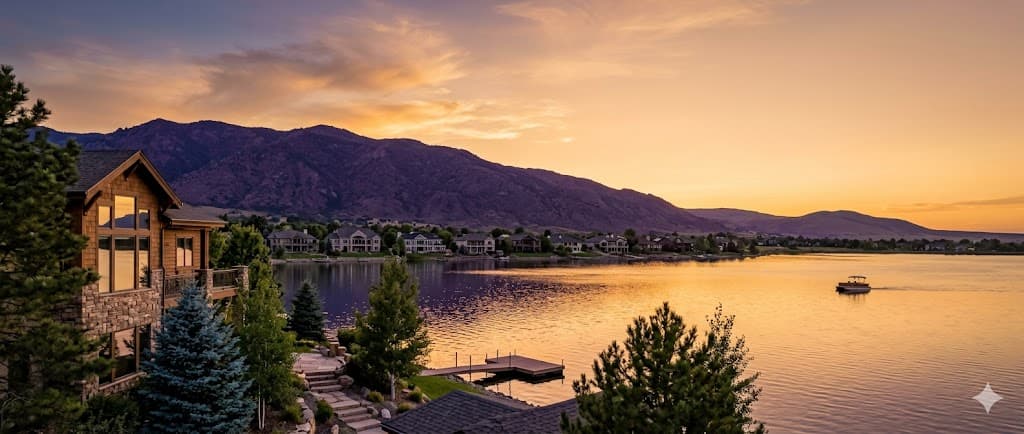
Loveland's map rewards specificity. The Old Town blocks sell character and walkability to patient, particular buyers. The Lake Loveland ring is the emotional center of the market — mid-century homes with water light — but it demands precision: the lake's surface is private, accessed through a recreation club, with no public ramp, so the pitch that holds is views, parks, and shoreline paths, not private boating. Get that right and you build trust; get it wrong and the correction arrives mid-showing. West, Mariana Butte wraps the municipal golf course above the Big Thompson corridor and sells scenery-plus-structure to buyers who want the foothills in their windows. East, the Centerra lakes communities sell new-without-generic — townhomes and patio homes beside wetlands, the environmental center, and the Chapungu stone sculptures. Northwest, Alford Meadows runs on the school calendar. And north, Seven Lakes is the quiet trophy market, peninsula homes between two lakes that surface rarely and sell to waiting lists. Six markets, six different buyers, and — this matters — six different definitions of what a well-finished listing looks like.
04The east-side engine: what Centerra means for a seller
The eastern edge of Loveland is home to one of Northern Colorado's largest master-planned developments — thousands of acres of retail, medical, office, and residential that changed who moves to this city and why. The regional hospital on the hill draws medical professionals who want to live near their shifts. The shopping and employment base pulls households that once defaulted to the bigger city up the interstate. And the residential villages inside the development — the lakes communities among them — created a kind of housing Loveland simply didn't have before: new construction with wetlands, trails, and public art built into the plan. For sellers elsewhere in the city, Centerra is less a competitor than a demand generator; it brings people to Loveland who then discover the lake blocks and Old Town. For sellers inside it, the buyer is typically comparing you against other newer homes, which makes condition parity and presentation polish decisive. Either way, the east side has given Loveland something valuable: two independent engines of demand, one historic and one new, pulling buyers from different directions at once.
05Pricing Loveland on its own terms
The pricing mistake specific to this city is imported logic — anchoring a Loveland home against the bigger market fifteen minutes north and calling the difference a discount. That framing sells the city short and misprices the house in both directions: it overshoots when it borrows the neighbor's premiums, and it undershoots when it accepts 'affordable alternative' as an identity. Loveland's own evidence is rich enough to price from directly: what the lake blocks have actually commanded, what west-side golf-course homes really sell for, what the east-side villages are actually selling for against their own competition. Price from that evidence and the number carries conviction — you can defend it to a buyer's agent in one sentence, which is the practical test of any list price. There is also a Loveland-specific reward for discipline here: because the city's stock is so varied, a precisely-priced home stands out quickly against imprecise neighbors. In a market where the buyer may be touring a bungalow, a lake ranch, and a Centerra townhome in the same afternoon, the listing that clearly knows its own worth is the one that gets taken seriously.
06Preparation as finish work
Every market rewards preparation; Loveland rewards it with interest, because this is a town whose eye is trained. The preparation that pays here is the kind a foundry would recognize as finishing — not transformation, but the disciplined completion of what's already good. Mechanically, that means the systems serviced and the records assembled so a buyer's inspector confirms rather than discovers. Cosmetically, it means repairs completed instead of noted, paint where paint earns its keep, and staging that respects the home's era — a mid-century ranch styled to its lines, a bungalow allowed its history, a new build kept gallery-clean. Photographically, it means hiring for light: lake light, foothill light, the way Fourth Street glows at dusk if you're lucky enough to be near it. What it doesn't mean is the panicked pre-sale remodel — this market's buyers, like this town's makers, would usually rather buy the well-kept original and finish it to their own taste. The line I keep coming back to with Loveland sellers: we're not changing the piece, we're finishing it. Done right, the buyer can feel the difference standing in the driveway.
07Commissions in a two-downtown city
Loveland's commission conversation should start from an observation about the city itself: this is one market with two completely different marketing jobs in it. A character home near Fourth Street needs provenance marketing — history told well, photography that earns the era, reach into the buyer pools that hunt for exactly that. A newer home on the east side needs precision marketing — condition parity, amenity storytelling, and sharp positioning against comparable new stock. When you endorse the listing agreement — and since 2024, every commission term in it is yours to set, including whether and what to offer a buyer's agent — the question isn't what the customary numbers are. It's which marketing job your home requires and whether the fee is buying that job specifically. A cooperating-agent offer may widen reach meaningfully for one kind of Loveland home and add little for another; a listing-side fee may fund the photography and preparation that a character sale lives on, or the pricing precision a newer-home sale turns on. I put the whole structure in writing against your actual house — the job, the fee, and what connects them — before you commit to anything.
08One crucible for the whole move
Most Loveland sellers are moving to another Loveland address — up to the butte, down to a patio home, out to the lakes community — or carrying serious equity toward a bigger change. Either way, the move has two halves, and the industry's standard practice is to pour them separately and hope the seam holds. Mine is to pour them together. As your broker, the listing is mine to run, with local agents from my Northern Colorado network handling the ground work; as your mortgage broker, I underwrite the next purchase before the sale launches, and size the bridge or equity line if the calendars drift. One person, both licenses, no cold seams. The consult is free and specific: your home, your equity, your next chapter, on one page. That's the whole finished piece — and you'll know it when you see it.