01How to actually sell a home in Arvada
Arvada is the metro suburb that never stopped being a town. It has what its neighbors spent fortunes trying to build or buy: an authentic historic main street with a flour mill on the skyline, a commuter train from that main street to Union Station, and a century-deep identity that started with a gold pan in a creek and a national reputation for celery, of all things. Selling here means understanding that the town itself does the first half of your marketing — buyers arrive pre-charmed — and that the second half is entirely on the listing: placing your home accurately on Arvada's east-to-northwest gradient of eras, pricing it against its true pocket rather than the citywide blur, and proving with documentation what the charm implies. I serve Colorado statewide from my base in Edwards, carrying both the real estate and mortgage licenses, which means every Arvada sale I run is priced with an agent's local rigor and read with a lender's cold eye — and the move it funds is engineered in the same plan.
02Olde Town: the main street that anchors every Arvada price
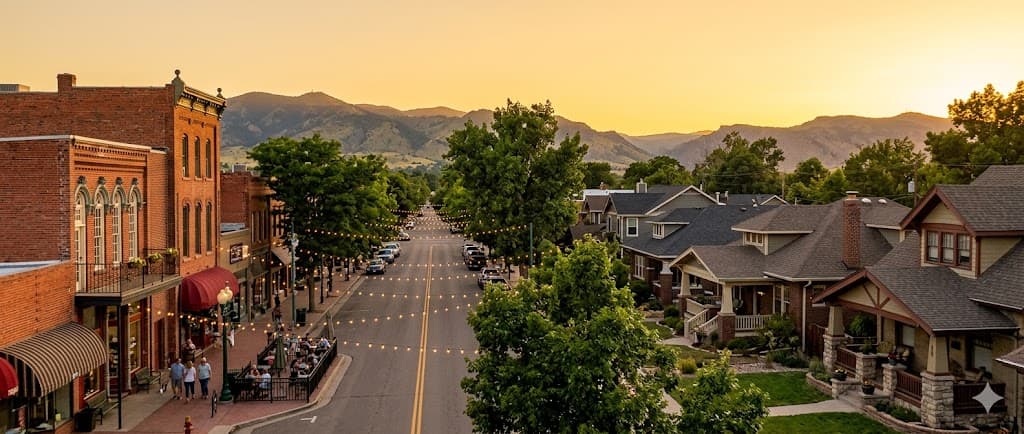
Most suburbs would trade their city hall for what Arvada has at its center. Olde Town is the genuine article — brick storefronts, the preserved flour mill and water tower, a public square that hosts the town's calendar, and bungalow blocks radiating outward — and since the commuter line arrived, it's a historic main street with a train platform, a combination the metro cannot duplicate. For sellers, Olde Town functions as the city's value anchor, and the discipline is measuring your home's true relationship to it. The walkable core commands devotion pricing — buyers compete for those blocks the way they compete for Denver's bungalow belts, with the added argument of the train. The bikeable ring trades meaningfully on access. And the rest of the city borrows the glow: Olde Town is the one-line answer to why Arvada over anywhere else, whatever the address. My listings claim each home's true ring and defend it with distances, minutes, and the era details that belong to that ring — because around a main street this real, precision beats poetry.
03From celery fields to cul-de-sacs: reading the gradient
Arvada's housing tells its history in bands, west and north from the old core. The early-century blocks near Olde Town carry the bungalows and farm-town fabric of the celery decades, when this soil shipped prize produce east by refrigerated railcar. The postwar bands hold the ranches and the mid-century enclave that design buyers now treat as a destination. The seventies delivered the lake-and-golf neighborhoods with their split-levels and family scenery. The nineties pushed two-stories and fairway customs westward, and this century opened the far-northwest frontier — master-planned villages against open land, with their own schools and swim clubs. Each band attracts a distinct buyer with distinct comparables, and the gradient is why 'the Arvada market' is nearly a meaningless phrase for a seller. What matters is your band's market. I price within the band, prepare for the band's buyer, and market in the band's language — then let the town's shared identity, from gold pan to train platform, close the argument that the band began.
04The mid-century question: original character in a design-aware town
Arvada holds a card few suburbs can play: a coherent mid-century-modern enclave — low rooflines, exposed beams, integrated carports, built as a piece in the fifties — plus a broad belt of postwar ranches in various states of originality. The metro's design-buyer pool knows this, and that changes the calculus for any seller holding original condition. The reflex in most markets is to treat a vintage kitchen as a discount coupon. Here, the first question is which buyer pool your home's condition actually serves best: the design buyer who will pay for untouched character and resents the flip-grade remodel, or the convenience buyer who wants updates finished and priced in. The answer is arithmetic — what targeted work returns in your pocket versus what the as-is pools pay — and I run it with real figures rather than instinct. The one unforgivable move is splitting the difference: the half-remodel that erases the character one pool wanted without delivering the finish the other pool demands. In a design-aware town, coherence sells. Whichever route we choose, we commit.
05When Denver's agents come to Arvada: commissions after 2024
Here's the structural quirk the 2024 commission changes exposed in Arvada: a large share of this town's buyers are Denver refugees — priced out of the city's bungalow neighborhoods — and they arrive with Denver agents attached. Those agents bring city norms with them: expectations about compensation, service tempo, and how listings signal cooperation, formed in Denver's specialist ecosystems rather than Arvada's local ones. Meanwhile the town's own agent bench works its established pockets with long-memory relationships. Your listing's compensation decision lands on both benches at once, and they read it differently — the local bench through familiarity, the visiting bench through comparison with what they see in the city. That dual audience deserves deliberate strategy: a scarce Olde Town bungalow can hold assured terms with either bench; a new-frontier two-story competing against builder incentives may want both benches enthusiastic. Before you endorse the listing agreement, I model your realistic options against your specific pocket and both buyer channels, with projections — because a decision two audiences will read should never be written by default.
06The northwest frontier: new construction and the conversation around it
Arvada's growth edge runs northwest, where this-century master plans have built view-named villages with resort amenities against thousands of acres of protected open land. Sellers there compete on frontier terms: against builders' remaining inventory and each other's near-identical floor plans, where differentiation lives in lot position, view lines, finished basements, and the plain presentation of what the association and metro-district structure provides. Sellers elsewhere in Arvada should understand the frontier as a segmenting force — it absorbs the buyers who want new, leaving the established bands' buyers more concentrated on what they want.
07The town that rewards staying — and the exit that rewards planning
Arvada's defining seller is someone the town paid for patience: decades in a ranch or split-level, a mortgage that shrank while the equity grew, a life assembled around the creek trail and the square. When that seller finally moves — to a single-level, to the grandkids, to the bigger place out west — the transaction carries more weight than a typical suburban listing, because it's converting a life's principal asset into a life's next phase. That conversion deserves engineering. As the agent, I run the sale with the pocket-precision this town's gradient demands. As the mortgage broker, I structure what the proceeds do next — the right-sized loan on the next home, the sequencing that prevents a rental purgatory, the timeline that respects a family's actual calendar rather than two companies' separate ones. And as one person, I answer for the whole arc. The town rewarded your staying. The exit should reward your planning — and that, in a sentence, is the service.