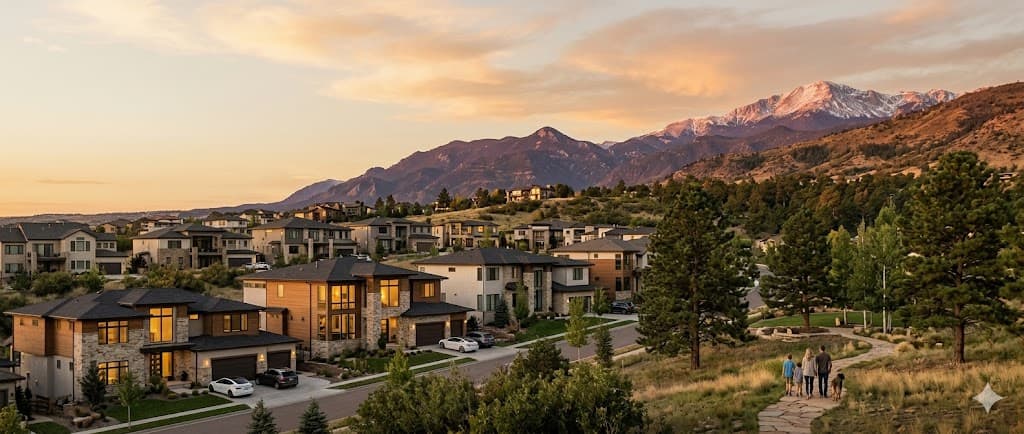
01How to actually sell a home in Highlands Ranch
Highlands Ranch is master-planned and unapologetic about it — tens of thousands of acres of former cattle ranch converted, over four decades, into the most populous unincorporated community in Colorado, governed by a metro district, a community association, and a plan that has delivered with unusual fidelity. Selling here means embracing what that plan produced: a buyer pool narrower and more predictable than any city's — families purchasing Douglas County schools, full stop — and a housing stock uniform enough that pricing is a discipline of differentiation rather than discovery. The sellers who struggle here fight the premise, marketing 'unique charm' the plan deliberately never built. The sellers who win work with it: they know their quadrant, their feeder pattern, their home's genuine points of difference within the sameness, and they price the district's admission ticket at what admission is worth. I serve Colorado statewide from my base in Edwards, carrying both the real estate and mortgage licenses — and in a community built on delivered specifications, I run your sale and your next financing to a specification of my own, at one accountable desk.
02The district is the product
Strip the landscaping away and every Highlands Ranch transaction is the same trade: a family is buying enrollment, and a house comes with it. The district's gravity explains everything else about this market — why the buyer pool refreshes each spring as families position for fall enrollment, why demand tracks feeder patterns street by street, why graduations reliably produce listings, and why a community this uniform never lacks for motivated purchasers. A seller who internalizes this stops marketing granite and starts marketing access: the assigned elementary and its walk, the middle-and-high feeder chain, the enrollment logic a relocating family needs stated plainly because they're managing it from three states away. It also disciplines the calendar — the listing that meets families during their planning season harvests the pool at its deepest. None of this diminishes your home; it clarifies your home's role. In Highlands Ranch, the house is how the family gets the district. Sell the how brilliantly, and the district sells the rest.
03HRCA and the metro district: the operating system your buyer's lender will read
Highlands Ranch runs on an institutional architecture buyers from ordinary suburbs have never met: a community association that owns the four rec centers, maintains the covenant standards, and manages the wilderness area, alongside a metro district handling roads, parks, and infrastructure — all without a city government anywhere in sight. For your sale, this architecture shows up twice. First, in the buyer's lender's file review: association documents, assessments, and covenant standing get examined, and the seller whose paperwork is assembled before listing keeps the contract period boring — the highest compliment a contract period can earn. Second, in the marketing itself: the association fee is the price of the community's entire promise — rec centers, trails, standards, the streetscape that holds its looks — and the listing should present it as the membership it is rather than the tax it isn't. I package the institutional file as routine listing preparation here, because in a community governed by systems, the smooth sale belongs to the seller whose systems are already in order.
04Uniform stock, decisive differences
The master plan's great trade-off is legibility: buyers can price a Highlands Ranch baseline in a weekend, because the community offers them dozens of nearly comparable homes at any moment. Sellers hear that as bad news; it's actually the clearest pricing environment in Colorado — if you understand where the margins live. With the baseline established by the lookalikes, value concentrates entirely in the differences: the greenbelt or open-space lot line, the quadrant and its rec-center personality, the walk-to-elementary block, the mature trees of the original quarters, the finished basement done properly, the updates that match what this buyer pool actually pays for versus the ones that merely photograph well. My pricing method here is differential: establish the pocket's baseline ruthlessly, then inventory and price your home's genuine deltas one by one. The uniform market punishes vague premiums instantly — but it rewards documented differences with equal speed, because your buyer has seen the baseline twelve times this month and knows exactly what your delta is worth.
05Steering in a lookalike market: commissions after 2024
Buyer-agent compensation became an explicit per-sale decision in 2024, and no market feels the consequences quite like a master-planned community. Here's why: when a buyer's agent works a client through Highlands Ranch, they're often choosing among several genuinely similar listings — same era, same plans, same district — and some tiebreaker has to order the tour. In differentiated markets, the property itself does that work. In uniform markets, softer signals carry more weight, and the listing's cooperation structure is one of them, in either direction: a structure that reads as difficult can quietly slide a lookalike listing down the showing order, while assured terms on a genuinely differentiated home hold without friction. The strategic response isn't reflexive generosity — it's knowing exactly how differentiated your specific home is before deciding. A greenbelt lot with a finished walkout can afford confidence; a baseline two-story amid four active lookalikes should think hard about being anyone's second-choice showing. We run that assessment together, with projections, before you endorse the listing agreement — because in a steering-sensitive market, this decision is part of the price.
06The wilderness dividend: trails, rec cards, and the southern edge
The master plan's least-copied feature isn't inside the community at all — it's the preserved wilderness sprawling along the southern edge, thousands of acres of protected backcountry with trail systems, programs, and a horizon no future developer can take. Add the internal network — roughly seventy miles of paved trail lacing the quadrants together, four rec centers with distinct personalities from lazy-river resort to suspended running track — and Highlands Ranch offers something its price-tier rivals structurally cannot: a private parks-and-recreation system bundled into the address. Listings here chronically undersell it, defaulting to 'great community amenities' boilerplate that buyers scroll past. The winning presentation is possessive and specific: which rec center your household treats as its own, which trail leaves from your block and where it goes, what the backcountry edge means on an autumn Saturday, how the amenity card actually gets used by a family like your buyer's. The plan spent four decades building this dividend. The listing's only job is to claim your home's exact share of it — in specifics a relocating family can taste.
07When the clock runs out: the graduation sale, engineered
Highlands Ranch has a demographic heartbeat you can nearly set a watch by: families arrive ahead of kindergarten, the community carries them through the feeder years, and graduation flips a switch — suddenly the rec passes go unused, the four bedrooms echo, and the district that justified the address has finished its work. The graduation sale that follows is this community's signature transaction, and it deserves better engineering than it usually gets. The sellers hold a premium product — an admission ticket the next family is actively hunting — and simultaneously face their most open-ended decision in decades: right-size within the plan, head south to newer stock, chase the foothills, fund the long-postponed elsewhere. My two-license practice was built for precisely this pivot. The sale runs as the premium transaction it is: differentiated, timed to the enrollment calendar, priced to the ticket's real worth. And the next chapter's financing is structured against actual projected proceeds — at the same desk, on the same calendar, by the same accountable person. The district's clock ends for every family eventually. The plan, run properly, doesn't.