The stack of mail on the counter in a University Hills ranch home is three inches deep by the time anyone gets around to sorting it — a property tax notice, a homeowners insurance renewal with a number that's climbed again, a card from a grandchild in Fort Collins, and underneath everything, a mortgage statement with a balance that hasn't moved much in years despite payments made faithfully every single month. The man who owns that house bought it the year the neighborhood was still being built. He is 78. He is not confused about his finances. He is just tired of them.
I hear some version of that scene from Denver homeowners constantly — not always a mortgage statement, sometimes it's a stack of medical bills, sometimes it's a granddaughter's tuition invoice sitting next to a fixed retirement income that isn't going to grow to meet it. What's underneath all of it is usually the same thing: a house worth far more than what's owed against it, and an owner who has never once considered that the house itself might be part of the answer.
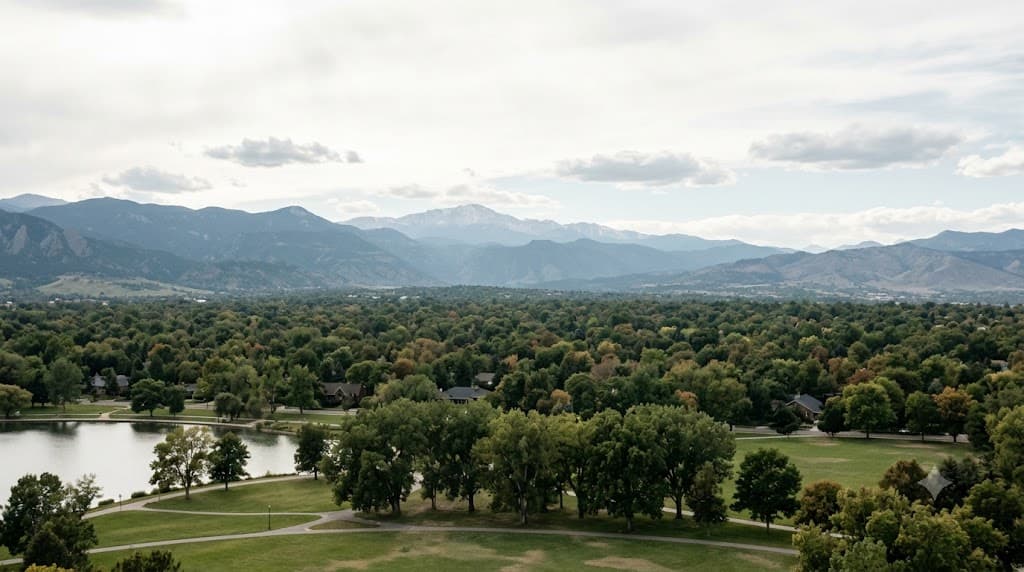
Denver's older neighborhoods make this an unusually candid conversation to have, because so much of the city's long-tenure ownership is concentrated in a handful of recognizable places. University Hills homeowners bought 1950s brick ranches and stayed for decades. Park Hill and Bonnie Brae are full of families who raised kids in bungalows and Tudor-style homes their parents or grandparents bought. Montclair's ownership is more mixed — some families have been there since the neighborhood's quieter years, others arrived more recently and are still building equity. In every case, the length of ownership tells you almost everything about how much room there is to work with.
Then there's the other end of Denver — Hilltop and Country Club, where home values have climbed well past what a standard, federally insured HECM was built to cover, and Cherry Creek, where enough homes sit right at or above that same line that the jumbo conversation comes up constantly without being automatic. In Hilltop and Country Club, a homeowner usually isn't asking whether they have enough equity — they're asking whether the standard program's limit even applies, and often it doesn't. In Cherry Creek, it depends more on the specific address than the zip code.
I hold an NMLS license, which means I have to be precise about a detail a lot of reverse mortgage marketing blurs on purpose: the standard HECM requires age 62. That's a federal rule, not a suggestion. The jumbo proprietary programs, which run through my lending network rather than FHA, allow borrowers as young as 55 in many cases. I've talked to Denver homeowners in their late fifties who were told by someone else to come back in a few years — advice that cost them time they didn't need to lose, because nobody mentioned the programs that already fit them.
None of this means a reverse mortgage is the right move for every Denver homeowner who calls me, and I say that as plainly as I can. Someone planning to sell and move within the next year or two is better served by a straightforward listing conversation. Someone with a smaller balance and a lot of runway left in their career has other tools available that cost less over time. I've talked people out of this when it wasn't the right fit, because the alternative — watching someone commit to something that doesn't serve them — isn't a version of this business I'm willing to run.
What I actually spend most of my time on with Denver clients is the family conversation, not the underwriting. Adult kids who live in Aurora or out of state worry, reasonably, about a parent's finances — and a reverse mortgage discussed in secret, after the fact, reads very differently than one talked through together while everyone still has a say. The homeowners who come out of this process feeling good about it are almost always the ones who brought their family in early.
I serve Colorado statewide from my base in Edwards, and Denver is one of the markets where I spend the most time, because the city's mix of long-tenure middle-market neighborhoods and genuine jumbo-territory enclaves means almost every conversation is different. Some homeowners need the government-insured version. Some need the proprietary one. A few, it turns out after we run the numbers, don't need either — and I'd rather tell someone that directly than sell them something they don't need.