
Jumbo Reverse Mortgage Colorado: What Mountain Homeowners Need to Know
The standard reverse mortgage has a hard ceiling. The FHA's HECM program tops out at $1,249,125 in 2026 — meaning if your home is worth $2.5 million, nearly half your home's value is completely invisible to that program.
For most of Colorado's mountain communities, that ceiling is a wall. And jumbo reverse mortgages exist specifically to go through it.
Why Colorado Mountain Homes Need Jumbo
Let's put real numbers on this. The median home price in Vail is around $1.85 million. In Aspen, we're talking $3.5 million. Breckenridge sits at roughly $1.45 million. Telluride and Steamboat aren't far behind. Every single one of those medians clears the HECM limit — which means the average homeowner in these communities cannot access their full equity through a government-backed reverse mortgage.
Here's the thing. These homeowners often have the most to gain. They bought their mountain properties decades ago, values have tripled or quadrupled, and they're sitting on $1 million to $3 million in equity while living on Social Security and investment income. A jumbo reverse mortgage can change their financial picture completely — no monthly payment, no sale, full access to what they've built.
I work with Colorado mountain homeowners on this regularly. The difference between a HECM and a jumbo program isn't just loan size — it's a fundamentally different transaction with different economics. Understanding both is the only way to make the right call for your situation. If adult children or grandchildren are looking to buy their own Colorado home, our first-time home buyer guide covers the lending options available through the same network.
HECM vs. Jumbo: What Actually Changes
| Feature | HECM (Government-Backed) | Jumbo (Proprietary) |
|---|---|---|
| 2026 max home value used | $1,249,125 | Up to $10M+ |
| Max loan proceeds | ~$700K at limit | Up to $4M |
| Minimum age | 62 | 55 |
| Upfront MIP | 2% of max claim | None |
| Origination fee | Up to $6,000 | Often waived |
| FHA counseling required | Yes | No |
| Line of credit growth | Yes | Program-dependent |
The MIP difference alone is worth pausing on. On a $1,249,125 HECM, the upfront mortgage insurance premium is $24,982. On a jumbo program for the same value — or double the value — that cost is $0. For homeowners with $2M+ homes, the savings are dramatic.
The age difference matters too. Many of my Colorado clients are 57, 58, 59 — retired from tech or business or medicine, sitting in a mountain home they love, and wanting to access equity without selling. HECM says wait. Jumbo says come in.
How Jumbo Proceeds Are Calculated
Jumbo reverse mortgage proceeds are determined by three main factors: your age (older = more proceeds as a percentage of home value), your home's appraised value, and current interest rates. The older you are and the lower the rates, the higher the percentage of your home's value you can access.
Rough benchmarks on a $2 million Colorado mountain home: a 62-year-old might access 35-45% of value, or $700,000 to $900,000. A 70-year-old might access 45-55%, or $900,000 to $1.1 million. A 75-year-old could access 55-65% or more. These are illustrative ranges — the actual number depends on current interest rates and the specific program.
What I do is run the actual numbers for your age, your home's value, and today's rates across the programs I work with. You get a real figure, not a ballpark. That's the only real way to have this conversation.
Find Out What Your Mountain Home Can Access
I specialize in Colorado's resort markets. Give me your home value and age — I'll show you what a jumbo reverse mortgage looks like for your specific situation.
Start Your Equity AnalysisHow a $3.2M Aspen Home Left $2M on the HECM Table
Patricia purchased her Aspen condo in 2004 for $890,000. By 2025, it appraised at $3.2 million. She was 68, widowed, and her investment portfolio had taken a hit. She needed access to equity — not to move, not to sell, just to rebalance her financial picture and fund a comfortable retirement without drawing down her remaining assets too aggressively.
She came to me after being told by a national reverse mortgage company that she could access about $560,000 through a HECM. She knew her home was worth $3.2 million and couldn't understand why the number was so low.
The answer was simple: HECM only "sees" $1,249,125 of her $3.2 million home. Nearly $2 million of home value was invisible to the program. The $560,000 they quoted was based on the HECM cap, not her actual equity.
Through a jumbo program, I was able to access $1.4 million in proceeds — more than double what the HECM offered. She took $400,000 upfront to rebalance her portfolio and set the remaining $1 million as a growing line of credit she draws from as needed.
"I didn't realize how much I was leaving behind," she told me. "That conversation changed everything."
— Patricia, Aspen CO
Mountain Condo Considerations
Condos in Colorado's ski resorts introduce an extra layer of review that most lenders handle poorly. FHA-approved condos are required for HECM — and many Vail and Aspen condo projects aren't FHA approved, which can kill a HECM application entirely. Jumbo programs have their own approval process, but it's typically more flexible.
Look: I've seen national lenders order appraisals on Breckenridge ski-in properties and come back $300,000 to $500,000 below market because their automated model pulled Front Range comps. A proper appraisal from someone who actually understands mountain resort markets changes the outcome. I know which appraisers to use for Colorado mountain properties. That's not a small thing. And if you're weighing whether to sell your mountain home instead of borrowing against it, the appraisal accuracy matters just as much on the listing side.
APPRAISAL TIP
On mountain and resort properties, always request a full field appraisal — not an automated valuation. In Vail, Breckenridge, and Telluride, the difference between an AVM and a proper appraisal can easily be $200,000 to $500,000 on a single property. That translates directly to how much you can access.
When a HECM Still Makes Sense
Not every Colorado mountain homeowner should go jumbo. If your home appraises under $900,000 and you're 62 or older, a HECM might actually produce comparable or better net proceeds once you account for the jumbo program's slightly higher interest rates. The math isn't always obvious — you need both numbers in front of you to compare correctly.
I run both scenarios for every client I work with on a Colorado reverse mortgage. Sometimes the HECM wins. Sometimes the jumbo wins by $400,000. The only way to know is to calculate both.
Frequently Asked Questions
Don't Overpay for Homeowners Insurance
Jumbo reverse mortgages require homeowners insurance — and for mountain properties, that means wildfire coverage, appropriate replacement cost coverage, and HOA master policy review. Our insurance team specializes in Colorado mountain properties and can review your coverage at the same time we review your reverse mortgage options. Being underinsured on a $3M condo isn't a small risk.
Get the Full Picture on Your Mountain Home's Equity
HECM vs. jumbo, real proceeds, actual costs — I'll run both scenarios and show you the difference for your specific Colorado property.
Get Your Equity BlueprintBobby Friel
NMLS# 332039 · Colorado Licensed Mortgage Loan Originator
Published April 10, 2026
Keep Reading
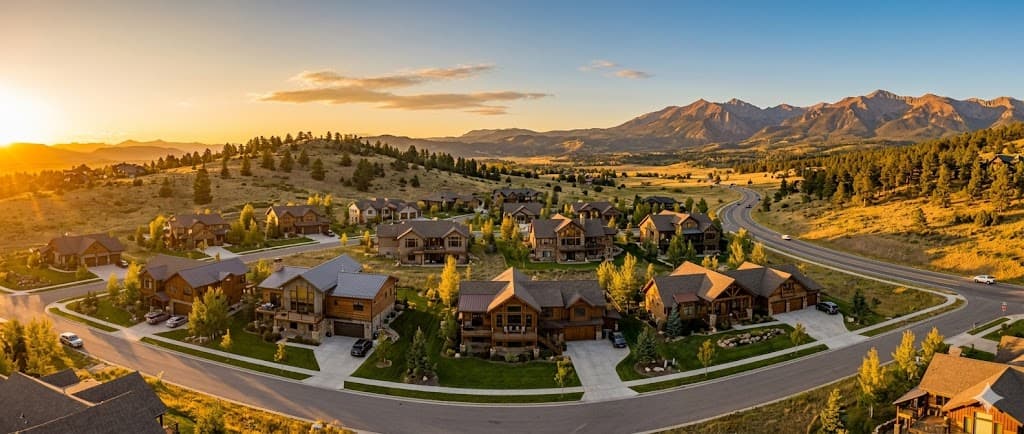
Colorado Reverse Mortgage 2026: The Complete Guide
New $1,249,125 HECM limit, jumbo programs up to $4M for age 55+, and what Colorado mountain homeowners need to know in 2026. Bobby Friel breaks it all down.
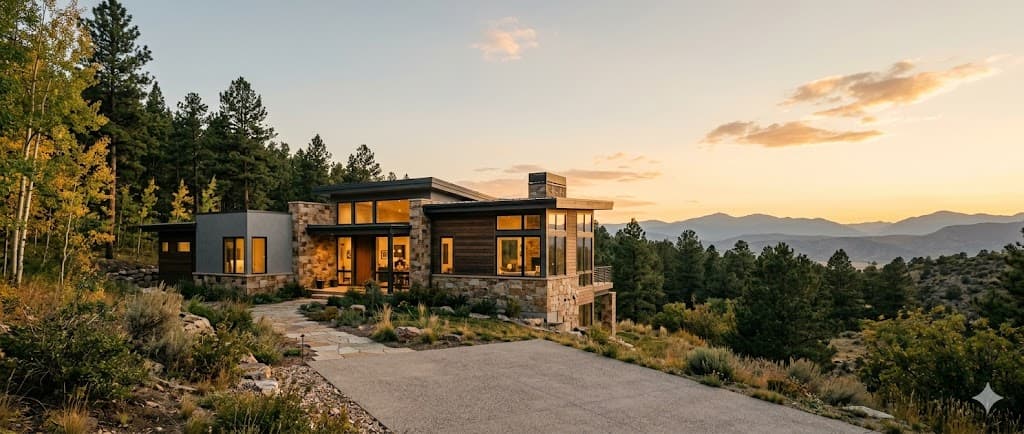
Reverse Mortgage for Purchase Colorado: Buy Your Next Home With No Monthly Payment
Use a reverse mortgage to buy a home in Colorado with no monthly mortgage payment. The HECM for Purchase lets you downsize, pocket equity, and eliminate your payment at the same time.

Reverse Mortgage at Age 55 in Colorado: What You Need to Know
Most people think you have to be 62 for a reverse mortgage. In Colorado, jumbo proprietary programs start at 55. Here's who qualifies, what's different, and why it matters for early retirees.