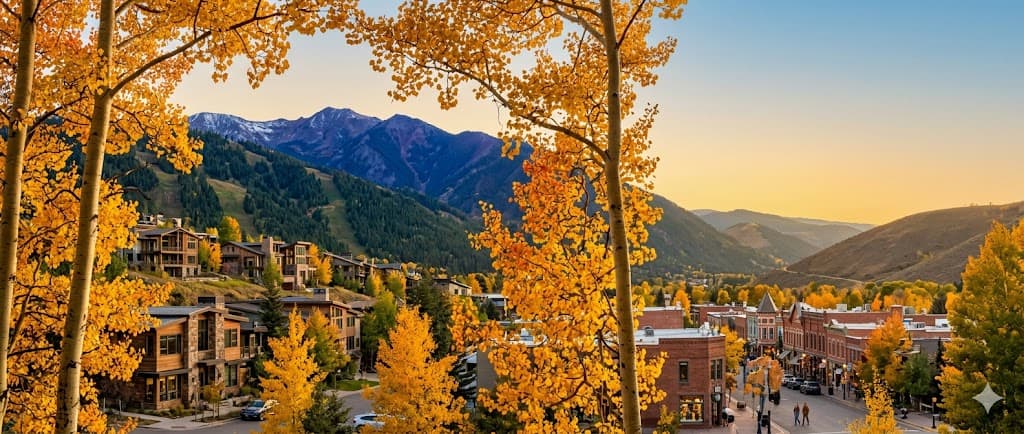
Aspen Home Equity — $1,800,000 in Average Tappable Equity
Aspen homeowners are sitting on record equity. Access $50K to $750K through a HELOC funded in as few as 5 days — without touching the low mortgage rate you locked in years ago. One application. I handle the placement. You get the right answer.
See Your Maximum HELOC
Slide to your home’s current value for an instant estimate.
Maximum HELOC Available
$750,000
Program maximum reached
Based on 85% CLTV · Program maximum: $750,000
Want your real number? Subtract your existing mortgage balance from this — or let our full calculator do it for you.
No credit impact · 60-second full estimate
Aspen Homeowners Who Put Their Equity to Work
Before you keep reading, look at the Aspen homeowners below. Which scenario sounds closest to where you are right now? Whichever one resonates — that’s the conversation worth having.

🏛️Historic Victorian restoration that commands Food & Wine pricing
Catherine bought a 3BR Victorian on the West End for $4.2M in 2018 — now worth $7.5M. She used a $500K HELOC for a full historic-sensitive restoration, working within Aspen Historic Preservation Commission guidelines to preserve the 1890s exterior while completely modernizing the interior.
The restoration added an estimated $1.2M in appraised value. Because her specific zoning permits longer-stay cultural-event rentals, she now lists the home during Food & Wine Classic and Aspen Music Festival at $3,500/night — and her sub-4% first mortgage stayed exactly where it was.

🏘️One HELOC, two properties working in two zip codes
Richard and Maria own a ski-in/ski-out Snowmass Village condo purchased for $1.6M in 2016, now appraised at $2.8M. They used a $350K HELOC in two tranches — $150K for a kitchen and bath renovation targeting short-term rental pricing, and $200K as a down payment on a Basalt long-term rental property.
The Snowmass renovation pushed nightly ski-season rates up 40%. The Basalt property generates $2,800/month in long-term rental income. Their 3.1% Snowmass first mortgage stayed in place — untouched — while their equity started working in two Eagle/Pitkin County markets simultaneously.

🚀Ranch guest house plus venture capital from a single draw
Jonathan is a tech entrepreneur who purchased a 35-acre Woody Creek ranch for $3.5M in 2017 — now appraised at $5.8M. He used a $500K HELOC in two pieces: $300K for a detached guest house on the property (unincorporated Pitkin County zoning permits more flexible rentals than Aspen proper) and $200K to seed a startup at the earliest stage.
The guest house generates $4,500/month during peak seasons. The startup has since raised a Series A, and the HELOC interest cost is a tiny fraction of the carry cost of selling liquid assets or dipping into the company's bridge runway.

💼Second-home liquidity for a Manhattan owner — no flights, no branch
Margot lives primarily in Manhattan and spends roughly six weeks a year at her Aspen Highlands second home, purchased for $3.1M in 2020 and now valued at $4.6M. She used a $600K HELOC to fund a private-equity allocation and cover a phased interior refresh of the Aspen property.
The entire process — application, document signing, funding — happened online from her New York apartment. No flights, no branch visits, no coordination headaches. Her 2.9% primary mortgage on the Highlands home stayed exactly where it was, and the HELOC sat behind it as a flexible second lien for the next draw she takes.
These are illustrative examples based on real Aspen funding scenarios.

“Most Aspen homeowners have a number in their head — the renovation, the investment property, the debt they’d eliminate if they could. My job is to turn that number into a funded HELOC in 5 days. I already know which lender prices your Aspen situation best. One application. One conversation. One right answer.”
— Bobby Friel, CO Home Equity · Founder · NMLS# 332039
Aspen Homeowner Equity
$1,800,000+
The average Aspen homeowner’s tappable equity.
The question isn’t whether you have it — it’s what you’re going to do with it.
Aspen Neighborhood Equity Map — Where Your Home Fits
Aspen’s neighborhoods carry distinct equity profiles and HELOC strategies. Find where your home fits below.
| Neighborhood | Median Value | Typical Equity Range | Top HELOC UseKey |
|---|---|---|---|
| Aspen Core / West End | $8,500,000 | $4.5M+ | Historic restoration |
| Red Mountain | $12,000,000 | $6M+ | Wildfire mitigation & estate upgrade |
| Aspen Highlands | $5,500,000 | $3M | Luxury renovation |
| Smuggler Mountain | $4,000,000 | $2.2M | Estate improvements |
| Snowmass Village | $2,800,000 | $1.5M | STR-ready upgrade |
| Woody Creek / Old Snowmass | $4,000,000 | $2.2M | Ranch improvements |
| Starwood | $15,000,000 | $7.5M+ | Portfolio diversification |
Aspen Neighborhoods — What Your Equity Looks Like by Street
When you think about your home, you probably don’t think in metro-wide averages — you think in terms of your block, your street, your neighbors’ recent sales. Here’s the neighborhood-level picture.
West End
$6M–$12M
The West End is Aspen's most iconic residential grid — tree-lined streets where restored Victorian miners' cottages sit beside modern architectural statements, all walkable to the Wheeler Opera House, galleries, and the Hyman Avenue pedestrian mall. Proximity alone commands a premium that no other Colorado neighborhood can match.
West End owners typically hold $3M to $7M in tappable equity. Most have either been in the home long enough to see it triple in value or bought with substantial down payments. HELOC draws here fund historic-sensitive renovations under the Aspen Historic Preservation Commission, wine cellar builds, and full interior modernizations that keep the 1890s shell intact while delivering 2026 luxury inside.
Red Mountain
$8M–$20M+
Red Mountain is Aspen's most exclusive hillside enclave — gated estates on multi-acre parcels with panoramic views of Aspen Mountain, Independence Pass, and the Elk Mountain range. This is where privacy, acreage, and scale live together. Many residents are globally recognizable, and turnover is measured in decades, not years.
Red Mountain also carries Pitkin County's highest wildfire risk designation, which translates into specialty carrier pricing and meaningful HELOC-funded mitigation projects: defensible space, Class A roofs, ember-resistant vents, perimeter water systems. Properties have appreciated 60-80% since 2019 — creating equity positions where even the full $750K HELOC draw represents a tiny sliver of available collateral.
Smuggler Mountain
$3M–$6M
Smuggler Mountain offers the most authentic Aspen neighborhood experience. On the northeast side of town, many lots trace directly to original silver mining claims from the 1880s — the history is literally under the foundations. The area draws long-term Aspen families and residents who want mountain character without the curated feel of newer developments.
By Aspen standards Smuggler is approachable — which means $1M to $3M equity draws without touching the very top of the market. HELOC capital typically funds expansion projects, detached guest structures, and property-by-property upgrades that respect the neighborhood's unpretentious character while significantly increasing appraised value.
Aspen Highlands
$2M–$5M
Aspen Highlands is the ski-in/ski-out neighborhood of choice for serious skiers and families — base of the Highlands ski area, adjacent to the Maroon Creek Club, more relaxed atmosphere than downtown Aspen. A meaningful cohort here are remote workers who relocated during 2020-2022 and locked in sub-4% mortgages they refuse to refinance.
Those homeowners are exactly the HELOC profile that makes the most financial sense: substantial equity, immovably low first mortgage rates, and specific use cases — whether that's a luxury interior refresh, a second-home acquisition in Edwards or Basalt, or private equity allocations that benefit from the lower cost of capital a second lien provides.
Snowmass Village
$2M–$5M
Snowmass Village sits 12 miles from Aspen proper and serves a different buyer — families, active-lifestyle owners, and younger affluent buyers drawn to purpose-built resort living. Construction runs 1970s to present, with more uniform standards than Aspen's eclectic historic mix, and the village has more flexible short-term rental policies than the Town of Aspen.
That STR flexibility makes Snowmass Village one of the strongest HELOC-funded renovation candidates in the market. Kitchen and bath upgrades, hot tub additions, and interior refreshes that photograph well for Airbnb and VRBO can materially move nightly rates during ski season and summer events — often paying back the HELOC carrying cost within a few seasons.
Starwood
$10M–$25M+
Starwood is Aspen's most private gated community — a collection of multi-acre ranch estates perched on a mesa above the Roaring Fork Valley with 360-degree mountain views. Long-tenured residents, sweeping meadows, equestrian facilities, and properties that trade infrequently and always for serious numbers.
For HELOC purposes, Starwood is the extreme case. Even the $750K cap represents a sliver of available equity, which makes approvals straightforward and lender risk minimal. Owners here typically use HELOC capital for portfolio diversification, art acquisition, private equity allocations, or property-portfolio moves across multiple states — never because they need the liquidity, always because the cost of capital is better than liquidating investments.
Aspen-Specific Equity Strategies
Aspen’s market dynamics create equity opportunities worth considering. Here are the strategies Aspen homeowners are using most in 2026.
Ultra-Luxury Renovation at $800–$2,000/sqft
Aspen construction runs $800 to $2,000 per square foot — meaning even a modest kitchen and bath refresh exceeds $200K, and full-scale remodels regularly clear $500K. A HELOC funds these projects without liquidating investments or touching a low first-mortgage rate. That matters when you've locked in 2.9% or 3.25% and today's 30-year jumbo is over 7%.
Many Aspen homeowners use HELOC capital to modernize older West End Victorians within Historic Preservation Commission guidelines, or to add the amenities buyers and high-end renters now expect at this price point — wine cellars, dual primary suites, heated outdoor living spaces, chef's kitchens with dual islands. What would you build in your Aspen home if capital wasn't the constraint?
Portfolio Diversification Without Selling
Most Aspen homeowners have a disproportionate share of net worth parked in a single, illiquid asset. When your home represents $3M to $15M of concentrated real estate wealth, a HELOC unlocks liquidity without forcing a sale in a market where off-season listings can sit for quarters and produce depressed-sale pricing.
Aspen owners use HELOC proceeds to diversify into alternative investments, private equity, venture capital, or simply rebalance toward liquid assets. The HELOC interest cost is almost always less than the opportunity cost of leaving that capital locked behind the walls of a single property. This is especially powerful for seasonal residents who want financial flexibility across multiple markets and asset classes — without the tax, friction, or optics of selling an Aspen home.
Divorce Equity Buyout on $5M+ Homes
Pitkin County's high-value properties make divorce equity buyouts one of the most financially complex transactions in Colorado real estate. When a marital home is worth $5M to $20M, one spouse often needs to buy the other out of their share — a sum running $1.5M to $8M+. A HELOC provides immediate liquidity for the buyout without forcing a sale in a market where listing could take months and depressed-sale pricing could cost hundreds of thousands.
This is especially common when children are involved and one parent wants to maintain stability. I work closely with Aspen family law attorneys to structure these transactions efficiently and ensure HELOC terms align with the divorce decree timeline — so the equity buyout closes on the schedule the court set, not the schedule a traditional 45-day bank close dictates.
Wildfire Mitigation & Insurance Preservation
Wildfire risk in Pitkin County has escalated dramatically, and several major carriers have restricted new policy issuance for Red Mountain, Starwood, and rural Woody Creek properties. Homeowners facing non-renewal or premium spikes use HELOC funds to complete defensible-space work, Class A roof replacements, ember-resistant vents, and perimeter water systems — then requalify with specialty high-value carriers like Chubb, PURE, and AIG Private Client.
Because every HELOC lender requires active homeowners insurance before funding, preserving insurability is itself a financial asset. HELOC-funded mitigation protects both the property and your ability to keep financing it. On a $9M estate, letting coverage lapse is a catastrophic outcome that no rational owner accepts — and the HELOC makes the mitigation affordable without touching a sub-4% first mortgage.
Down-Valley Investment Property Acquisition
Aspen equity serves as a springboard into income-producing real estate in more accessible markets. A $500K HELOC draw against your Aspen home provides a 25% down payment on a $2M rental property in Basalt, Carbondale, or Glenwood Springs — markets with stronger rental yields, lower entry points, and year-round demand from the Roaring Fork Valley workforce.
This strategy keeps your Aspen property (and its appreciation trajectory) while building a diversified real estate portfolio. Several Aspen homeowners I work with have used this approach to acquire two or three down-valley properties using a single HELOC draw, generating passive income that often offsets the HELOC interest cost entirely within the first year of stabilized rent.
Ready to Put Your Aspen Equity to Work?
Checking your options does not affect your credit score. No obligation. Personalized to your address.
Questions Worth Asking Before You Tap Your Aspen Equity
🔒 Did you know you can keep your low first mortgage rate AND access your Aspen equity?
Most Aspen homeowners think they have to choose — refinance the entire mortgage or do nothing at all. The HELOC sits behind your first mortgage as a separate line of credit. Your 3.1%, 3.5%, or 3.9% rate stays exactly where it is. The HELOC is independent. One product gives you cash access. The other preserves your rate. You don’t choose — you get both.
⌛ What’s been keeping you from acting on the Aspen equity you already have?
Every month you wait has a real cost. The credit card interest accumulates. The renovation gets more expensive as material prices climb. The investment opportunity passes to someone else. HELOC rates move with the Fed automatically — when rates drop, your rate drops too without refinancing. You don’t have to wait for the perfect moment. You have to start before the cost of waiting exceeds the cost of acting.
📊 Want to know exactly what you can afford before you commit to anything?
A HELOC is a second lien with a predictable monthly payment. I run the full affordability analysis BEFORE you commit, not after. If the math doesn’t work for your Aspen family, I’ll tell you and we won’t move forward. I’d rather walk away from a transaction than put a Aspen family in a payment they can’t actually afford. Your numbers, your decision, no pressure.
💰 What if no cash was due at closing?
On a HELOC, origination is built into the loan, not charged upfront — nothing due out of pocket at the closing table. Compare that to a cash-out refinance at $8,000 to $15,000 in closing costs paid at the table on a Aspen property. The math isn’t even close. Plus there’s no escrow, no reserves, and no prepayment penalties. You can pay it down faster and save on interest whenever you want.
🏠 When was the last time you actually checked what your Aspen home is worth?
Most Aspen homeowners haven’t run the numbers in 2 to 3 years. The median Aspen home has gained meaningful value during that window. If you bought before 2023, you almost certainly have more accessible equity than you realize. Our 60-second calculator tells you instantly — no obligation, no credit pull, just the real number.
🎯 When you think about the next 12 months, what’s the one decision that would unlock everything else?
For some Aspen homeowners, it’s the renovation that adds real resale value. For others, it’s the investment property down payment that launches a rental portfolio. For others, it’s the debt elimination that frees up thousands in monthly cash flow. Whatever it is for you — that’s the conversation worth having before another month passes.
What a Aspen HELOC Actually Costs — and What It Could Fund
When you think about a HELOC, you probably focus on what it costs. But the more important question is: what could it fund? Here are real Aspen HELOC ranges and what they typically unlock for borrowers in your situation.
| HELOC Amount | Estimated Monthly Payment | Closing Costs | What This Could FundKey |
|---|---|---|---|
| $50,000 | ~$350–$450 | No cash at closing | Debt consolidation, Aspen business capital, tuition |
| $100,000 | ~$700–$900 | No cash at closing | Light renovations, Aspen investment property down payment |
| $150,000 | ~$1,050–$1,350 | No cash at closing | Kitchen upgrade, Aspen ADU partial funding, mountain home down payment |
| $200,000 | ~$1,400–$1,800 | No cash at closing | Major Aspen remodel, full ADU build, business launch capital |
| $300,000 | ~$2,100–$2,700 | No cash at closing | Multi-property Aspen strategy, complete debt elimination |
| $500,000 | ~$3,500–$4,500 | No cash at closing | Aspen + mountain portfolio, luxury renovation build-out |
Estimated monthly payments shown are for illustration purposes only based on current market rate ranges. Your actual rate and payment depend on credit score, equity position, draw amount, and loan term. Autopay discount of 0.25% is available. No prepayment penalties — pay it down faster and save on interest whenever you want.
Looking at this table, what’s the number that catches your eye? More importantly — what’s the Aspen use case next to it that you’ve been thinking about for a while?

“The numbers on the table above matter less than what you’d actually do with the money. When you picture your life 12 months from now with the right HELOC in place — what’s different?”
— Bobby Friel, CO Home Equity · Founder · NMLS# 332039
How Bobby Builds Your Aspen Equity Strategy
How would it feel to know exactly what your Aspen equity options look like before you ever talked to a lender? Here’s how I work.
Tell Me Your Aspen Situation
Fill out a short form — your Aspen property, your mortgage, and what you’re trying to accomplish. No credit impact. I read every submission personally.
I Pull Your Numbers
Before we ever talk, I’ve already run your Aspen property data, your equity position, and your CLTV at different scenarios. I come to our conversation with answers, not questions.
We Build Your Strategy Together
A 15–30 minute video call where I walk you through your real options — not a sales pitch, a financial plan. What you qualify for, what it costs, and whether a HELOC is even the right move for your Aspen situation. If it’s not, I’ll tell you.
I Match You With the Right Lender
One application. I match your Aspen profile to the lender that prices your specific situation best — CLTV, terms, funding speed. You never call a bank. You never need to call a bank — I’ve already done that work.
Funded — As Few as 5 Days
E-notary signing from your Aspen kitchen table. Funds deposited directly. Most borrowers are funded within 5 business days. Your existing mortgage rate stays untouched.
Checking your options does not affect your credit score.
5 HELOC Mistakes Aspen Homeowners Make
I see these errors repeatedly. Each one costs Aspen homeowners real money — and every one is avoidable.
Using a national lender without Pitkin County knowledge
Ultra-luxury markets like Aspen require lenders who understand $800-$2,000/sqft construction costs, GMQS restrictions, and the unique dynamics of Pitkin County appraisals. National lenders often undervalue Aspen properties by $500K to $1.5M — applying suburban underwriting models that don't fit this market.
That undervaluation translates directly into a smaller HELOC, or worse, a declined file. I route Aspen applications to lenders whose appraisers know Red Mountain, West End, and Snowmass Village as distinct submarkets — not interchangeable comps.
Underinsuring at $800–$1,500/sqft replacement costs
Many Aspen homeowners carry insurance based on original purchase-date valuations. Rebuilding a 5,000-sqft Aspen home at current costs runs $4M to $7.5M — far above what most legacy policies cover. Every HELOC lender requires 100% replacement cost coverage before funding.
Being underinsured can delay or outright block your HELOC close. Review your replacement cost with a specialty carrier — Chubb, PURE, AIG Private Client, Cincinnati — who understand luxury mountain construction before you apply, not after.
Ignoring the 30-day rental minimum in Aspen proper
The Town of Aspen restricts short-term rentals to a minimum 30-day stay in most residential zones. Homeowners who plan to use HELOC funds for STR upgrades need to verify their property's specific zoning and rental eligibility before investing.
Snowmass Village, Woody Creek, and unincorporated Pitkin County generally offer more flexible STR policies. Zoning mismatch is one of the most common reasons Aspen renovation-for-rental strategies underperform projections — and the mistake is entirely avoidable with a 15-minute zoning verification before the first draw.
Trusting Zestimate on a $5M+ Aspen property
Zestimate and public AVMs are structurally unreliable on ultra-luxury Aspen properties. Thin comparable sales data, seasonal transaction patterns, and the sheer uniqueness of individual estates mean automated valuations can miss by $1M to $3M in either direction.
Lenders who rely on AVMs for Aspen HELOC decisions generate wrong answers. A proper Pitkin County appraisal by an appraiser who actually works this market is non-negotiable — and it often unlocks substantially more HELOC capacity than the online estimate suggests.
Refinancing a sub-4% first mortgage to access equity
Aspen homeowners with sub-4% rates locked in during 2020-2022 would lose tens of thousands annually by refinancing at today's jumbo rates. On a $5M property with a $2M first mortgage, the rate difference can cost $50K to $100K+ per year — compounded across the remaining loan term.
A HELOC preserves your first-mortgage rate entirely and sits behind it as a separate second lien. This is the right structure for accessing ultra-luxury equity without resetting a loan you'll never find at that rate again.
HELOC vs. Home Equity Loan vs. Cash-Out Refinance — Aspen Edition
Three ways to access your Aspen home equity. For most Aspen homeowners who locked in low rates between 2020 and 2022, the HELOC wins decisively.
| Feature | ✅ HELOCRecommended | 🏠 Home Equity Loan | 🔄 Cash-Out Refi |
|---|---|---|---|
| 💵 How funds are received | Revolving credit line — draw as needed | One-time lump sum | One-time lump sum |
| 🔒 Existing mortgage impact | None — stays completely untouched | None — stays untouched | Replaced entirely at new (higher) rate |
| 📈 Interest rate type | Variable (or fixed-rate option) | Fixed rate | Fixed rate (on entire balance) |
| ⚡ Funding speed | 5 days (CO Home Equity) | 14–30 days | 30–45 days |
| 🔄 Flexibility | High — draw, repay, re-borrow | Low — one-time disbursement only | Low — one-time disbursement only |
| 💰 Cash due at closing | None — origination built into the loan | Moderate (2–5%) | 2–5% of entire loan amount paid at the table |
| 💳 Pay interest on | Only the amount you draw | Full loan balance from day one | Entire new mortgage balance |
| 🎯 Best Aspen use case | Renovations, flexible capital, ongoing needs | One-time, known Aspen expense | Only if upgrading from a high rate |
For Aspen homeowners who secured mortgage rates below 4% between 2020 and 2022, a HELOC preserves that rate advantage while unlocking flexible equity access. A cash-out refinance would replace your low rate with today’s higher rates across your entire loan balance — costing thousands more per year.
What Most Aspen Lenders Don’t Tell You
Every Fed rate cut drops your HELOC rate automatically.
No refinance. No reapply. No waiting. With 2–3 cuts expected in 2026, what would it mean to lock in access today and watch your rate improve on its own?
How a Aspen HELOC Actually Works
Most Aspen homeowners understand they have equity. Most don’t understand how a HELOC actually works mechanically — and that misunderstanding is why so many leave money on the table or make the wrong financial choice. Let me walk you through it the way I would on a phone call.
When you draw from a HELOC, you’re not borrowing the entire credit limit at once. You’re borrowing exactly what you need, when you need it. Take $50,000 today for a kitchen remodel. Leave the remaining $150,000 sitting available for the next opportunity. Your interest is only charged on what you’ve actually drawn. That’s why a HELOC is fundamentally different from a fixed home equity loan or a cash-out refinance — both of which deliver a lump sum and start charging interest on the entire amount immediately. Which model fits your actual cash needs better?
Your first mortgage stays completely untouched. The HELOC is a second lien — a separate loan that sits behind your existing mortgage. If you locked in 2.75%, 3.25%, or 3.9% during the 2020 to 2022 window, that rate doesn’t change. Same payment. Same term. The HELOC doesn’t touch it. How important is preserving that rate to your overall Aspen financial picture?
Draw Periods by Term Length
10-year HELOC
3-year draw
7-year repayment
15-year HELOC
4-year draw
11-year repayment
20-year HELOC
4-year draw
16-year repayment
30-year HELOC
5-year draw
25-year repayment
Variable rate tied to prime plus margin. Most HELOC rates are variable, moving with the prime rate. When the Fed cuts rates, your payment drops automatically. No refinancing. No reapplying. With 2 to 3 Fed cuts expected in 2026, variable rates are working in Aspen borrowers’ favor right now. Have you considered what your monthly payment looks like if rates drop another 0.50% over the next 12 months?
100% initial draw available. You can draw your full credit limit at closing if needed. Additional draws have a $500 minimum up to your total credit limit. No prepayment penalties — pay it down faster and save on interest. No escrows or reserves required.
Not sure how much equity you have? Our guide on how to calculate your Colorado home equity walks through the math step by step. For a deeper look at HELOC mechanics, see how a HELOC works.
Aspen HELOC Requirements — What You Need to Qualify
Before you wonder if you’d qualify, here’s the straight answer on what it takes. These are the actual numbers — and most Aspen homeowners qualify more easily than they think.
Credit Score
640 minimum for primary residences through our lending network. 680 minimum for second homes and investment properties.
Best rates are reserved for 740+ borrowers. If you’re at 620, there are specific steps that can get you to 640 in 30–45 days. I’ll show you exactly what to do.
Loan-to-Value (CLTV)
Up to 85% CLTV on qualified primary residences. Your combined first mortgage + HELOC cannot exceed 85% of your home’s value. On a $3,500,000 Aspen home, that math can unlock six figures of accessible equity. HELOCs over $400K require 760+ FICO and 75% max CLTV.
Debt-to-Income (DTI)
Up to 50% DTI — more generous than most Aspen banks, which cap at 43%. Your total monthly debt payments including the new HELOC must stay below 50% of gross monthly income. Child support and alimony count as qualifying income.
Additional Requirements
Proof of income (W-2s, tax returns, pay stubs). Active homeowners insurance with 100% replacement cost. No 30-day lates in previous 12 months. 5-year seasoning since BK, foreclosure, short sale, or deed-in-lieu. Property types: SFR, PUD, townhomes, duplexes, condos, 3–4 unit.
Aspen Neighborhood Alerts — Protect Your Equity Before You Access It
Smart equity access starts with knowing the risks specific to your Aspen neighborhood. Here’s what to watch for.
Red Mountain / Starwood / Woody Creek — Wildland-Urban Interface
Red Mountain, Starwood, and rural Woody Creek properties sit in Pitkin County's highest wildfire risk zones. Several major carriers have restricted new policy issuance in these areas, and existing homeowners face premium hikes of 20-50% or outright non-renewal.
Defensible space and hardened-home upgrades are increasingly required for coverage. Secure adequate insurance before applying for a HELOC — lender requirements are non-negotiable, and a lapse or non-renewal blocks funding until coverage is restored with a specialty carrier.
West End & Downtown — Historic Preservation Costs
Pitkin County historic preservation requirements for West End and downtown properties can add $50K to $200K to renovation budgets, plus months of review timeline with the Historic Preservation Commission.
If you're planning HELOC-funded renovations on a historically designated property, build preservation costs and approval timelines into your draw schedule before breaking ground. Non-compliant work triggers rework costs and enforcement delays that can compound quickly on a $500K-plus renovation.
Snowmass Base Village — Special Assessment Risk
Snowmass Base Village condo owners face potential special assessments as the development matures. Infrastructure costs, common-area upgrades, and deferred maintenance can generate unexpected assessment bills that hit well into six figures on high-value units.
If you own in Base Village, consider maintaining a HELOC credit line specifically as a financial buffer for potential assessments — it is typically cheaper than liquidating investments on short notice, and the line is in place before the assessment arrives rather than during a scramble.
Aspen Proper — 30-Day Rental Minimum Zoning
The Town of Aspen's 30-day minimum-stay rule for most residential zones materially changes the ROI math on renovation-for-rental strategies. Before using HELOC funds to upgrade a property for short-term rental income, verify zoning, HOA rules, and any grandfathered rental permits.
Zoning mismatches are one of the most common reasons Aspen renovation strategies underperform — and the verification is a 15-minute conversation with Aspen Community Development, not a post-hoc discovery.

Your HELOC Requires Insurance — When Was the Last Time You Actually Compared?
When was the last time you actually compared your homeowners insurance against current Aspen market rates? Your HELOC lender will require proof of active homeowners insurance with 100% replacement cost coverage before funding. Most Aspen homeowners haven’t reviewed their policy since they bought the home — and given how much Aspen home values have surged, most are either underinsured or overpaying significantly.
Colorado homeowners face real exposure: hail in the Front Range, wildfire in the foothills and mountain zones, severe wind across the plains. A single storm can cause $10,000 to $30,000 in roof and exterior damage to a typical home.
Through our partnership with Direct Insurance Services, we compare 30+ carriers to find Aspen homeowners the right coverage at the best possible rate — with specific expertise in Colorado-specific risk factors and high-value home endorsements.
Aspen HELOC — Frequently Asked Questions
Everything Aspen homeowners need to know about accessing their home equity, answered in plain language.
Still have questions about Aspen HELOCs? I’m here to help.
Aspen Real Estate Market Overview
Aspen’s real estate market operates under structural constraints that make it fundamentally different from every other Colorado market. Pitkin County’s Growth Management Quota System (GMQS) limits new residential construction to approximately 40 units per year — a cap that has been in place since the 1970s and shows no sign of loosening. This artificial supply constraint, combined with relentless global demand from ultra-high-net-worth buyers, has created a market where home values are insulated from the normal boom-and-bust cycles that whipsaw Front Range cities.
For HELOC borrowers, this structural scarcity means your collateral value is supported by forces far more durable than short-term interest rate movements. When the Fed raised rates in 2022-2023, Denver saw price corrections of 5-8%. Aspen barely flinched. That durability matters when a HELOC lender is assessing the long-term stability of the collateral behind your line of credit.
Between 50% and 70% of Aspen transactions close with all cash — the highest cash-buyer rate of any Colorado market. This means Aspen’s property values are largely insulated from the mortgage rate fluctuations that move other markets. Major employers in Pitkin County include Aspen Skiing Company, Aspen Valley Hospital, and the City and County governments — but the real economic engine is second-home ownership and the services and construction economy that supports it. An estimated 50-60% of Aspen residences are not primary homes: they’re second homes, vacation properties, or investment holdings owned by out-of-state residents.
This creates a seasonal population swing from roughly 7,700 year-round residents to as many as 27,000 during peak ski season and summer events like the Aspen Music Festival, Food & Wine Classic, and FIS X Games. For HELOC purposes, it means many applicants are applying from out of state — which is exactly why the 100% online process, with no branch visits required, is especially valuable for Aspen property owners. Whether you live in Aspen full-time or visit six weeks a year, the application and funding process works identically.
Since 2019, Aspen home values have appreciated 50-70% depending on the neighborhood, with Red Mountain and Starwood leading the way. This appreciation has created an extraordinary equity environment: homeowners who purchased a $4M property in 2019 may now own an asset worth $6M to $7M, with $2M to $3M in tappable equity sitting idle behind a sub-4% first mortgage. The question for most Aspen owners is not whether the equity exists — it’s what to do with it. And the answer almost never involves refinancing a rate you’ll never see again.

“If you locked in a sub-4% rate during 2020 to 2022 and you’re sitting on $1,800,000+ in Aspen equity, what’s actually been preventing you from acting on it? Every month that passes, you’re paying the cost of inaction. If we could solve your Aspen situation in 5 days, would that be worth a conversation?”
— Bobby Friel, CO Home Equity · Founder · NMLS# 332039
Aspen Homeowners — More Ways We Can Help
Explore Nearby Pitkin County Communities

Aspen’s Home Values Have Done the Hard Work. Now Put Your Equity to Work.
The average Aspen homeowner holds $1,800,000+ in tappable equity. The question isn’t whether you have it — it’s what you’re going to do with it. One application. I handle the placement. Your Aspen equity, working for you.
No credit impact to get started. Funded in as few as 5 days.