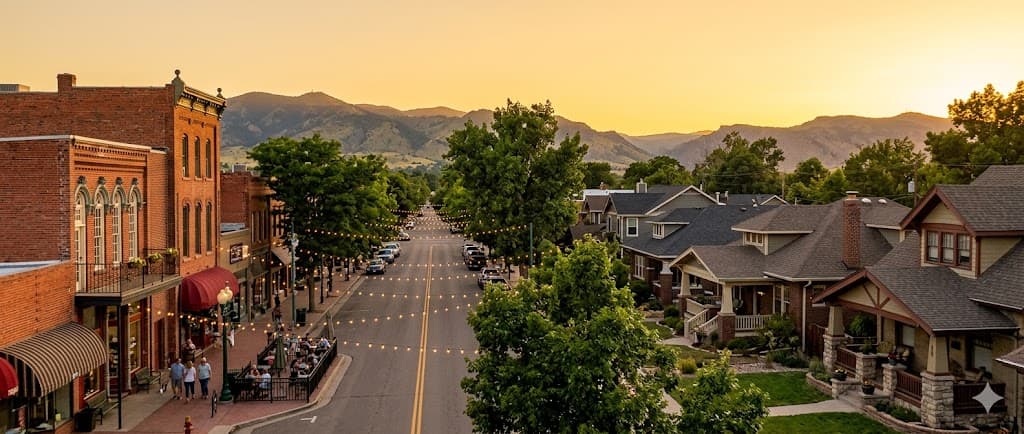
Saturday morning in Alta Vista, and the woman at the kitchen window is watching the young couple next door carry pieces of their kitchen out to a dumpster — the same cabinets, the same layout, the same 1959 footprint as hers, going out the door in armloads. They paid for that house what she and her husband would have considered a fortune beyond imagining. They're putting in another fortune she can see from here. Her own kitchen still has the original hardware, and her coffee is getting cold while she does the arithmetic every long-tenure Arvada homeowner eventually does: if theirs is worth that, then mine —
That arithmetic is where most of my Arvada conversations begin. Not with a crisis, not with a brochure — with a homeowner who bought a modest house in a modest neighborhood half a century ago and has slowly realized the neighborhood stopped being modest without asking anyone's permission. Alta Vista, Scenic Heights, Club Crest, Far Horizons: these are some of the highest owner-occupancy, longest-tenure blocks in the metro, full of people whose net worth migrated into their house while they were busy living in it.
What Arvada is, in program terms, is a standard-HECM city almost wall to wall. Home values across every neighborhood I work in here sit inside what the federal program covers — this is not Vail, and it isn't trying to be. That's a feature. It means the simpler, government-insured product with the mandatory counseling and the non-recourse protection is the tool that fits, and nobody needs to be upsold into anything more elaborate. The house-by-house exceptions live mostly along the fairways of West Woods Ranch, where the largest golf-frontage properties occasionally value past the standard program's reach and open the jumbo proprietary door — which matters at 55 through 61, when that door is the only one open.
On ages, the license I hold requires precision and the marketing around this product rarely supplies it, so: 62 is the standard HECM's federal floor, full stop. The jumbo proprietary programs through my lending network start at 55, for homes whose value exceeds the standard program's range. In Arvada, that combination is uncommon — real, but uncommon — and I'll tell a 58-year-old in Club Crest the truth, which is that their better move is spending the next few years getting ready, not forcing a product that doesn't fit their house.
The couple in the story above — the ones with the dumpster — are also part of the full picture, because their arrival changes the older owner's costs, not just her home's value. Reassessments follow the renovations next door. Insurance follows the hail, and the roofs in these neighborhoods are aging in formation, whole blocks at a time. The squeeze on a fixed income here is rarely dramatic; it's a few hundred dollars of annual creep across three or four line items, compounding against a pension that doesn't. The house can carry some of that. Deciding whether it should is what the conversation is for.
Who shouldn't do this in Arvada: anyone with a move already forming — to the kids, to a smaller place, to somewhere warmer — inside the next few years, because the costs need staying power to justify themselves. Anyone whose real need is small enough that simpler tools cover it. And anyone unwilling to have the family conversation first, because a reverse mortgage that arrives as a surprise in the estate reads as a betrayal even when it was a good decision. I've declined to write loans over that last one. The paperwork can wait until that conversation happens.
I serve Colorado statewide from my base in Edwards, and Arvada holds a particular place in the work: a city where the equity was earned by staying, where the standard program fits the actual housing stock, and where my job is mostly translation — helping the woman at the kitchen window turn the arithmetic she's already done into a plan that keeps her exactly where she is.