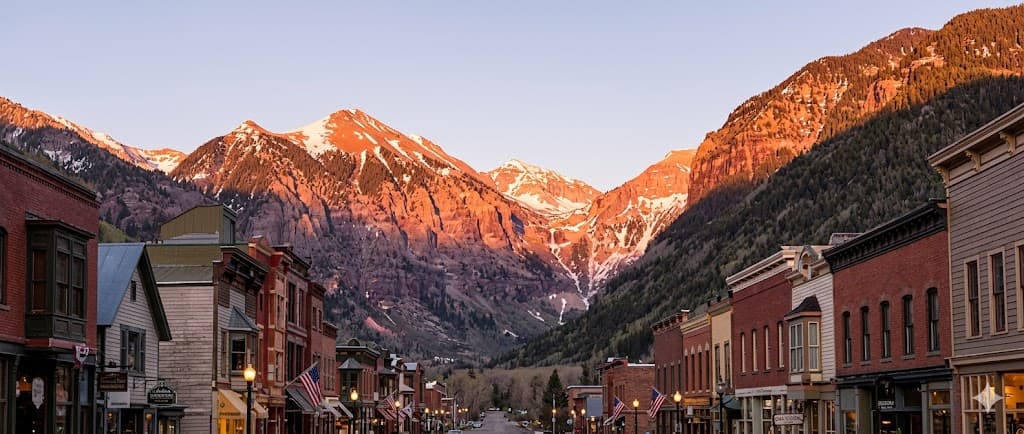
Telluride · San Miguel County · Median Home Value $2,200,000 · Population 2,607

Telluride Home Equity — $1,100,000 in Average Tappable Equity

Telluride homeowners are sitting on record equity. Access $50K to $750K through a HELOC funded in as few as 5 days — without touching the low mortgage rate you locked in years ago. One application. I handle the placement. You get the right answer.

See Your Maximum HELOC

Slide to your home’s current value for an instant estimate.

$300K$2M+
$2,000,000

Maximum HELOC Available

$750,000

Program maximum reached

Based on 85% CLTV · Program maximum: $750,000

Get Your Real Equity Number →

No credit impact · 60-second full estimate

🔒No Credit Impact to Check Options640 Minimum Credit Score🏠Up to 85% CLTVFunded as Few as 5 Days💰No Cash Due at Closing🔄Your First Mortgage Rate Stays Untouched
$2,200,000
Median Home Value
Telluride 2026
$1,100,000
Average Equity
Estimated tappable
2,607
Population
San Miguel County
5 Days
Funding Speed
Through CO Home Equity
Real Telluride Homeowners

Telluride Homeowners Who Put Their Equity to Work

Before you keep reading, look at the Telluride homeowners below. Which scenario sounds closest to where you are right now? Whichever one resonates — that’s the conversation worth having.

Telluride Historic District Victorian HARC-compliant renovation funded by HELOC
Telluride Historic District

🏛️HARC-compliant Victorian renovation targeting festival-week pricing

Elizabeth bought a 3BR Victorian in the Telluride Historic District for $2.4M in 2018 — now worth $4.1M. She used a $400K HELOC for a full historic-sensitive restoration, working within Telluride Historic and Architectural Review Commission (HARC) guidelines to preserve the 1890s exterior while completely modernizing the interior.

The restoration added an estimated $900K in appraised value. Her property now lists during Telluride Film Festival, Bluegrass, and Blues & Brews at $2,800/night — roughly 4x the shoulder-season rate — and her 3.125% first mortgage stayed exactly where it was.

HELOC: $400KValue Added: +$900KFirst Rate Kept: 3.125%
Mountain Village ski condo and Ridgway rental property investment strategy
Mountain Village Core

🎿Ski-in/ski-out condo renovation plus a second rental in Ridgway

Marcus and Patricia bought a 3BR ski-in/ski-out Mountain Village condo for $1.7M in 2016, now worth $2.8M. They used a $450K HELOC in two tranches — $250K for a mountain-modern renovation targeting 5-star festival-week nightly rates, and $200K as a down payment on a long-term rental property in Ridgway, 45 minutes down-valley.

The Mountain Village renovation moved peak-week rates from $950 to $1,450/night. The Ridgway property generates $2,400/month in long-term rental income from the San Miguel County workforce. Their 2.875% first mortgage stayed untouched, and their equity is now working in two San Miguel region markets.

HELOC: $450KPeak Rate: +53%Monthly Rent: $2,400
Aldasoro Ranch HELOC funds private equity allocation
Aldasoro Ranch

🚀Private-equity allocation from box-canyon equity

James is an investor who owns a 5BR estate on Aldasoro Ranch, purchased for $3.8M in 2019 and now valued at $6.2M. He used a $600K HELOC to fund a private-equity allocation with a long-standing fund manager plus to seed a small operating business run by his adult children.

The HELOC interest cost was a fraction of what liquidating portions of his public-equity portfolio would have cost in capital gains — and his 2.99% first mortgage on the Aldasoro home stayed in place. The HELOC sits behind it as a flexible second lien for the next capital call.

HELOC: $600KUse: PE + BusinessFirst Rate Kept: 2.99%
Dallas-based second-home owner funds Telluride HELOC online
Ski Ranches

💼Second-home liquidity for a Dallas owner — no flights, no branch

Andrea lives primarily in Dallas and spends roughly seven weeks a year at her Ski Ranches second home, purchased for $1.6M in 2017 and now valued at $2.3M. She used a $350K HELOC to fund education expenses for two children and cover a phased interior refresh of the Telluride property.

The entire process — application, document signing, funding — happened online from her Dallas home office. No flights, no branch visits, no coordination headaches. Her 3.25% primary mortgage on the Ski Ranches home stayed exactly where it was, and the HELOC sat behind it as a flexible second lien for the next draw.

HELOC: $350KFunded: OnlineFirst Rate Kept: 3.25%

These are illustrative examples based on real Telluride funding scenarios.

Bobby Friel — CO Home Equity Founder, NMLS# 332039

“Most Telluride homeowners have a number in their head — the renovation, the investment property, the debt they’d eliminate if they could. My job is to turn that number into a funded HELOC in 5 days. I already know which lender prices your Telluride situation best. One application. One conversation. One right answer.”

— Bobby Friel, CO Home Equity · Founder · NMLS# 332039

Telluride Homeowner Equity

$1,100,000+

The average Telluride homeowner’s tappable equity.The question isn’t whether you have it — it’s what you’re going to do with it.

Neighborhood Guide

Telluride Neighborhood Equity Map — Where Your Home Fits

Telluride’s neighborhoods carry distinct equity profiles and HELOC strategies. Find where your home fits below.

NeighborhoodMedian ValueTypical Equity RangeTop HELOC UseKey
Telluride Historic District$3,400,000$1.9M+Historic-sensitive renovation
West End / Aldasoro Ranch$4,200,000$2.3MEstate renovation
Mountain Village Core$2,400,000$1.2MSki-in/out STR upgrade
Mountain Village (Double Cabin, Cortina)$3,800,000$2M+Luxury renovation
Ski Ranches$1,900,000$950KPrimary residence renovation
Hastings Mesa / Last Dollar Rd$1,600,000$780KWildfire mitigation
Lawson Hill$1,200,000$580KDown-valley investment

Telluride Neighborhoods — What Your Equity Looks Like by Street

When you think about your home, you probably don’t think in metro-wide averages — you think in terms of your block, your street, your neighbors’ recent sales. Here’s the neighborhood-level picture.

Telluride Historic District

$2.5M–$6M

The Telluride Historic District sits at the floor of the box canyon — Victorian miners' cottages, brick storefronts along Colorado Avenue, and the entire town listed on the National Register of Historic Places. Walking distance to the gondola, the free Galloping Goose bus, and every bar and restaurant on Main Street. The single most iconic residential address in any Colorado ski town.

Historic District owners typically hold $1.5M to $3.5M in tappable equity. HELOC draws here disproportionately fund historic-sensitive renovations under the Telluride Historic and Architectural Review Commission (HARC), wine cellar builds, and full interior modernizations that keep the 1880s exterior intact while delivering 2026 luxury inside. Festival-week rental income on HARC-compliant renovated properties is among the strongest in Colorado.

Mountain Village Core

$1.8M–$4.5M

Mountain Village Core is the ski-resort village atop Coonskin Ridge — connected to Telluride proper by a free gondola that runs year-round. Purpose-built 1990s and 2000s resort architecture, higher density condo stock, and a ski-in/ski-out inventory that Telluride proper largely lacks. The Mountain Village municipality permits STR more broadly than the historic district, driving most of Telluride's rental activity.

Mountain Village Core owners often use HELOC capital for renovation-for-rental strategies targeting ski-week and festival-week nightly rate bands. A $200K-$350K HELOC-funded refresh in a 2BR-3BR Mountain Village condo typically moves peak-week nightly rates from $900 to $1,400+, generating $50K-$80K in incremental annual rental revenue on well-located ski-in/ski-out units.

West End / Aldasoro Ranch

$3M–$8M+

West End Telluride and Aldasoro Ranch sit on the western plateau above the box canyon — large-lot estate properties, custom architecture, panoramic views of the San Juans, and meaningful privacy that the historic district cannot offer. Aldasoro Ranch in particular is a planned community with acreage, trails, and some of Telluride's largest homes.

West End and Aldasoro owners carry the largest equity positions in the Telluride market, often $2M to $5M+ in tappable equity. HELOC draws here fund estate-scale renovations, portfolio diversification moves, divorce equity buyouts, and wildfire mitigation required to maintain specialty high-value insurance coverage. The combination of acreage and San Juan views makes these properties exceptional collateral for lenders who understand the market.

Mountain Village Upper (Double Cabin, Cortina)

$2.8M–$6M

Upper Mountain Village — the Double Cabin and Cortina neighborhoods — sits above the village core along the ski runs, with ski-in/ski-out single-family homes and custom estates. Larger lots than the village core, mountain-modern architecture, and the highest concentration of trophy-level ski properties in the Telluride market.

For HELOC purposes, Upper Mountain Village is where the luxury-renovation math runs strongest. Owners have equity positions in the $1.5M-$3M+ range and use HELOC capital for mountain-modern interior refreshes, steam rooms, dual primary suites, and outdoor living build-outs. These renovations significantly move appraised value and, in the STR-friendly Mountain Village municipality, unlock festival-week nightly rates that pay back HELOC carrying costs quickly.

Ski Ranches

$1.5M–$3M

Ski Ranches sits at the base of Telluride's Lift 7 (Prospect) and along the Sunshine Mesa — a quieter, more local neighborhood with larger lots, strong trees, and a blend of original 1970s-1990s homes alongside newer custom builds. Strong primary-residence presence, including families working in the Telluride economy and retirees drawn to San Juan living without the ski-village density.

For HELOC purposes, Ski Ranches is the classic primary-residence play. Many owners have sub-4% first mortgages locked in during 2020-2022 and substantial equity from San Miguel County's 40-60% appreciation since. HELOC draws fund kitchen and bath renovations, detached guest structures, and wildfire mitigation — Ski Ranches carries meaningful WUI exposure along its upper edges.

Lawson Hill

$900K–$1.6M

Lawson Hill is the workforce housing and primary-residence corridor six miles west of Telluride proper — the most affordable entry point into the Telluride school district and San Miguel County. Mix of single-family homes, townhomes, and deed-restricted workforce units, with strong year-round community presence among the professionals who actually keep Telluride operating.

Lawson Hill owners typically use HELOC capital as a financial bridge — down payments on investment properties further down valley in Norwood or Placerville, renovations that meaningfully move Lawson Hill appraised value, or business launches in the Telluride Valley service economy. Equity positions are more modest but HELOC use cases are equally productive.

Put Your Equity to Work

Telluride-Specific Equity Strategies

Telluride’s market dynamics create equity opportunities worth considering. Here are the strategies Telluride homeowners are using most in 2026.

Festival-Week Renovation for Premium STR Rates

Telluride's festival calendar — Film Festival, Bluegrass, Blues & Brews, Jazz, plus peak ski weeks — drives nightly rates of $800 to $3,500+ on well-appointed properties. A HELOC-funded renovation targeting the amenities festival attendees pay for — premium kitchens, steam showers, outdoor living, ski storage, upgraded bedding — typically moves annual rental revenue 30-50% within one season.

The math is cleanest in Mountain Village where STR licensing is more permissive than Telluride proper. A $200K-$350K HELOC-funded refresh in a 3BR Mountain Village condo regularly generates $50K-$80K in incremental annual rental revenue on well-located ski-in/ski-out units. What would your property earn if it was built for the festival audience it already hosts?

HARC-Compliant Historic Renovation

Telluride Historic and Architectural Review Commission (HARC) guidelines control renovations on the 1880s Victorian stock in the historic district. HARC review adds $30K-$150K in consultant, permit, and premium-material costs to a typical historic renovation — plus months of review timeline. A HELOC funds the premium without touching a low first-mortgage rate.

Done right, HARC-compliant restorations produce the most valuable product in the Telluride market: a historically authentic exterior wrapping a fully modernized interior that appraises exceptionally and rents at the top of the festival-week band. The HELOC structure is especially well suited here because the project timeline is unpredictable — draws happen as the work progresses, and the line remains available for cost overruns.

Wildfire Mitigation & Insurance Preservation

San Miguel County carries meaningful wildfire WUI exposure, particularly on Hastings Mesa, Last Dollar Road, Ski Ranches upper edges, and the Mountain Village upper neighborhoods. Several major carriers have tightened policy issuance in these areas. Homeowners facing non-renewal or premium spikes use HELOC funds to complete defensible-space work, Class A roof replacements, ember-resistant vents, and perimeter water systems — then requalify with specialty high-value carriers like Chubb, PURE, AIG Private Client, and Cincinnati.

Because every HELOC lender requires active homeowners insurance before funding, preserving insurability is itself a financial asset. HELOC-funded mitigation protects both the property and your ability to keep financing it. Telluride Fire Protection District standards are the baseline, and hitting or exceeding them is the difference between keeping specialty coverage and the Colorado FAIR Plan.

Portfolio Diversification Without Selling

Telluride homeowners often have a disproportionate share of net worth parked in a single, illiquid asset. When your home represents $2M to $8M of concentrated real estate wealth, a HELOC unlocks liquidity without forcing a sale in a box-canyon market where off-season listings can sit for quarters.

Telluride owners use HELOC proceeds to diversify into alternative investments, private equity, venture capital, or simply rebalance toward liquid assets. The HELOC interest cost is almost always less than the opportunity cost of leaving capital locked behind the walls of a single property — and the tax, friction, and optics of selling a Telluride home rarely pencil relative to a clean HELOC draw.

Divorce Equity Buyout on $3M+ Marital Homes

San Miguel County's high-value properties make divorce equity buyouts one of the most complex transactions in Colorado real estate. When a marital home is worth $3M to $8M, one spouse often needs to buy the other out of their share — a sum running $1M to $4M. A HELOC provides immediate liquidity for the buyout without forcing a sale in a market where off-season box-canyon listings can sit for quarters and produce depressed-sale pricing.

I work closely with Telluride-area family law attorneys to structure these transactions so HELOC terms align with the divorce decree timeline — the buyout closes on the court's schedule, not a traditional 45-day bank timeline.

Ready to Put Your Telluride Equity to Work?

Checking your options does not affect your credit score. No obligation. Personalized to your address.

What You Should Know

Questions Worth Asking Before You Tap Your Telluride Equity

🔒 Did you know you can keep your low first mortgage rate AND access your Telluride equity?

Most Telluride homeowners think they have to choose — refinance the entire mortgage or do nothing at all. The HELOC sits behind your first mortgage as a separate line of credit. Your 3.1%, 3.5%, or 3.9% rate stays exactly where it is. The HELOC is independent. One product gives you cash access. The other preserves your rate. You don’t choose — you get both.

What’s been keeping you from acting on the Telluride equity you already have?

Every month you wait has a real cost. The credit card interest accumulates. The renovation gets more expensive as material prices climb. The investment opportunity passes to someone else. HELOC rates move with the Fed automatically — when rates drop, your rate drops too without refinancing. You don’t have to wait for the perfect moment. You have to start before the cost of waiting exceeds the cost of acting.

📊 Want to know exactly what you can afford before you commit to anything?

A HELOC is a second lien with a predictable monthly payment. I run the full affordability analysis BEFORE you commit, not after. If the math doesn’t work for your Telluride family, I’ll tell you and we won’t move forward. I’d rather walk away from a transaction than put a Telluride family in a payment they can’t actually afford. Your numbers, your decision, no pressure.

💰 What if no cash was due at closing?

On a HELOC, origination is built into the loan, not charged upfront — nothing due out of pocket at the closing table. Compare that to a cash-out refinance at $8,000 to $15,000 in closing costs paid at the table on a Telluride property. The math isn’t even close. Plus there’s no escrow, no reserves, and no prepayment penalties. You can pay it down faster and save on interest whenever you want.

🏠 When was the last time you actually checked what your Telluride home is worth?

Most Telluride homeowners haven’t run the numbers in 2 to 3 years. The median Telluride home has gained meaningful value during that window. If you bought before 2023, you almost certainly have more accessible equity than you realize. Our 60-second calculator tells you instantly — no obligation, no credit pull, just the real number.

🎯 When you think about the next 12 months, what’s the one decision that would unlock everything else?

For some Telluride homeowners, it’s the renovation that adds real resale value. For others, it’s the investment property down payment that launches a rental portfolio. For others, it’s the debt elimination that frees up thousands in monthly cash flow. Whatever it is for you — that’s the conversation worth having before another month passes.

Real Numbers

What a Telluride HELOC Actually Costs — and What It Could Fund

When you think about a HELOC, you probably focus on what it costs. But the more important question is: what could it fund? Here are real Telluride HELOC ranges and what they typically unlock for borrowers in your situation.

HELOC AmountEstimated Monthly PaymentClosing CostsWhat This Could FundKey
$50,000~$350–$450No cash at closingDebt consolidation, Telluride business capital, tuition
$100,000~$700–$900No cash at closingLight renovations, Telluride investment property down payment
$150,000~$1,050–$1,350No cash at closingKitchen upgrade, Telluride ADU partial funding, mountain home down payment
$200,000~$1,400–$1,800No cash at closingMajor Telluride remodel, full ADU build, business launch capital
$300,000~$2,100–$2,700No cash at closingMulti-property Telluride strategy, complete debt elimination
$500,000~$3,500–$4,500No cash at closingTelluride + mountain portfolio, luxury renovation build-out

Estimated monthly payments shown are for illustration purposes only based on current market rate ranges. Your actual rate and payment depend on credit score, equity position, draw amount, and loan term. Autopay discount of 0.25% is available. No prepayment penalties — pay it down faster and save on interest whenever you want.

Looking at this table, what’s the number that catches your eye? More importantly — what’s the Telluride use case next to it that you’ve been thinking about for a while?

Bobby Friel — CO Home Equity Founder

“The numbers on the table above matter less than what you’d actually do with the money. When you picture your life 12 months from now with the right HELOC in place — what’s different?”

— Bobby Friel, CO Home Equity · Founder · NMLS# 332039

Our Process

How Bobby Builds Your Telluride Equity Strategy

How would it feel to know exactly what your Telluride equity options look like before you ever talked to a lender? Here’s how I work.

🏠
01

Tell Me Your Telluride Situation

Fill out a short form — your Telluride property, your mortgage, and what you’re trying to accomplish. No credit impact. I read every submission personally.

📊
02

I Pull Your Numbers

Before we ever talk, I’ve already run your Telluride property data, your equity position, and your CLTV at different scenarios. I come to our conversation with answers, not questions.

🗺️
03

We Build Your Strategy Together

A 15–30 minute video call where I walk you through your real options — not a sales pitch, a financial plan. What you qualify for, what it costs, and whether a HELOC is even the right move for your Telluride situation. If it’s not, I’ll tell you.

🏦
04

I Match You With the Right Lender

One application. I match your Telluride profile to the lender that prices your specific situation best — CLTV, terms, funding speed. You never call a bank. You never need to call a bank — I’ve already done that work.

05

Funded — As Few as 5 Days

E-notary signing from your Telluride kitchen table. Funds deposited directly. Most borrowers are funded within 5 business days. Your existing mortgage rate stays untouched.

Checking your options does not affect your credit score.

Avoid These Pitfalls

5 HELOC Mistakes Telluride Homeowners Make

I see these errors repeatedly. Each one costs Telluride homeowners real money — and every one is avoidable.

1

Using a national lender without San Miguel County knowledge

Resort markets like Telluride require lenders who understand $700-$1,500/sqft construction costs, HARC review, Mountain Village vs. Telluride proper STR distinctions, and the seasonality of San Miguel County appraisals. National lenders often undervalue Telluride properties by $300K to $900K — applying generic underwriting models that don't fit this market.

That undervaluation translates directly into a smaller HELOC, or worse, a declined file. I route Telluride applications to lenders whose appraisers know the historic district, Mountain Village core, Aldasoro Ranch, and Ski Ranches as distinct submarkets — not interchangeable comps.

2

Confusing Mountain Village and Telluride proper STR rules

Telluride proper and Mountain Village are legally distinct municipalities with different STR licensing, zoning, and enforcement rules. Telluride proper has tightened STR caps and a historic preservation overlay; Mountain Village generally permits STR more broadly.

Homeowners planning HELOC-funded renovation-for-rental strategies need to verify their property's specific municipality, zoning, and licensing status before investing. A $250K renovation optimized for nightly rentals in a Telluride proper zone that caps short-term activity underperforms projections by 50%+.

3

Underinsuring at $700–$1,500/sqft replacement costs

Many Telluride homeowners carry insurance based on original purchase-date valuations. Rebuilding a 4,000-sqft Telluride home at current costs runs $2.8M to $6M — often well above what legacy policies cover. Every HELOC lender requires 100% replacement cost coverage before funding, and being underinsured can delay or outright block your close.

Review replacement cost with a specialty carrier — Chubb, PURE, AIG Private Client, Cincinnati — who understand box-canyon construction and San Miguel wildfire WUI before you apply, not after. Snow-load coverage and avalanche-zone endorsements should also be explicitly confirmed on the policy.

4

Refinancing a sub-4% first mortgage to access equity

Telluride homeowners with sub-4% rates locked in during 2020-2022 would lose tens of thousands annually by refinancing at today's jumbo rates. On a $3M property with a $1.4M first mortgage, the rate difference can cost $35K to $70K+ per year — compounded across the remaining loan term.

A HELOC preserves your first-mortgage rate entirely and sits behind it as a separate second lien. This is the right structure for accessing San Miguel County equity without resetting a loan you'll never find at that rate again.

5

Trusting Zestimate on a $3M+ Telluride property

Zestimate and public AVMs are structurally unreliable on Telluride properties. Thin comparable sales data, the box-canyon vs. Mountain Village distinction, and the sheer uniqueness of individual estates mean automated valuations can miss by $500K to $2M in either direction.

Lenders who rely on AVMs for Telluride HELOC decisions generate wrong answers. A proper San Miguel County appraisal by an appraiser who actually works this market is non-negotiable — and it often unlocks substantially more HELOC capacity than the online estimate suggests.

Compare Your Options

HELOC vs. Home Equity Loan vs. Cash-Out Refinance — Telluride Edition

Three ways to access your Telluride home equity. For most Telluride homeowners who locked in low rates between 2020 and 2022, the HELOC wins decisively.

Feature HELOCRecommended🏠 Home Equity Loan🔄 Cash-Out Refi
💵 How funds are receivedRevolving credit line — draw as neededOne-time lump sumOne-time lump sum
🔒 Existing mortgage impactNone — stays completely untouchedNone — stays untouchedReplaced entirely at new (higher) rate
📈 Interest rate typeVariable (or fixed-rate option)Fixed rateFixed rate (on entire balance)
⚡ Funding speed5 days (CO Home Equity)14–30 days30–45 days
🔄 FlexibilityHigh — draw, repay, re-borrowLow — one-time disbursement onlyLow — one-time disbursement only
💰 Cash due at closingNone — origination built into the loanModerate (2–5%)2–5% of entire loan amount paid at the table
💳 Pay interest onOnly the amount you drawFull loan balance from day oneEntire new mortgage balance
🎯 Best Telluride use caseRenovations, flexible capital, ongoing needsOne-time, known Telluride expenseOnly if upgrading from a high rate

For Telluride homeowners who secured mortgage rates below 4% between 2020 and 2022, a HELOC preserves that rate advantage while unlocking flexible equity access. A cash-out refinance would replace your low rate with today’s higher rates across your entire loan balance — costing thousands more per year.

What Most Telluride Lenders Don’t Tell You

Every Fed rate cut drops your HELOC rate automatically.

No refinance. No reapply. No waiting. With 2–3 cuts expected in 2026, what would it mean to lock in access today and watch your rate improve on its own?

HELOC Education

How a Telluride HELOC Actually Works

Most Telluride homeowners understand they have equity. Most don’t understand how a HELOC actually works mechanically — and that misunderstanding is why so many leave money on the table or make the wrong financial choice. Let me walk you through it the way I would on a phone call.

When you draw from a HELOC, you’re not borrowing the entire credit limit at once. You’re borrowing exactly what you need, when you need it. Take $50,000 today for a kitchen remodel. Leave the remaining $150,000 sitting available for the next opportunity. Your interest is only charged on what you’ve actually drawn. That’s why a HELOC is fundamentally different from a fixed home equity loan or a cash-out refinance — both of which deliver a lump sum and start charging interest on the entire amount immediately. Which model fits your actual cash needs better?

Your first mortgage stays completely untouched. The HELOC is a second lien — a separate loan that sits behind your existing mortgage. If you locked in 2.75%, 3.25%, or 3.9% during the 2020 to 2022 window, that rate doesn’t change. Same payment. Same term. The HELOC doesn’t touch it. How important is preserving that rate to your overall Telluride financial picture?

Draw Periods by Term Length

10-year HELOC

3-year draw

7-year repayment

15-year HELOC

4-year draw

11-year repayment

20-year HELOC

4-year draw

16-year repayment

30-year HELOC

5-year draw

25-year repayment

Variable rate tied to prime plus margin. Most HELOC rates are variable, moving with the prime rate. When the Fed cuts rates, your payment drops automatically. No refinancing. No reapplying. With 2 to 3 Fed cuts expected in 2026, variable rates are working in Telluride borrowers’ favor right now. Have you considered what your monthly payment looks like if rates drop another 0.50% over the next 12 months?

100% initial draw available. You can draw your full credit limit at closing if needed. Additional draws have a $500 minimum up to your total credit limit. No prepayment penalties — pay it down faster and save on interest. No escrows or reserves required.

Not sure how much equity you have? Our guide on how to calculate your Colorado home equity walks through the math step by step. For a deeper look at HELOC mechanics, see how a HELOC works.

Qualification Guide

Telluride HELOC Requirements — What You Need to Qualify

Before you wonder if you’d qualify, here’s the straight answer on what it takes. These are the actual numbers — and most Telluride homeowners qualify more easily than they think.

Credit Score

640 minimum for primary residences through our lending network. 680 minimum for second homes and investment properties.

Best rates are reserved for 740+ borrowers. If you’re at 620, there are specific steps that can get you to 640 in 30–45 days. I’ll show you exactly what to do.

🏠

Loan-to-Value (CLTV)

Up to 85% CLTV on qualified primary residences. Your combined first mortgage + HELOC cannot exceed 85% of your home’s value. On a $2,200,000 Telluride home, that math can unlock six figures of accessible equity. HELOCs over $400K require 760+ FICO and 75% max CLTV.

📊

Debt-to-Income (DTI)

Up to 50% DTI — more generous than most Telluride banks, which cap at 43%. Your total monthly debt payments including the new HELOC must stay below 50% of gross monthly income. Child support and alimony count as qualifying income.

📄

Additional Requirements

Proof of income (W-2s, tax returns, pay stubs). Active homeowners insurance with 100% replacement cost. No 30-day lates in previous 12 months. 5-year seasoning since BK, foreclosure, short sale, or deed-in-lieu. Property types: SFR, PUD, townhomes, duplexes, condos, 3–4 unit.

Equity Risk Intelligence

Telluride Neighborhood Alerts — Protect Your Equity Before You Access It

Smart equity access starts with knowing the risks specific to your Telluride neighborhood. Here’s what to watch for.

Hastings Mesa / Last Dollar Rd / Ski Ranches Upper — Wildland-Urban Interface

Properties on Hastings Mesa, Last Dollar Road, and the upper edges of Ski Ranches sit in San Miguel County's highest wildfire risk zones. Several major carriers have restricted new policy issuance in these areas, and existing homeowners face premium hikes of 20-50% or outright non-renewal.

Telluride Fire Protection District defensible-space standards are the baseline. Hitting or exceeding them is the difference between keeping specialty coverage and landing in the Colorado FAIR Plan. Secure adequate insurance before applying for a HELOC — lender requirements are non-negotiable and a lapse blocks funding.

Telluride Historic District — HARC Review Costs

Telluride's Historic and Architectural Review Commission (HARC) process can add $50K to $200K to renovation budgets, plus several months of review timeline. Materials, fenestration details, and exterior changes require HARC approval before permits issue.

If you're planning HELOC-funded renovations on a historic district property, build HARC costs and approval timelines into your draw schedule before breaking ground. Non-compliant work triggers rework costs and enforcement delays that compound quickly on a $400K-plus renovation.

Box Canyon Avalanche & Access Risk

Telluride proper sits at the floor of a box canyon with historical avalanche paths, and State Route 145 from Placerville can close during heavy snow. This affects both insurance underwriting on specific parcels and access-dependent STR activity during major storm cycles.

Confirm avalanche-zone designations on your parcel before applying for a HELOC — lenders and insurers both price this risk explicitly, and parcels in formal avalanche paths require specialty coverage that not all carriers write.

Telluride Proper STR License Caps

The Town of Telluride has implemented STR license caps and neighborhood-specific restrictions to manage housing pressure on the workforce. Caps can affect rental income projections and, by extension, HELOC-funded renovation ROI.

Before using HELOC capital for a renovation-for-rental strategy in Telluride proper, verify your property's current STR license status, transferability, and zoning. Mountain Village STR rules are more permissive but not static — build a margin of safety into any rental proforma.

Telluride homeowners insurance review — protect your home and equity
Protect Your Telluride Home

Your HELOC Requires Insurance — When Was the Last Time You Actually Compared?

When was the last time you actually compared your homeowners insurance against current Telluride market rates? Your HELOC lender will require proof of active homeowners insurance with 100% replacement cost coverage before funding. Most Telluride homeowners haven’t reviewed their policy since they bought the home — and given how much Telluride home values have surged, most are either underinsured or overpaying significantly.

Colorado homeowners face real exposure: hail in the Front Range, wildfire in the foothills and mountain zones, severe wind across the plains. A single storm can cause $10,000 to $30,000 in roof and exterior damage to a typical home.

Through our partnership with Direct Insurance Services, we compare 30+ carriers to find Telluride homeowners the right coverage at the best possible rate — with specific expertise in Colorado-specific risk factors and high-value home endorsements.

Colorado-specific coverage for Telluride exposures
Replacement cost updated to reflect 2026 home values
Compare 30+ carriers in one free review
Removes insurance delays from your HELOC funding timeline
Average savings: $400–$800/year on premiums
Common Questions

Telluride HELOC — Frequently Asked Questions

Everything Telluride homeowners need to know about accessing their home equity, answered in plain language.

Telluride homeowners with a primary-residence $1.5M-$5M property typically qualify for the full $750K HELOC through our partner network. Your first mortgage stays completely untouched — the HELOC is a separate second lien. With Telluride's $2.2M median home value and average equity north of $1.1M, most owners have more tappable equity than the $750K cap covers. For ultra-high-net-worth homeowners who need $1M to $3M+ in liquidity, I can discuss specialty jumbo HELOC programs and portfolio lending that sit behind accurate San Miguel County appraisals.
San Miguel County is a designated high-cost area with a 2026 conforming loan limit of $1,149,825 — higher than most Colorado counties. For first mortgages at or below that amount, conforming HELOC pricing applies. Above that threshold, your loan enters jumbo territory, affecting both the first mortgage and any HELOC stacked behind it. On a $3M Telluride home with a $1.4M first mortgage, your HELOC gets priced and underwritten against jumbo guidelines — and I match you to lenders who specifically work the San Miguel jumbo HELOC market rather than applying a generic model.
Telluride's festival calendar is among the most lucrative STR windows in Colorado. Telluride Film Festival (Labor Day weekend), Bluegrass Festival (June), Blues & Brews (September), Jazz Festival (August), and peak ski weeks (Christmas-New Year, MLK, Presidents) drive nightly rates of $800 to $3,500+ on well-appointed properties. Off-peak summer runs $250-$600 and shoulder seasons $150-$400. A HELOC-funded renovation targeting festival-week premium pricing and post-gondola easy access typically moves annual rental revenue 30-50% within one season.
Yes. The majority of Telluride residences are second homes, and my online process is built for exactly this situation. You apply from Dallas, Los Angeles, New York, Chicago, or wherever you primarily live. Second-home HELOCs typically require 720+ FICO and cap at 70-80% CLTV versus 85% on primaries. Document signing is e-notary, the appraisal is handled by San Miguel County-experienced appraisers who know the box canyon versus Mountain Village distinction, and funding hits in 5-10 business days regardless of where you live.
Your HELOC lender requires proof of active homeowners insurance with 100% replacement cost coverage before funding. Telluride properties sit in Telluride Fire Protection District territory with meaningful wildfire WUI exposure, plus heavy snow-load requirements. Standard HO-3 policies often fall short on replacement cost for $700-$1,500/sqft Telluride construction. Chubb, PURE, AIG Private Client, Cincinnati, and Travelers write this market well. Through Direct Insurance Services I compare carriers to find the right fit — and I sequence insurance ahead of your HELOC close so coverage doesn't delay funding.
Telluride proper (the box canyon historic town) and Mountain Village (the ski-resort village atop Coonskin Ridge, connected by the free gondola) are legally distinct municipalities with different STR rules, zoning, and appraisal dynamics. Mountain Village generally permits STR more broadly and has a higher share of resort condos; Telluride proper has tighter STR licensing caps and a historic preservation overlay that affects renovation permits. Both sit in San Miguel County and share the $1,149,825 conforming limit — but HELOC underwriting treats them as distinct submarkets and the appraisal should be handled accordingly.
Traditional San Miguel County banks quote 30-45 days. Through my network, most Telluride HELOCs fund in 5-10 business days depending on appraisal timing and title work. The 100% online process eliminates branch visits — critical for the majority of Telluride owners living primarily in Texas, California, New York, and Illinois. Checking your options uses a soft credit pull with no score impact. I read every application personally and come to the conversation with numbers already run against your specific San Miguel County property.
Per IRS rules, HELOC interest is deductible only when funds are used to buy, build, or substantially improve the home securing the loan. Renovations, additions, and significant property improvements on your Telluride home typically qualify. Using HELOC proceeds for portfolio diversification, private equity allocations, divorce equity buyouts, or investment property down payments does not qualify — regardless of how sound the use case is. Colorado imposes no additional state-level HELOC interest deduction. Always confirm specifics with your CPA before assuming deductibility on any given draw.

Still have questions about Telluride HELOCs? I’m here to help.

Market Deep Dive

Telluride Real Estate Market Overview

Telluride’s real estate market is shaped by one of the most unusual geographies in Colorado — a historic mining town wedged into the floor of a 13,000-foot box canyon, connected by a free gondola to the ski resort village atop Coonskin Ridge. The box-canyon geometry means no sprawl, no suburban rings, and a permanently constrained supply of buildable lots. Since 2019, Telluride and Mountain Village values have appreciated 45-65% depending on submarket, with the historic district and Aldasoro Ranch leading the way.

For HELOC borrowers, this appreciation has created extraordinary equity positions. A homeowner who purchased a $2M Mountain Village condo in 2019 may now own an asset worth $3M to $3.5M, with $1.3M to $1.7M in tappable equity sitting behind a sub-4% first mortgage. The question isn’t whether the equity exists — it’s what to do with it. And the answer almost never involves refinancing a rate you’ll never see again.

An estimated 55-70% of Telluride transactions involve second-home buyers, and a significant share close with all cash or involve jumbo financing above San Miguel County’s $1,149,825 conforming limit. Major employers in San Miguel County include Telluride Ski & Golf, the Telluride Medical Center, San Miguel County government, and the Telluride R-1 school district — but the real economic engine is second-home ownership and the services, construction, and hospitality economy that supports it.

Telluride’s festival calendar is structurally different from other ski resorts. Telluride Film Festival (Labor Day weekend), Bluegrass Festival (June), Blues & Brews (September), and Jazz Festival (August) each drive 3-5 days of ultra-premium rental demand. Combined with peak ski weeks (Christmas-New Year, MLK, Presidents), the high-rate calendar spans a meaningful portion of the year and drives the rental-renovation math. Nightly rates of $800 to $3,500+ on well-appointed festival-ready properties are realistic — and HELOC-funded renovations targeted at this audience are among the most productive uses of San Miguel County equity.

For second-home owners living primarily in Dallas, Los Angeles, New York, Chicago, and the coasts, the 100% online HELOC process eliminates the biggest friction point of traditional San Miguel County lending: the assumption of local document signing. Whether you live in Telluride full-time or visit eight weeks a year, the application, appraisal, and funding process works identically — and the typical 5-10 business day funding timeline means your HELOC is ready when the renovation contractor, divorce buyout deadline, or investment opportunity is.

Bobby Friel — CO Home Equity Founder

“If you locked in a sub-4% rate during 2020 to 2022 and you’re sitting on $1,100,000+ in Telluride equity, what’s actually been preventing you from acting on it? Every month that passes, you’re paying the cost of inaction. If we could solve your Telluride situation in 5 days, would that be worth a conversation?”

— Bobby Friel, CO Home Equity · Founder · NMLS# 332039

Telluride’s Home Values Have Done the Hard Work. Now Put Your Equity to Work.

The average Telluride homeowner holds $1,100,000+ in tappable equity. The question isn’t whether you have it — it’s what you’re going to do with it. One application. I handle the placement. Your Telluride equity, working for you.

No credit impact to get started. Funded in as few as 5 days.