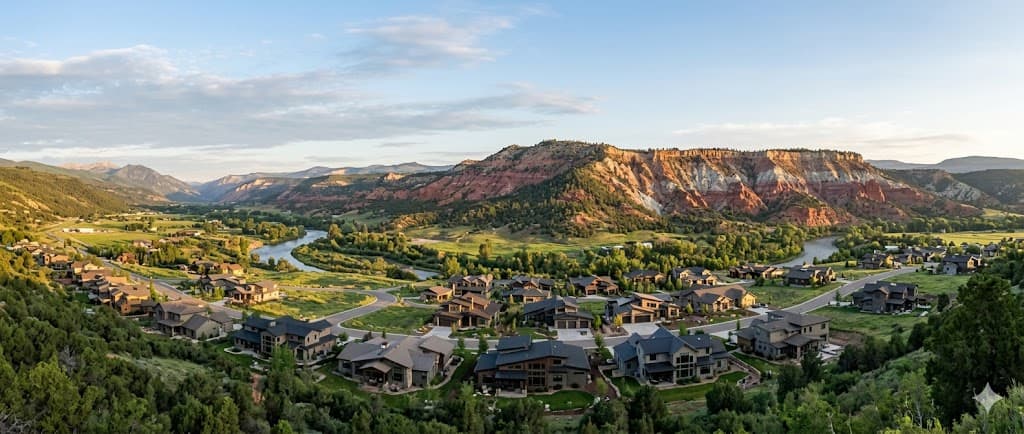
Gypsum · Eagle County · Median Home Value $650,000 · Population 8,382

Gypsum Home Equity — $300,000 in Average Tappable Equity

Gypsum homeowners are sitting on record equity. Access $50K to $750K through a HELOC funded in as few as 5 days — without touching the low mortgage rate you locked in years ago. One application. I handle the placement. You get the right answer.

See Your Maximum HELOC

Slide to your home’s current value for an instant estimate.

$300K$2M+
$650,000

Maximum HELOC Available

$552,500

Based on 85% CLTV · Program maximum: $750,000

Get Your Real Equity Number →

No credit impact · 60-second full estimate

🔒No Credit Impact to Check Options640 Minimum Credit Score🏠Up to 85% CLTVFunded as Few as 5 Days💰No Cash Due at Closing🔄Your First Mortgage Rate Stays Untouched
$650,000
Median Home Value
Gypsum 2026
$300,000
Average Equity
Estimated tappable
8,382
Population
Eagle County
5 Days
Funding Speed
Through CO Home Equity
Real Gypsum Homeowners

Gypsum Homeowners Who Put Their Equity to Work

Before you keep reading, look at the Gypsum homeowners below. Which scenario sounds closest to where you are right now? Whichever one resonates — that’s the conversation worth having.

Stratton Flats Gypsum detached ADU build funded by HELOC
Stratton Flats

🏡Detached ADU generating $1,900/month from Eagle County workforce demand

Carlos and Maria bought their 4BR Stratton Flats home for $425K in 2018 — now worth $725K. They used a $215K HELOC to fund a detached 600-sqft 1BR ADU above a new garage, completed in roughly eight months. The ADU was designed specifically for the Eagle County workforce rental market where demand consistently outpaces supply.

The ADU rents at $1,900/month to a Vail Resorts supervisor and covers the HELOC carry completely, producing positive cash flow. The appraised value lift on the main property plus the ADU added an estimated $170K to the total property's appraised value. Their 2.99% first mortgage stayed untouched.

HELOC: $215KMonthly Rent: $1,900Value Added: +$170K
Original Gypsum HELOC debt consolidation frees monthly cash flow
Original Gypsum

💳Debt consolidation that freed $950/month in cash flow

Diana has owned her 3BR Original Gypsum home since 2005 — purchased for $195K and now worth $510K. Over two decades she accumulated $48K in credit card debt across four cards plus a $22K auto loan — combined monthly payments of roughly $1,850 at blended interest rates above 20%.

She used a $85K HELOC to pay off all of it in a single week. Her new consolidated monthly payment is roughly $900, freeing $950/month in cash flow and saving an estimated $11,500 in interest over the next three years. Her 3.0% first mortgage stayed exactly in place, and the HELOC interest is significantly lower than any of the retired balances.

HELOC: $85KMonthly Saved: $950Interest Saved: $11.5K
Buckhorn Valley HELOC funds Eagle duplex rental acquisition
Buckhorn Valley

🏘️Buckhorn Valley equity funding a duplex in Eagle

Brandon and Kelly own a 4BR Buckhorn Valley home purchased for $475K in 2017, now worth $785K. They used a $225K HELOC to fund the 25% down payment on a $900K duplex rental property in Eagle — targeting Eagle County workforce housing demand that consistently outpaces supply across the valley.

The Eagle duplex generates $4,800/month combined in long-term rental income, covering the HELOC carry and producing positive cash flow. Their 3.125% Buckhorn Valley first mortgage stayed untouched, and their equity is now working in two Eagle County markets with complementary workforce-driven demand.

HELOC: $225KMonthly Rent: $4,800First Rate Kept: 3.125%
Cotton Ranch Gypsum HELOC funds Eagle County construction business launch
Cotton Ranch

🚀Eagle County business launch from Cotton Ranch equity

Nathan owns a 4BR Cotton Ranch home purchased for $625K in 2019, now worth $1.05M. He used a $275K HELOC to launch a construction-services business targeting the Eagle County residential renovation market — capturing the chronic demand for skilled trades across Vail, Edwards, Eagle, and Gypsum.

The business reached breakeven in month seven and now produces meaningful monthly cash flow. His 2.875% first mortgage stayed in place, and the HELOC interest cost was a fraction of what an SBA loan or private credit line would have cost at Eagle County small-business rates.

HELOC: $275KBreakeven: Month 7First Rate Kept: 2.875%

These are illustrative examples based on real Gypsum funding scenarios.

Bobby Friel — CO Home Equity Founder, NMLS# 332039

“Most Gypsum homeowners have a number in their head — the renovation, the investment property, the debt they’d eliminate if they could. My job is to turn that number into a funded HELOC in 5 days. I already know which lender prices your Gypsum situation best. One application. One conversation. One right answer.”

— Bobby Friel, CO Home Equity · Founder · NMLS# 332039

Gypsum Homeowner Equity

$300,000+

The average Gypsum homeowner’s tappable equity.The question isn’t whether you have it — it’s what you’re going to do with it.

Neighborhood Guide

Gypsum Neighborhood Equity Map — Where Your Home Fits

Gypsum’s neighborhoods carry distinct equity profiles and HELOC strategies. Find where your home fits below.

NeighborhoodMedian ValueTypical Equity RangeTop HELOC UseKey
Buckhorn Valley$785,000$325KRenovation + ADU
Chatfield Corners$675,000$275KPrimary renovation
Stratton Flats$720,000$295KADU for workforce rental
Eagle County Regional (South Gypsum)$615,000$250KWildfire mitigation
Original Gypsum (Downtown Core)$525,000$210KDebt consolidation
Cotton Ranch$845,000$360KEstate renovation
Dry Creek$635,000$260KPrimary renovation

Gypsum Neighborhoods — What Your Equity Looks Like by Street

When you think about your home, you probably don’t think in metro-wide averages — you think in terms of your block, your street, your neighbors’ recent sales. Here’s the neighborhood-level picture.

Buckhorn Valley

$700K–$950K

Buckhorn Valley is Gypsum's most established master-planned community — 2000s and 2010s build era, tree-lined streets, a community pool and trail system, and strong single-family homes on larger lots. Quick access to I-70 and the Eagle County Regional Airport, which is the single largest employer in the area.

Buckhorn Valley owners typically hold $250K to $450K in tappable equity after a decade or more of Eagle County appreciation. HELOC draws here commonly fund kitchen and bath renovations, detached ADU builds (the larger lot sizes make ADUs practical), finished basements, and the occasional down-valley investment property down payment. The newer construction means fewer mechanical-end-of-life issues than older Eagle County housing stock.

Chatfield Corners

$600K–$800K

Chatfield Corners is Gypsum's family-friendly 2000s neighborhood north of Highway 6 — walking distance to Gypsum Elementary and the Gypsum Recreation Center, larger lot sizes than the older core neighborhoods, and strong full-time resident character. Mix of two-story single-family homes with finished basements standard in the build spec.

For HELOC purposes, Chatfield Corners is a classic primary-residence play. Many owners have sub-4% first mortgages locked in during 2020-2022 and meaningful equity from Eagle County's 40-55% appreciation since. HELOC draws fund kitchen and bath renovations, basement finishes, garage expansions, and wildfire mitigation on the northern-edge parcels adjacent to open space.

Stratton Flats

$625K–$900K

Stratton Flats is one of Gypsum's newer master-planned developments — 2010s and ongoing build era, with a mix of single-family homes, townhomes, and duplexes. Strong workforce-housing component, including some deed-restricted units built under Eagle County workforce housing programs. Quick access to the airport and I-70.

Stratton Flats owners use HELOC capital for ADU build-outs targeting the Eagle County workforce rental market (where demand consistently outpaces supply), modest kitchen and bath renovations, and investment property down payments further up-valley in Eagle and Edwards. The strong workforce-rental math makes Stratton Flats one of the better HELOC-funded ADU candidates in the valley.

Cotton Ranch

$750K–$1.3M

Cotton Ranch is Gypsum's upscale master-planned community — larger custom homes, panoramic views across the valley to New York Mountain, the Cotton Ranch Golf Club, and the highest per-square-foot values in Gypsum. Strong mix of full-time residents and second-home owners who want Eagle County lifestyle at a price that still pencils.

Cotton Ranch owners carry the largest equity positions in Gypsum, often $350K to $600K+ in tappable equity. HELOC draws here fund full-scale luxury renovations, detached guest houses, wildfire mitigation (the upper Cotton Ranch parcels carry meaningful WUI exposure), and portfolio diversification moves that capitalize on Eagle County's continuing appreciation trajectory.

Original Gypsum (Downtown Core)

$425K–$600K

Original Gypsum — the downtown core along Highway 6 and 1st Street — is the most affordable entry point into Eagle County. Mix of 1960s-80s ranch homes, infill 2000s builds, and the historic mining-era cottages that give Gypsum its Western working-town character. Strong long-term resident presence including many of the Eagle County Airport and valley-wide service workforce.

Original Gypsum owners typically hold 15-30 years of appreciation — equity positions of $175K-$275K on modestly priced homes. HELOC draws here commonly fund debt consolidation (rolling credit card and auto debt into a lower-rate second lien), kitchen and bath renovations, and mechanical-systems replacement on 1970s-80s housing stock approaching end-of-life.

Dry Creek / Eagle County Airport Area

$525K–$775K

Dry Creek and the Eagle County Regional Airport-adjacent neighborhoods sit on the north side of I-70 — close to the airport (which is the single largest employer in west Eagle County) and featuring a mix of 1990s-2010s single-family homes and townhomes. Convenience to the airport and the emerging commercial corridor makes this area practical for the airport workforce.

For HELOC purposes, Dry Creek is a solid primary-residence play. Owners use HELOC capital for renovations that meaningfully move appraised value, ADU build-outs on the larger-lot parcels, and down payments on investment rental properties. The Eagle County Airport workforce drives consistent rental demand, and HELOC-funded rental property strategies typically produce positive cash flow in year one.

Put Your Equity to Work

Gypsum-Specific Equity Strategies

Gypsum’s market dynamics create equity opportunities worth considering. Here are the strategies Gypsum homeowners are using most in 2026.

Detached ADU for Eagle County Workforce Rental

Eagle County has a chronic workforce housing shortage, and Gypsum's larger-lot subdivisions (Buckhorn Valley, Chatfield Corners, Stratton Flats, Cotton Ranch) are among the most practical ADU markets in the valley. A HELOC-funded ADU typically runs $150K-$300K depending on size and finish, and a 1BR Gypsum ADU currently rents at $1,600-$2,200/month to the Eagle County workforce.

The math is compelling: rental income typically covers HELOC carry and produces positive cash flow, while the ADU adds meaningful appraised value to the main property. Verify your specific zoning and Gypsum ADU permit requirements before committing capital — rules are evolving around workforce housing incentives. A 30-minute call to Gypsum Community Development clarifies feasibility on your specific parcel.

Up-Valley Investment Property Acquisition

Gypsum equity serves as a springboard into income-producing real estate further up-valley. A $200K-$300K HELOC draw against your Gypsum home provides a 25% down payment on an $800K-$1.2M rental property in Eagle, Edwards, or Avon — markets with stronger long-term rental demand from the Eagle County workforce and the Vail Resorts economy.

This strategy keeps your Gypsum property (and its valley appreciation trajectory) while building a diversified real estate portfolio in the same county. Workforce rental demand across Eagle, Edwards, and Avon consistently outpaces supply, and long-term rentals at $3,500-$5,500/month typically cover HELOC carry and produce positive cash flow in the first year.

Debt Consolidation That Frees Monthly Cash Flow

Many Gypsum homeowners have accumulated credit card balances, auto loans, and personal debt at rates of 18-29% — particularly households navigating Eagle County's high cost of living on service-economy incomes. A HELOC at materially lower rates lets you pay off high-cost debt in a single transaction and collapse multiple monthly payments into one substantially smaller payment. On $60K of consolidated debt, a Gypsum homeowner commonly frees $700-$1,000/month in cash flow and saves $8K-$15K in interest over three years.

The strategy only works if you don't run the credit cards back up — behavioral discipline is the prerequisite. For homeowners ready to reset their balance sheet, HELOC-funded consolidation is one of the highest-impact uses of Gypsum equity. And your sub-4% first mortgage stays exactly where it was.

Wildfire Mitigation & Insurance Preservation

Wildfire risk in west Eagle County has escalated in recent years, particularly on the southern Gypsum bench, the upper Cotton Ranch parcels, and properties adjacent to BLM and Forest Service land. Several major carriers have tightened policy issuance. Homeowners facing non-renewal or premium spikes use HELOC funds to complete defensible-space work, Class A roof replacements, ember-resistant vents, and perimeter water systems — then requalify with specialty carriers.

Because every HELOC lender requires active homeowners insurance before funding, preserving insurability is itself a financial asset. HELOC-funded mitigation protects both the property and your ability to keep financing it. Greater Eagle Fire Protection District standards are the baseline, and hitting or exceeding them is the difference between keeping coverage and the Colorado FAIR Plan.

Primary Renovation at $350–$550/sqft

Gypsum construction runs $350 to $550 per square foot on current builds — more affordable than up-valley Eagle, Edwards, or Vail, but still meaningful money on any renovation scope. A HELOC funds kitchen and bath remodels, basement finishes, and system replacements (HVAC, roofs, windows) without liquidating investments or touching a low first-mortgage rate. That matters when you've locked in 2.875% or 3.125% and today's 30-year is over 7%.

Many Gypsum homeowners use HELOC capital to modernize older 1990s and 2000s homes, add updates that buyers and tenants now expect, or build out mudroom and storage space. What would you build in your Gypsum home if capital wasn't the constraint?

Ready to Put Your Gypsum Equity to Work?

Checking your options does not affect your credit score. No obligation. Personalized to your address.

What You Should Know

Questions Worth Asking Before You Tap Your Gypsum Equity

🔒 Did you know you can keep your low first mortgage rate AND access your Gypsum equity?

Most Gypsum homeowners think they have to choose — refinance the entire mortgage or do nothing at all. The HELOC sits behind your first mortgage as a separate line of credit. Your 3.1%, 3.5%, or 3.9% rate stays exactly where it is. The HELOC is independent. One product gives you cash access. The other preserves your rate. You don’t choose — you get both.

What’s been keeping you from acting on the Gypsum equity you already have?

Every month you wait has a real cost. The credit card interest accumulates. The renovation gets more expensive as material prices climb. The investment opportunity passes to someone else. HELOC rates move with the Fed automatically — when rates drop, your rate drops too without refinancing. You don’t have to wait for the perfect moment. You have to start before the cost of waiting exceeds the cost of acting.

📊 Want to know exactly what you can afford before you commit to anything?

A HELOC is a second lien with a predictable monthly payment. I run the full affordability analysis BEFORE you commit, not after. If the math doesn’t work for your Gypsum family, I’ll tell you and we won’t move forward. I’d rather walk away from a transaction than put a Gypsum family in a payment they can’t actually afford. Your numbers, your decision, no pressure.

💰 What if no cash was due at closing?

On a HELOC, origination is built into the loan, not charged upfront — nothing due out of pocket at the closing table. Compare that to a cash-out refinance at $8,000 to $15,000 in closing costs paid at the table on a Gypsum property. The math isn’t even close. Plus there’s no escrow, no reserves, and no prepayment penalties. You can pay it down faster and save on interest whenever you want.

🏠 When was the last time you actually checked what your Gypsum home is worth?

Most Gypsum homeowners haven’t run the numbers in 2 to 3 years. The median Gypsum home has gained meaningful value during that window. If you bought before 2023, you almost certainly have more accessible equity than you realize. Our 60-second calculator tells you instantly — no obligation, no credit pull, just the real number.

🎯 When you think about the next 12 months, what’s the one decision that would unlock everything else?

For some Gypsum homeowners, it’s the renovation that adds real resale value. For others, it’s the investment property down payment that launches a rental portfolio. For others, it’s the debt elimination that frees up thousands in monthly cash flow. Whatever it is for you — that’s the conversation worth having before another month passes.

Real Numbers

What a Gypsum HELOC Actually Costs — and What It Could Fund

When you think about a HELOC, you probably focus on what it costs. But the more important question is: what could it fund? Here are real Gypsum HELOC ranges and what they typically unlock for borrowers in your situation.

HELOC AmountEstimated Monthly PaymentClosing CostsWhat This Could FundKey
$50,000~$350–$450No cash at closingDebt consolidation, Gypsum business capital, tuition
$100,000~$700–$900No cash at closingLight renovations, Gypsum investment property down payment
$150,000~$1,050–$1,350No cash at closingKitchen upgrade, Gypsum ADU partial funding, mountain home down payment
$200,000~$1,400–$1,800No cash at closingMajor Gypsum remodel, full ADU build, business launch capital
$300,000~$2,100–$2,700No cash at closingMulti-property Gypsum strategy, complete debt elimination
$500,000~$3,500–$4,500No cash at closingGypsum + mountain portfolio, luxury renovation build-out

Estimated monthly payments shown are for illustration purposes only based on current market rate ranges. Your actual rate and payment depend on credit score, equity position, draw amount, and loan term. Autopay discount of 0.25% is available. No prepayment penalties — pay it down faster and save on interest whenever you want.

Looking at this table, what’s the number that catches your eye? More importantly — what’s the Gypsum use case next to it that you’ve been thinking about for a while?

Bobby Friel — CO Home Equity Founder

“The numbers on the table above matter less than what you’d actually do with the money. When you picture your life 12 months from now with the right HELOC in place — what’s different?”

— Bobby Friel, CO Home Equity · Founder · NMLS# 332039

Our Process

How Bobby Builds Your Gypsum Equity Strategy

How would it feel to know exactly what your Gypsum equity options look like before you ever talked to a lender? Here’s how I work.

🏠
01

Tell Me Your Gypsum Situation

Fill out a short form — your Gypsum property, your mortgage, and what you’re trying to accomplish. No credit impact. I read every submission personally.

📊
02

I Pull Your Numbers

Before we ever talk, I’ve already run your Gypsum property data, your equity position, and your CLTV at different scenarios. I come to our conversation with answers, not questions.

🗺️
03

We Build Your Strategy Together

A 15–30 minute video call where I walk you through your real options — not a sales pitch, a financial plan. What you qualify for, what it costs, and whether a HELOC is even the right move for your Gypsum situation. If it’s not, I’ll tell you.

🏦
04

I Match You With the Right Lender

One application. I match your Gypsum profile to the lender that prices your specific situation best — CLTV, terms, funding speed. You never call a bank. You never need to call a bank — I’ve already done that work.

05

Funded — As Few as 5 Days

E-notary signing from your Gypsum kitchen table. Funds deposited directly. Most borrowers are funded within 5 business days. Your existing mortgage rate stays untouched.

Checking your options does not affect your credit score.

Avoid These Pitfalls

5 HELOC Mistakes Gypsum Homeowners Make

I see these errors repeatedly. Each one costs Gypsum homeowners real money — and every one is avoidable.

1

Confusing Gypsum with up-valley Eagle County pricing

Gypsum is Eagle County's workforce gateway and trades at meaningfully lower price points than Eagle, Edwards, Avon, or Vail. National lenders sometimes apply up-valley Eagle County comps that overshoot Gypsum reality — or conversely, apply generic Western Slope comps that undershoot.

Appraisal accuracy matters for HELOC sizing. I route Gypsum applications to lenders whose appraisers know Gypsum as a distinct submarket — Buckhorn Valley, Chatfield Corners, Stratton Flats, Cotton Ranch, and Original Gypsum trade at different price points and each has its own comp set.

2

Skipping ADU zoning verification before HELOC draws

Gypsum's ADU rules continue to evolve, particularly around workforce housing incentives. Lot-size minimums, setback requirements, and permit specifics vary by zoning. Homeowners who commit HELOC capital to an ADU design without first verifying zoning compliance can find themselves with a non-permittable plan.

Verify ADU feasibility with Gypsum Community Development before finalizing plans or drawing HELOC capital. The 30-minute conversation is free and prevents six-figure mistakes. Most larger-lot 2000s-2010s Gypsum parcels qualify, but verification is essential — and in some cases workforce-housing incentives make the math even stronger than standard ADU pricing suggests.

3

Refinancing a sub-4% first mortgage to access equity

Gypsum homeowners with sub-4% rates locked in during 2020-2022 would lose thousands annually by refinancing at today's rates. On a $700K property with a $425K first mortgage, the rate difference can cost $10K to $18K+ per year — compounded across the remaining loan term.

A HELOC preserves your first-mortgage rate entirely and sits behind it as a separate second lien. This is the right structure for accessing Gypsum equity without resetting a loan you'll never find at that rate again.

4

Running the credit cards back up after consolidation

HELOC-funded debt consolidation is only a winning strategy if you don't re-accumulate the credit card balances you paid off. When the cards get run back up, homeowners end up with the same unsecured balances they had before, plus a secured second lien on the home. The resulting financial position is materially worse, not better.

Before using HELOC capital for consolidation, make the behavioral commitment: the cards stay at zero, cash-flow discipline holds, and the freed monthly payment rolls into savings or additional HELOC paydown. The math only works with the discipline.

5

Overlooking wildfire mitigation requirements on southern-bench parcels

Properties on Gypsum's southern bench, upper Cotton Ranch, and parcels adjacent to BLM and Forest Service land face rising wildfire-market insurance pressure. Homeowners with aged roofs, inadequate defensible space, or non-compliant vegetation management can find coverage non-renewed precisely when they're trying to close a HELOC.

Sequence the insurance review ahead of the HELOC application, not after. A Class 4 impact-resistant roof, defensible-space clearing, and appropriate replacement cost coverage are all part of the sequence. Starting the insurance review after the HELOC is in process is the most common reason Gypsum closes get delayed.

Compare Your Options

HELOC vs. Home Equity Loan vs. Cash-Out Refinance — Gypsum Edition

Three ways to access your Gypsum home equity. For most Gypsum homeowners who locked in low rates between 2020 and 2022, the HELOC wins decisively.

Feature HELOCRecommended🏠 Home Equity Loan🔄 Cash-Out Refi
💵 How funds are receivedRevolving credit line — draw as neededOne-time lump sumOne-time lump sum
🔒 Existing mortgage impactNone — stays completely untouchedNone — stays untouchedReplaced entirely at new (higher) rate
📈 Interest rate typeVariable (or fixed-rate option)Fixed rateFixed rate (on entire balance)
⚡ Funding speed5 days (CO Home Equity)14–30 days30–45 days
🔄 FlexibilityHigh — draw, repay, re-borrowLow — one-time disbursement onlyLow — one-time disbursement only
💰 Cash due at closingNone — origination built into the loanModerate (2–5%)2–5% of entire loan amount paid at the table
💳 Pay interest onOnly the amount you drawFull loan balance from day oneEntire new mortgage balance
🎯 Best Gypsum use caseRenovations, flexible capital, ongoing needsOne-time, known Gypsum expenseOnly if upgrading from a high rate

For Gypsum homeowners who secured mortgage rates below 4% between 2020 and 2022, a HELOC preserves that rate advantage while unlocking flexible equity access. A cash-out refinance would replace your low rate with today’s higher rates across your entire loan balance — costing thousands more per year.

What Most Gypsum Lenders Don’t Tell You

Every Fed rate cut drops your HELOC rate automatically.

No refinance. No reapply. No waiting. With 2–3 cuts expected in 2026, what would it mean to lock in access today and watch your rate improve on its own?

HELOC Education

How a Gypsum HELOC Actually Works

Most Gypsum homeowners understand they have equity. Most don’t understand how a HELOC actually works mechanically — and that misunderstanding is why so many leave money on the table or make the wrong financial choice. Let me walk you through it the way I would on a phone call.

When you draw from a HELOC, you’re not borrowing the entire credit limit at once. You’re borrowing exactly what you need, when you need it. Take $50,000 today for a kitchen remodel. Leave the remaining $150,000 sitting available for the next opportunity. Your interest is only charged on what you’ve actually drawn. That’s why a HELOC is fundamentally different from a fixed home equity loan or a cash-out refinance — both of which deliver a lump sum and start charging interest on the entire amount immediately. Which model fits your actual cash needs better?

Your first mortgage stays completely untouched. The HELOC is a second lien — a separate loan that sits behind your existing mortgage. If you locked in 2.75%, 3.25%, or 3.9% during the 2020 to 2022 window, that rate doesn’t change. Same payment. Same term. The HELOC doesn’t touch it. How important is preserving that rate to your overall Gypsum financial picture?

Draw Periods by Term Length

10-year HELOC

3-year draw

7-year repayment

15-year HELOC

4-year draw

11-year repayment

20-year HELOC

4-year draw

16-year repayment

30-year HELOC

5-year draw

25-year repayment

Variable rate tied to prime plus margin. Most HELOC rates are variable, moving with the prime rate. When the Fed cuts rates, your payment drops automatically. No refinancing. No reapplying. With 2 to 3 Fed cuts expected in 2026, variable rates are working in Gypsum borrowers’ favor right now. Have you considered what your monthly payment looks like if rates drop another 0.50% over the next 12 months?

100% initial draw available. You can draw your full credit limit at closing if needed. Additional draws have a $500 minimum up to your total credit limit. No prepayment penalties — pay it down faster and save on interest. No escrows or reserves required.

Not sure how much equity you have? Our guide on how to calculate your Colorado home equity walks through the math step by step. For a deeper look at HELOC mechanics, see how a HELOC works.

Qualification Guide

Gypsum HELOC Requirements — What You Need to Qualify

Before you wonder if you’d qualify, here’s the straight answer on what it takes. These are the actual numbers — and most Gypsum homeowners qualify more easily than they think.

Credit Score

640 minimum for primary residences through our lending network. 680 minimum for second homes and investment properties.

Best rates are reserved for 740+ borrowers. If you’re at 620, there are specific steps that can get you to 640 in 30–45 days. I’ll show you exactly what to do.

🏠

Loan-to-Value (CLTV)

Up to 85% CLTV on qualified primary residences. Your combined first mortgage + HELOC cannot exceed 85% of your home’s value. On a $650,000 Gypsum home, that math can unlock six figures of accessible equity. HELOCs over $400K require 760+ FICO and 75% max CLTV.

📊

Debt-to-Income (DTI)

Up to 50% DTI — more generous than most Gypsum banks, which cap at 43%. Your total monthly debt payments including the new HELOC must stay below 50% of gross monthly income. Child support and alimony count as qualifying income.

📄

Additional Requirements

Proof of income (W-2s, tax returns, pay stubs). Active homeowners insurance with 100% replacement cost. No 30-day lates in previous 12 months. 5-year seasoning since BK, foreclosure, short sale, or deed-in-lieu. Property types: SFR, PUD, townhomes, duplexes, condos, 3–4 unit.

Equity Risk Intelligence

Gypsum Neighborhood Alerts — Protect Your Equity Before You Access It

Smart equity access starts with knowing the risks specific to your Gypsum neighborhood. Here’s what to watch for.

Southern Bench / Cotton Ranch Upper — Wildland-Urban Interface

Properties on Gypsum's southern bench, upper Cotton Ranch, and parcels adjacent to BLM and Forest Service land sit in west Eagle County's elevated wildfire risk zones. Several major carriers have tightened policy issuance, and existing homeowners face premium hikes of 15-35% or outright non-renewal.

Greater Eagle Fire Protection District defensible-space standards are the baseline. Hitting or exceeding them is the difference between keeping specialty coverage and landing in the Colorado FAIR Plan. Secure adequate insurance before applying for a HELOC — lender requirements are non-negotiable and a lapse blocks funding.

Eagle County Workforce Housing Rule Evolution

Eagle County and the Town of Gypsum continue to evolve workforce housing rules, including ADU incentives, deed-restriction programs, and short-term rental regulations. These rules can affect HELOC-funded ADU and rental strategies — sometimes favorably (incentives that improve ROI) and sometimes not (occupancy or rental-term restrictions).

Before committing HELOC capital to a rental or ADU strategy, verify the current rules and any pending changes. Gypsum Community Development and the Eagle County Housing Department are the authoritative sources — a 30-minute conversation prevents expensive mismatches between your plan and the actual regulatory framework.

Original Gypsum — 1960s-80s Mechanical End-of-Life

Original Gypsum homes from the 1960s-80s often still run first-generation HVAC, water heaters, electrical panels, and sewer laterals — all past end-of-life. HELOC-funded mechanical replacement is a routine need in this submarket, and deferring it can create expensive emergency repair scenarios plus insurance coverage complications.

Before using HELOC capital for cosmetic upgrades in a 1960s-80s Original Gypsum home, budget for the mechanical systems the home actually needs. A full kitchen remodel on a home with a 50-year-old electrical panel is the wrong order of operations — the panel and supply line should come first.

Credit Card Behavioral Risk on Consolidation Strategies

HELOC-funded debt consolidation is a mathematically winning strategy only if the credit card balances stay at zero afterward. Homeowners who re-accumulate balances end up with the same unsecured debt plus a secured second lien — a worse financial position than before.

Before drawing HELOC capital for consolidation, make the behavioral commitment: the cards stay at zero, the freed monthly cash flow redirects to savings or HELOC paydown, and the underlying spending patterns that created the original balances get addressed. The strategy works only with the discipline.

Gypsum homeowners insurance review — protect your home and equity
Protect Your Gypsum Home

Your HELOC Requires Insurance — When Was the Last Time You Actually Compared?

When was the last time you actually compared your homeowners insurance against current Gypsum market rates? Your HELOC lender will require proof of active homeowners insurance with 100% replacement cost coverage before funding. Most Gypsum homeowners haven’t reviewed their policy since they bought the home — and given how much Gypsum home values have surged, most are either underinsured or overpaying significantly.

Colorado homeowners face real exposure: hail in the Front Range, wildfire in the foothills and mountain zones, severe wind across the plains. A single storm can cause $10,000 to $30,000 in roof and exterior damage to a typical home.

Through our partnership with Direct Insurance Services, we compare 30+ carriers to find Gypsum homeowners the right coverage at the best possible rate — with specific expertise in Colorado-specific risk factors and high-value home endorsements.

Colorado-specific coverage for Gypsum exposures
Replacement cost updated to reflect 2026 home values
Compare 30+ carriers in one free review
Removes insurance delays from your HELOC funding timeline
Average savings: $400–$800/year on premiums
Common Questions

Gypsum HELOC — Frequently Asked Questions

Everything Gypsum homeowners need to know about accessing their home equity, answered in plain language.

Gypsum homeowners with a primary-residence property typically qualify for the full $750K HELOC limit through our partner network — though most Gypsum HELOCs fall in the $50K-$250K range given the market's equity profile. Your first mortgage stays completely untouched — the HELOC is a separate second lien. With Gypsum's $650K median home value and average equity around $260K, primary-residence HELOCs on up to 85% CLTV open meaningful capital for renovation, ADU, investment, and workforce-housing strategies.
Gypsum sits at the west end of the Vail Valley — Eagle County's most affordable community with direct access to the Eagle County Regional Airport (EGE), Costco, and the I-70 corridor. Housing costs roughly one-third of Vail and meaningfully below Edwards or Eagle, which is exactly why Gypsum is Eagle County's workforce housing hub. The HELOC mechanics are identical across all four cities — the difference is appraised value, which affects total HELOC capacity. I route applications to lenders whose appraisers know Eagle County as distinct submarkets (Gypsum, Eagle, Edwards, Avon, Vail) rather than applying generic mountain-town comps.
Yes — and Gypsum is one of the stronger ADU markets in Eagle County given larger lot sizes in the newer subdivisions (Buckhorn Valley, Chatfield Corners, Stratton Flats) and Eagle County's chronic workforce housing shortage. A HELOC-funded ADU typically runs $150K-$300K depending on size and finish, and a 1BR ADU in Gypsum currently rents at $1,600-$2,200/month to the Eagle County workforce. That rental income typically covers HELOC carry and produces positive cash flow. Verify your specific zoning and Gypsum ADU permit requirements before committing capital — rules continue to evolve around workforce housing incentives.
Eagle County is a designated high-cost area with a 2026 conforming loan limit of $1,149,825. Most Gypsum homes sit well below that threshold, meaning conforming HELOC pricing applies — a meaningful rate advantage versus jumbo territory. For Gypsum properties approaching or exceeding the $1.15M range (primarily Buckhorn Valley and custom-built Stratton Flats homes), I match you to lenders who specifically work the Eagle County jumbo HELOC market so underwriting and pricing are handled correctly.
Yes. Investment-property HELOCs in Gypsum are available with typical requirements of 720+ FICO, 70-75% CLTV (versus 85% on primaries), and documented rental income. Given Eagle County's chronic workforce housing shortage, investment property HELOCs are a common strategy for Gypsum-area investors building rental portfolios. Long-term rents in Gypsum currently run $2,400-$4,200/month depending on size, and demand consistently outpaces supply. The process is fully online — no branch visits — and funding typically closes in 5-10 business days.
Your HELOC lender requires proof of active homeowners insurance with 100% replacement cost coverage before funding. Gypsum properties sit in Greater Eagle Fire Protection District territory with wildfire WUI considerations on the southern bench and higher elevations, plus standard Eagle County snow-load and freeze-thaw considerations. Standard HO-3 policies usually fit Gypsum replacement costs of $350-$550/sqft, but review is important. Chubb, Travelers, American Family, and State Farm write this market. Through Direct Insurance Services I compare carriers to find the right fit before the HELOC close.
Traditional Eagle County banks quote 30-45 days. Through my network, most Gypsum HELOCs fund in 5-10 business days depending on appraisal timing and title work. The 100% online process eliminates branch visits — critical for Gypsum homeowners who often work irregular schedules between the Eagle County Airport, Vail Resorts, and the down-valley construction economy. Checking your options uses a soft credit pull with no score impact. I read every application personally and come to the conversation with numbers already run against your specific Eagle County property.
Per IRS rules, HELOC interest is deductible only when funds are used to buy, build, or substantially improve the home securing the loan. HELOC-funded renovations, additions, and ADU construction on your Gypsum home typically qualify. Using HELOC proceeds for debt consolidation, investment property down payments, business capital, or education expenses does not qualify — regardless of how sound the use case is. Colorado imposes no additional state-level HELOC interest deduction. Always confirm specifics with your CPA before assuming deductibility on any given draw.

Still have questions about Gypsum HELOCs? I’m here to help.

Market Deep Dive

Gypsum Real Estate Market Overview

Gypsum’s real estate market is defined by its role as Eagle County’s workforce gateway — the most affordable community in the Vail Valley, home to the Eagle County Regional Airport (EGE), and the single largest concentration of year-round Vail Valley workforce. Since 2019, Gypsum values have appreciated 40-55% depending on submarket, with Buckhorn Valley, Cotton Ranch, and Stratton Flats leading the way — driven by the chronic Eagle County workforce housing shortage and the continuing up-valley price pressure.

For HELOC borrowers, this appreciation has created meaningful equity positions. A homeowner who purchased a $425K Gypsum home in 2019 may now own an asset worth $650K to $725K, with $220K to $300K in tappable equity sitting behind a sub-4% first mortgage. The question isn’t whether the equity exists — it’s what to do with it. And the answer almost never involves refinancing a rate you’ll never see again.

Gypsum’s position at the west end of the Vail Valley is structurally important for HELOC strategy. Housing costs roughly one-third of Vail, meaningfully below Edwards, and below Eagle — which is exactly why Gypsum is where the Vail Valley workforce lives. Major employers include the Eagle County Regional Airport, Vail Resorts (with most resort-area workers commuting up-valley from Gypsum and Eagle), Vail Health, Eagle County Schools, and Eagle County government. Secondary employers include Costco, the growing commercial corridor along Highway 6, and the construction trades that serve the entire valley.

The workforce-housing dynamic drives two of the highest-impact HELOC strategies in Gypsum: detached ADU builds for rental income (workforce rental demand consistently outpaces supply, 1BR ADUs rent at $1,600-$2,200/month), and investment property acquisitions further up-valley in Eagle and Edwards where rental yields are strong and demand is chronic. Both strategies let Gypsum homeowners participate in the Eagle County appreciation trajectory while keeping their sub-4% first mortgage exactly where it was.

For homeowners in Original Gypsum and the older core neighborhoods, the most common HELOC use case is different — debt consolidation that frees monthly cash flow and kills high-rate unsecured interest. On a typical $60K consolidated balance, a Gypsum homeowner commonly frees $700-$1,000/month in cash flow and saves $8K-$15K in interest over three years. Combined with the mechanical-systems replacement that 1960s-80s housing stock requires (HVAC, roofs, windows, electrical panels), HELOC capital does a lot of financial work in the Gypsum market — and the 100% online process means no branch visits, no coordination friction, and funding in 5-10 business days.

Bobby Friel — CO Home Equity Founder

“If you locked in a sub-4% rate during 2020 to 2022 and you’re sitting on $300,000+ in Gypsum equity, what’s actually been preventing you from acting on it? Every month that passes, you’re paying the cost of inaction. If we could solve your Gypsum situation in 5 days, would that be worth a conversation?”

— Bobby Friel, CO Home Equity · Founder · NMLS# 332039

Gypsum’s Home Values Have Done the Hard Work. Now Put Your Equity to Work.

The average Gypsum homeowner holds $300,000+ in tappable equity. The question isn’t whether you have it — it’s what you’re going to do with it. One application. I handle the placement. Your Gypsum equity, working for you.

No credit impact to get started. Funded in as few as 5 days.