Home Equity in Carbondale — HELOC and Home Equity Loans From a Local Lender
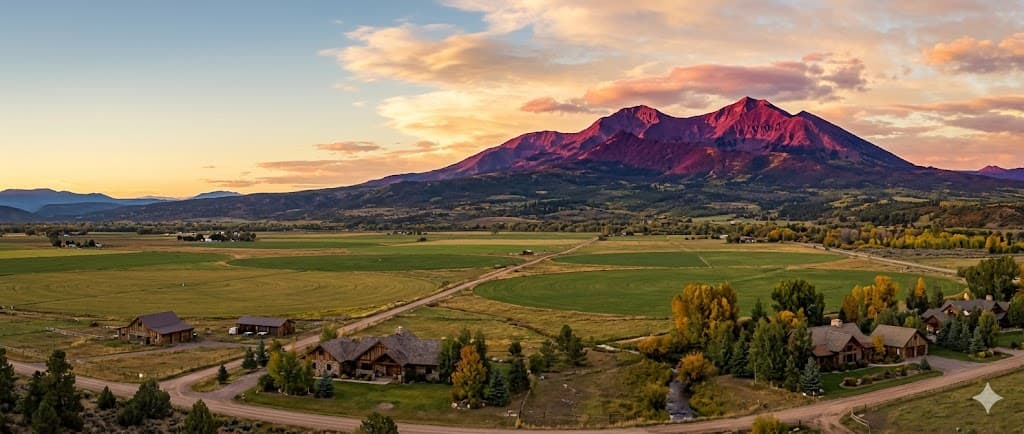
A potato town that became a coal town that became an arts town, at the foot of Mount Sopris where the Crystal meets the Roaring Fork. Victorians on the old grid, fairway homes on a former ranch, acreage on the mesa above — owned mostly by people who live here all year and drive to Aspen or Glenwood for work. The equity has been building for decades and the file is a short one. Here's how it gets reached.

See Your Maximum HELOC
Slide to your home’s current value for an instant estimate.
Maximum HELOC Available
$750,000
Program maximum reached
Based on 85% CLTV · Program maximum: $750,000
Want your real number? Subtract your existing mortgage balance from this — or let our full calculator do it for you.
No credit impact · 60-second full estimate
Three Ways to Reach Your Equity
In an arts town, each loan is a way of making something. The HELOC is the sketchbook: pages filled as the ideas arrive. The home equity loan is the commission — one piece, one price, one delivery date. A cash-out refinance repaints the whole house, including the walls that were fine.
HELOC
The sketchbook
Pages filled as the ideas arrive
A fixed- or variable-rate line that sits behind the existing mortgage and funds work as it's scoped rather than as it's guessed — page by page, on whatever draw terms your program carries.
Home Equity Loan
The commission
One piece, one price, one delivery
For work that already has a price — a gallery build-out, a kitchen with approved drawings, one dated invoice — paid in full at the start and retired on a schedule set for that piece alone, with the mortgage beside it untouched.
Cash-Out Refinance
Repaints the whole house
Redoes the walls that were fine
The whole mortgage comes off the wall and goes back up at whatever the market charges now — the part you needed and the part that was fine. Right when the old loan itself was the problem. For most owners here, a coat of paint over work that didn't need it.
The Town at the Foot of Sopris
Market Snapshot
Carbondale, CO
- County
- Garfield County
Carbondale was homesteaded to feed Aspen's silver camp and incorporated in 1888, named by settlers for the Carbondale they'd left in Pennsylvania. It grew its own potato — the Red McClure, shipped east to fine restaurants — and has thrown a Potato Day parade since 1909. Coal from the basin west of Redstone carried the town through the second half of the century until the mines closed in the early nineties — by which point the town had already become something no one planned: Mountain Fair in Sopris Park every July since the seventies, a boarding school on an old ranch, a state-certified creative district, a Thursday-night rodeo, and the Rio Grande Trail running straight through town on the railbed the Denver & Rio Grande left behind. Today it is the Roaring Fork's commuter town with a personality — where the valley's workers live, and where Aspen goes on a Friday night.
The streets say the same thing. The old townsite is a Victorian grid around Main Street with the depot, the mercantile, and the 1880s homestead house still standing. River Valley Ranch is the master-planned side of town — a golf community on what was a working ranch for a century, with its own master association, a mile and a half of Crystal River frontage, and a deed-restricted neighborhood built into it. Beyond the limits but inside the Carbondale address: Satank, the 1880s settlement at the edge of town that never joined it, with its pink timber truss bridge from 1900; Aspen Glen, the gated golf community downvalley that sits in unincorporated county; and Missouri Heights, the mesa above town where acreage and horse property straddle the Eagle–Garfield line — a place whose own edges the two counties describe differently. A file here starts by asking which of those it's in.
Where the Town Stops and the County Starts
Many of the properties that mail as Carbondale live under county rules rather than the Town's, and the distinction reaches every part of the file. Aspen Glen is permitted by Garfield County, on a special water and sanitation district rather than the Town's utility, with a homeowners association on the lots and a club whose membership is sold separately from them — a gated golf home with a town's name and none of the town's paperwork. Missouri Heights is acreage: gravel and subdivision roads, some homes on their own water and septic, parcels recorded in Garfield or in Eagle County — the deed says which, and the file follows the deed — and a fire-protection class that drops past five road miles from a station, and again past seven. The Crystal Valley up Highway 133 adds an undammed river that runs high every spring. An equity file goes through all of it; what changes is the valuation, the policy, and the list of lenders willing to hold the collateral. Second homes are here too — fairway homes at the Ranch and behind the Aspen Glen gate, weekend places on the mesa — and they qualify as second homes: fewer lenders, tougher credit, a smaller portion of the value than an owner-occupant gets. And one caution for anyone counting on rental income: the Town licenses short-term rentals to primary residences and the historic core, with a capped and waitlisted number elsewhere and none on restricted units, so a file is built on the income that exists, not the income a listing might produce.

Carbondale decided what it wanted to be — an arts town with a rodeo and a potato parade — and wrote its housing rules so the people who make it could stay. If you own a market home here, the town stayed itself around you and the value grew with it. Mountain Fair asks the same thing every July, and so will I: what are you making this year — and what's the number it needs?
— Bobby Friel, NMLS# 332039
How It Works With One Local Lender
Inside the limits or outside them
Town, Ranch, Satank, Aspen Glen, or the mesa — that answer sets the permits, the water, the fire rating, and the comps, and it comes first.
Valued against the sales next door, not across town
A Main Street Victorian, a fairway home at the Ranch, and mesa acreage each sell to a different buyer, and the valuation follows the sales that buyer made.
One application, one hard pull
Prequalification is a soft credit review; the only hard pull happens when the full application is filed. Line or one sum, variable or fixed — sent to a lender that already holds Roaring Fork collateral like yours.
Money by the time the crew shows up
As few as 5 days from a finished file — permits, policy, association statement where there is one, restriction where there is one.
The Mistakes Carbondale Owners Make
Mistake 01
The Crystal's high-water line is on a map before it's in the news
The Crystal is undammed and runs high every spring, and the Ranch's river frontage, the Highway 133 subdivisions, and Satank all sit near it. Whether a lot is inside a mapped flood zone is a parcel-by-parcel fact that decides whether flood coverage is required, and it's checked ahead of the valuation — not discovered at the policy step.
Mistake 02
The club card isn't on the deed
At Aspen Glen three offices do what one town hall does elsewhere: the county holds the permits, records, and taxes; a special district runs the water and sewer; and the club sells its memberships separately from the lots. The file wants the county record, the district's status, and the association's statement — the membership never enters it.
Mistake 03
Road miles are an underwriting fact on the mesa
Insurers read the district's protection class by road miles from a station — it holds within five, drops at five to seven, and drops again beyond — and the mesa and the Crystal Valley are where those miles add up. Carriers price that class, the fire that reached the mesa's edge, and the Crystal's spring behavior on river lots. Send the policy with the application and ask the district for its free mitigation visit before renewal, not after.
Your Carbondale Equity Questions, Answered
Mountain Fair Asks What You're Making. So Do I.
Bring the project and the address — town grid, the Ranch, the mesa, or the gate — and leave with a number. Nothing to pay to ask, nothing to pay at signing, and the mortgage that's already on the house keeps its page in the county record.