Home Equity in Steamboat Springs — HELOC and Home Equity Loans From a Local Lender
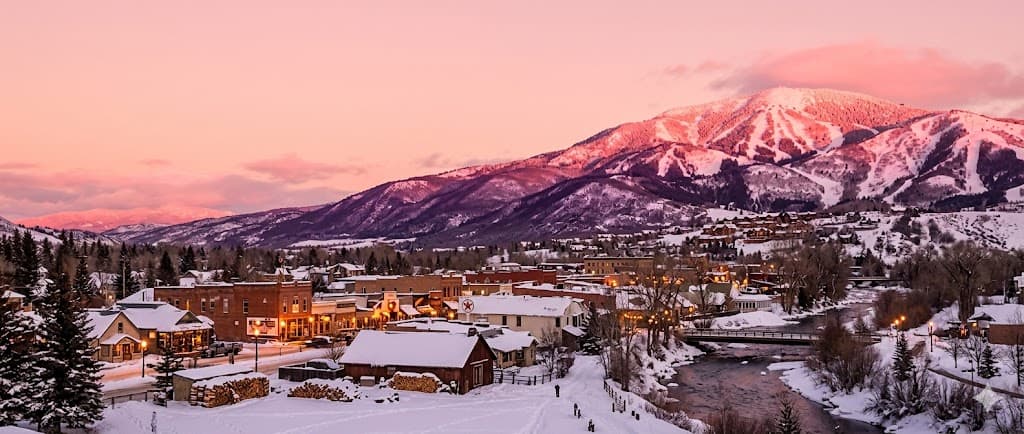
Steamboat was a working town long before it was a resort — and the equity here shows it, from Old Town lots that quietly became some of the valley's most valuable dirt to condos bought when the base area was young.

See Your Maximum HELOC
Slide to your home’s current value for an instant estimate.
Maximum HELOC Available
$750,000
Program maximum reached
Based on 85% CLTV · Program maximum: $750,000
Want your real number? Subtract your existing mortgage balance from this — or let our full calculator do it for you.
No credit impact · 60-second full estimate
Three Ways to Reach Your Equity
Equity is simple arithmetic — what the property would bring, minus what you still owe — but the right way to reach it depends on the job. The second-lien path exists so the loan you're proud of stays untouched while the equity goes to work.
HELOC
For plans that arrive in stages.
A line against the home
Opens a line against the home — fixed or variable — for plans that arrive in stages.
Home Equity Loan
For a job with a known price.
Pays once, one steady payment
Pays once and carries one steady payment, built for a job with a known price.
Cash-Out Refinance
A poor trade in this market.
Rewrites the first mortgage
Rewrites the whole first mortgage to reach the cash — a poor trade for anyone holding a mortgage written in a kinder market.
A Ranch Town's Equity, a Resort Town's Values
Market Snapshot
Steamboat Springs, CO
- County
- Routt County
Steamboat's equity story starts with a fact most ski towns can't claim: this is a real year-round community — county seat, working cattle valley, schools full of local kids — that happens to have a major resort attached. Roughly half the homes in town belong to people whose main address is elsewhere; the other half belong to the people who run the place. That mix produces four very different equity profiles. Old Town holds Victorians and mountain bungalows where the lot under the house has become a serious share of the value — owners with renovation-grade equity sitting under aging square footage. The base area holds generations of condos, from buildings that predate the modern resort to newer lodge product, where association dues and the occasional special assessment are part of the ownership math. The newer planned neighborhoods between town and mountain hold owners, many of whom bought before the valley's big run-up. And south of town, Stagecoach has been the valley's entry point — much of it well-and-septic country — where early buyers watched modest purchases grow into real positions.
One more local truth: county mass-appraisal admits it struggles here — resort valleys don't build cookie-cutter houses, so the county's number and a lender's appraisal can tell different stories about the same address. When the borrowing decision rides on the value, an individualized valuation isn't a formality; it's the decision itself.
Equity From a Second Home in Steamboat
For out-of-town owners, the rental question changed the equity question. Short-term rental rights here are zoned — open in the resort core, capped or closed across much of the residential grid — and a license belongs to an owner, not to an address, so it can't be assumed, transferred, or bought with the house. Owners in the closed zones who can't get a license face a cleaner pair of options: sell the place, or reach the value without selling it. That's the second-home equity file — held to tighter limits and heavier paperwork than a primary residence, and welcome at fewer institutions, which is exactly the kind of file that benefits from being matched to the right lender instead of mailed to the nearest one.

Steamboat owners are practical people — it's a town that fixes its own fences. But I keep meeting owners funding a roof, a remodel, or a kid's tuition with a credit card while six figures of equity sits idle under the same roof. Practical has a next step. What's the project you've been paying for the expensive way?
— Bobby Friel, NMLS# 332039
How It Works With One Local Lender
The Conversation
Your situation, the property, and its job in your life: primary, second home, or rental. Ten minutes, plain answers.
The Valuation
A real number for a valley where no two houses match, not a county average.
The Placement
One application on a soft pull; your file goes to the lender whose program actually fits it — line or lump sum, fixed or variable. The lone hard pull comes only with the full application you choose to make.
Funded
Clean files can move in as few as 5 days, and out-of-state owners handle the whole thing from wherever they live — nobody flies in to sign.
The Mistakes Steamboat Springs Owners Make
Mistake 01
Borrowing from a lender who's never seen the valley.
National desks price Steamboat like a suburb, then stall when the appraisal comes back shaped like a resort market — view corridors, condo buildings with fifty-year histories, acreage on wells. Local fluency isn’t a nicety here; it’s underwriting speed.
Mistake 02
Papering a second home like a primary.
Week four is when a mis-papered second-home file starts over — the occupancy box on page one sets everything downstream, and underwriting always checks. Say “second home” in the first sentence and the file never has to double back.
Mistake 03
Letting the insurance renewal ambush the loan.
Mountain coverage is repricing hard, and every equity loan requires it. A current policy — or the mitigation work insurers ask about — belongs at the front of the file. Equity that funds defensible space and a rated roof is equity defending its own collateral.
Your Steamboat Springs Equity Questions, Answered
Your Equity Kept Ranch Hours. Time It Clocked In.
One conversation — your number, your options, no obligation. The mortgage you locked in stays untouched.