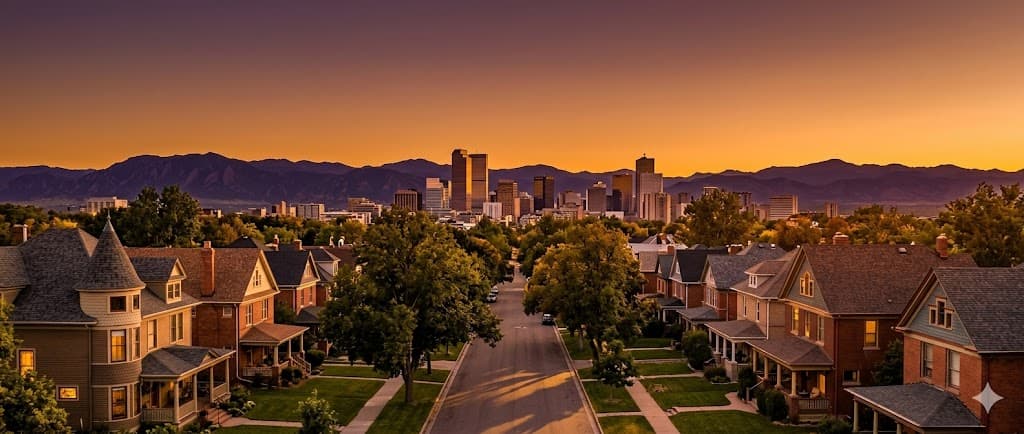
Denver Refinance — Should You Actually Do It?
Most Denver homeowners should NOT refinance — but some absolutely should. The difference between the two is math, not marketing. I run both scenarios so you see the real answer before you commit to anything.

Should You Refinance?
3 quick questions. Instant preliminary answer.
No credit impact · No email required
Where Does Your Current Rate Fall?
Your current mortgage rate is the single biggest factor in whether refinancing makes sense for your Denver home. Here is how to read yours.
Under 5% — Do NOT Refinance
Your rate is an irreplaceable asset. Refinancing would destroy it and cost you tens of thousands over the life of the loan. If you need cash, a HELOC accesses equity without touching this rate. If you need a lower payment, extending your term through a HELOC achieves the same result.
What if the most valuable financial decision you make this year is the one you decide NOT to make?
5% to Current Market — It Depends
This is the gray zone where the answer depends entirely on your specific numbers. How long are you staying? What are the closing costs? What is your break-even timeline? I run both the refinance and the HELOC scenarios side by side so you see which one actually wins for your Denver situation.
How confident are you that the rate improvement justifies the closing costs over your expected stay?
Above Current Market — Refinancing Probably Wins
If your current rate is meaningfully above where the market sits today, refinancing could genuinely lower your monthly payment and your total interest cost. The key is making sure the savings outweigh the closing costs within your planned stay. I get you the best available rate and show you the exact break-even math.
When you look at your monthly statement, what would a meaningfully lower payment change about your financial picture?
What if your current rate already tells you the right answer — and the 60-second assessment below confirms it?
Denver Refinance Math
$130,000+
What losing your sub-5% rate costs over 10 years on a typical Denver mortgage.
Before you refinance, make sure the math actually works in your favor.
Find Your Denver Answer in 60 Seconds
10 questions. No credit impact. No email required. Your situation is unique — this assessment accounts for rate, timing, goals, and divorce requirements to give you a personalized starting point.
What's your current mortgage rate?
3 Scenarios Where Denver Homeowners Should Refinance
Refinancing is not always wrong — it is wrong for the wrong reasons. Here are the three situations where the math genuinely supports it.
High Current Rate — Meaningful Savings Available
If your current Denver mortgage rate is meaningfully above today’s market, refinancing can lower your payment by hundreds per month. The key word is “meaningfully” — a 0.5% improvement rarely justifies $10,000+ in closing costs. I calculate your exact break-even timeline. If you will not stay long enough to recoup the costs, a HELOC accomplishes more for less.
Divorce Requires Removing a Spouse
When a divorce decree requires one spouse to be removed from the mortgage, a refinance is often the only legal path. A HELOC cannot satisfy this requirement — you need a new first mortgage in one name only. I specialize in Denver divorce refinances and coordinate with attorneys, mediators, and title companies to make the transition clean. If you are going through this, the right lender and the right timing can save thousands.
Major Consolidation Where the Math Works
If you are carrying $50,000+ in high-interest debt and your mortgage rate is already above 5.5%, consolidating everything into a single lower-rate mortgage can genuinely save money. But this only works when the total interest saved exceeds the refinance closing costs within your stay timeline. I run the full comparison — refinance consolidation versus HELOC payoff — so you see which path actually costs less over time.
HELOC vs. Cash-Out Refinance — Denver Edition
For most Denver homeowners who locked in low rates between 2020 and 2022, the HELOC wins decisively. Here is why.
| Feature | ✅ HELOCUsually Better | 🔄 Cash-Out Refi |
|---|---|---|
| Your existing rate | Stays untouched | Replaced entirely at new rate |
| Closing costs | $0–$500 | $8,000–$15,000+ on typical home |
| Funding speed | 5 days (CO Home Equity) | 30–45 days |
| Interest charged on | Only the amount you draw | Entire new loan balance |
| Flexibility | Draw, repay, re-borrow | One-time lump sum |
| Rate adjusts with Fed cuts | Yes — drops automatically | No — locked at closing rate |
| Removes someone from mortgage | No | Yes — required for divorce |
| Best Denver use case | Cash access while protecting your rate | High-rate replacement or divorce requirement |

“I run both scenarios for every Denver homeowner who calls me about refinancing. The refinance quote AND the HELOC alternative, side by side. When you see both numbers, the right answer becomes obvious. And if neither option makes sense right now, I will tell you that too.”
— Bobby Friel, CO Home Equity · Founder · NMLS# 332039
Denver Homeowners Who Got the Right Answer
Some came in wanting a refinance and left with a HELOC. Some needed a refinance and got the best rate available. Every one of them got the answer that actually saved them money.

Sarah & Tom — Saved from a Bad Refi
Sarah and Tom called about refinancing their Wash Park Tudor to fund a $150,000 whole-home renovation. Their rate was 2.875% on a $780,000 balance. Bobby showed them that a cash-out refinance would cost $19,500 in closing fees and add $1,720 per month by replacing their historic low rate. A $175,000 HELOC funded the entire renovation with room for landscaping, and their 2.875% first mortgage never changed. Savings over 15 years: $94,000.
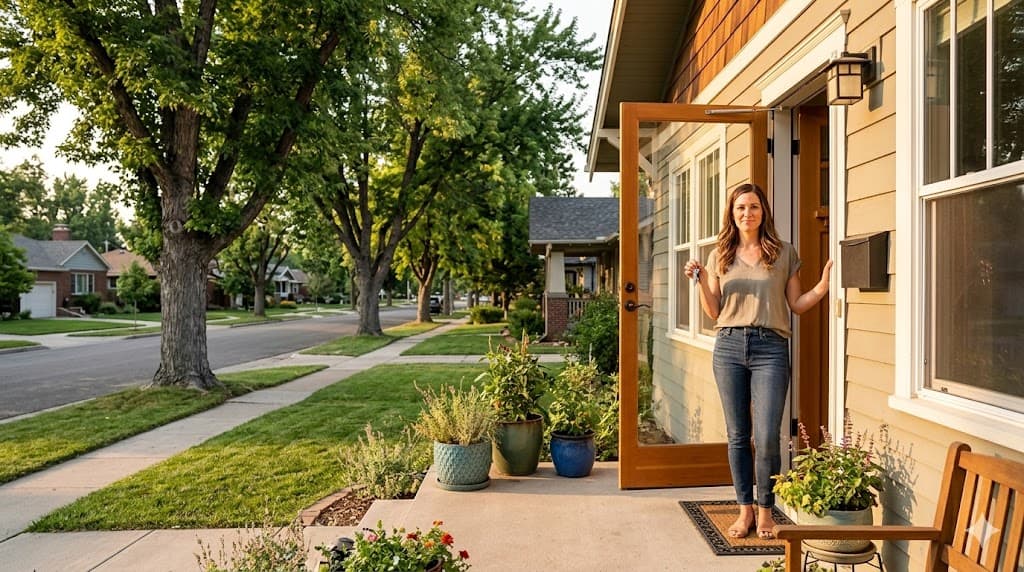
Jennifer — Divorce Refi, Clean Break
Jennifer's divorce required her to refinance her ex-husband off their Park Hill home — a $740,000 property with significant equity. The decree gave her 90 days, and finding a lender who could handle a high-value Denver divorce refi efficiently was critical. Bobby matched her to a portfolio lender experienced with Denver County family law cases. Closed in 30 days at a competitive rate. Jennifer kept the Park Hill home, maintained stability for her children, and moved forward.
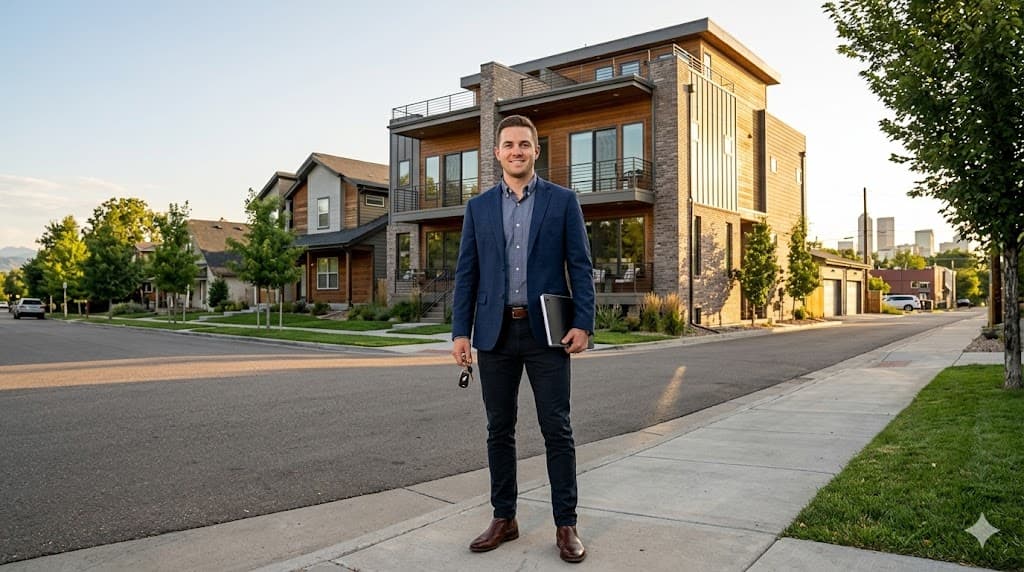
Marcus — Legitimate Refi Win
Marcus bought his Cap Hill condo in 2017 at 4.875%. While his RiNo and Highlands friends who purchased in 2020 had rates 2 points lower, Marcus was stuck at a higher rate from a different era. Bobby confirmed the math: refinancing from 4.875% to 3.875% on his $380,000 balance saved $314 per month. Closing costs of $7,800 created a 25-month break-even. Marcus loved Cap Hill and had no plans to move. A clear refi win.

Maria — Came for Refi, Left with HELOC
Maria was convinced she needed a cash-out refinance on her Highlands Victorian to build a detached ADU. Her rate was 3.0% on a $680,000 balance. Bobby showed her the true cost: refinancing would add $108,000 in interest over the loan's remaining term by replacing that rate. A $200,000 HELOC funded the ADU construction completely. The finished ADU now rents for $2,200 per month, and Maria's 3.0% first mortgage stayed intact.
These are illustrative examples based on real Denver refinance consultations. Individual results vary based on credit, property, and market conditions.

“My job is not to close a refinance — my job is to give you the right answer. For most Denver homeowners with rates below 5%, that answer is a HELOC. For homeowners going through a divorce or carrying a rate above today’s market, a refinance may genuinely be the better path. I run both scenarios so you never have to wonder if you made the wrong choice.”
— Bobby Friel, CO Home Equity · Founder · NMLS# 332039
Questions Worth Asking Before You Refinance Your Denver Home
🔒 What if your current Denver mortgage rate is actually an asset worth protecting?
Most Denver homeowners who locked in rates below 5% between 2020 and 2022 are sitting on a financial asset that may never be available again. A refinance replaces that rate entirely. Before you even consider it, I run the math to show exactly what you would gain versus what you would lose. If the numbers say keep your rate, I will tell you — and show you the HELOC alternative.
⚖️ Have you actually compared what a refinance costs versus what it saves?
Refinance closing costs on a typical Denver property run $8,000 to $15,000. If you are saving $200/month on your payment, it takes 40 to 75 months just to break even. I calculate your exact break-even timeline before you commit to anything — and if the math does not work, I will show you the alternative that does.
🔄 Did you know a HELOC can accomplish most of what a Denver refinance does — without touching your first mortgage?
Access cash, consolidate debt, fund renovations — a HELOC does all of this while your existing rate stays untouched. The only scenarios where a refinance genuinely wins are high current rates, divorce requirements, or very specific consolidation math. I run both scenarios so you see the real comparison.
📊 What would it mean to know your real answer before you talk to any lender?
Most Denver homeowners spend weeks calling banks and filling out applications before they know whether refinancing even makes sense. I give you the answer in one conversation — your real numbers, your real break-even, your real alternatives. No credit pull. No obligation. Just the math.
🏦 When was the last time someone told you NOT to refinance?
Every bank wants to close a loan. I get paid to give you the right answer. If refinancing costs you more than it saves — and for most Denver homeowners with sub-5% rates, it does — I will tell you and show you what to do instead. My reputation is built on the transactions I walk away from, not the ones I close.
🎯 If you could see your Denver refinance decision from 10 years out, would the answer change?
A refinance that saves $150/month sounds good today. But if it replaces a 3.25% rate with a higher one, the total interest cost over 10 years can exceed $130,000. I run the long-term math so you see both the monthly picture and the lifetime picture. The right answer depends on which timeframe matters most to you.
What Most Denver Lenders Will Not Tell You
A HELOC rate drops automatically with every Fed cut.
A refinance locks you in at today’s rate forever. A HELOC adjusts with the market — so when the Fed cuts, your rate drops without refinancing again. Which structure gives you more flexibility?
Denver Refinance Picture by Neighborhood
Different Denver neighborhoods carry different refinance considerations. Here is how the math looks across the city.
| Neighborhood | Median Value | Typical Equity | Best PathKey |
|---|---|---|---|
| Cherry Creek | $1.2M | $350K–$500K+ | HELOC usually better |
| Wash Park | $1.1M | $300K–$450K | HELOC usually better |
| Highlands / LoHi | $850K | $200K–$320K | HELOC usually better |
| Park Hill | $685K | $150K–$250K | Divorce refi common |
| RiNo | $720K | $150K–$280K | HELOC for investment capital |
| Central Park | $650K | $130K–$220K | HELOC usually better |
| Cap Hill / Cheesman | $480K | $80K–$150K | Rate drop refi possible |
| Green Valley Ranch | $475K | $70K–$130K | Refi if rate above 5% |
| Sunnyside | $650K | $140K–$240K | HELOC for renovation ROI |
Denver Neighborhoods — Refinance vs. HELOC by Area
The right answer depends on where your Denver home sits. Here is the neighborhood-level picture.
Cherry Creek
$800K–$2M+
Cherry Creek is Denver’s luxury district, and homeowners here hold the city’s largest equity positions — often $350K to $500K or more. For Cherry Creek owners considering a refinance, the stakes are enormous. Replacing a 3% rate on a $900,000 balance at today’s rates costs $1,800+ more per month. A HELOC is almost always the smarter move in Cherry Creek.
The only exception is divorce refinances, which are common in Cherry Creek given the property values involved. When a decree requires one spouse off the mortgage, I match Cherry Creek homeowners to portfolio lenders experienced with high-value Denver properties.
Washington Park (Wash Park)
$750K–$1.5M
Wash Park homeowners sit on $300K to $450K in typical equity, making this neighborhood one of Denver’s strongest HELOC candidates. The Tudor homes, Craftsman bungalows, and new-build luxury properties along the park command premium values.
Refinancing a Wash Park mortgage almost never makes sense for owners who locked in rates below 4%. The math is stark: on a $700,000 balance, even a 2-point rate increase adds over $1,100 per month. A HELOC preserves your low rate while giving you flexible access to six figures of equity.
Highlands / LoHi
$650K–$1.2M
The Highlands and LoHi represent Denver’s hottest dining and lifestyle scene, with property values reflecting the demand. Homeowners here typically hold $200K to $320K in equity. Many purchased Victorian cottages or modern townhomes during 2019–2021 and locked in rates that would be impossible to replace today.
For Highlands homeowners, a HELOC is the tool that unlocks equity for renovation or investment without sacrificing the rate advantage. The only refinance scenarios that work here are owners who bought at 5%+ rates before the 2020 drop — and there are fewer of those every year.
Park Hill
$600K–$1M
Park Hill’s established character and strong school access make it one of Denver’s most family-oriented neighborhoods. Equity positions of $150K to $250K are common, built through years of steady appreciation in a neighborhood with deep, organic demand.
Park Hill sees a notable share of divorce refinances — families who need to restructure homeownership after a separation. I work with Denver family law attorneys regularly and know which lenders handle Park Hill divorce refis most efficiently. For non-divorce scenarios, the HELOC is usually the winner here.
RiNo (River North Art District)
$550K–$900K
RiNo has been Denver’s fastest-appreciating neighborhood, transforming from warehouses to a tech-and-creative hub. Condos and townhomes dominate, with owners who purchased in 2019–2022 sitting on $150K to $280K in equity after just a few years.
RiNo owners who call about refinancing are often looking for investment capital — they want to use their RiNo equity into a rental property or business venture. A HELOC gives them that capital without touching the low rate they locked on their RiNo property. I run both scenarios, but the HELOC wins in RiNo about 70% of the time.
Central Park (Stapleton)
$500K–$800K
Central Park’s master-planned community has matured into one of Denver’s premier family neighborhoods. With newer construction (2005–2020), strong schools, and extensive amenities, homeowners here have built $130K to $220K in equity.
Many Central Park owners locked in rates below 3.5% during the peak buying years. Refinancing at today’s rates would add hundreds per month to their payments. A HELOC lets Central Park families access equity for basement finishes, investment properties, or college tuition without disrupting the mortgage that anchors their monthly budget.
Capitol Hill / Cheesman Park
$350K–$650K
Cap Hill and Cheesman Park offer Denver’s most accessible urban living, with condos and apartment conversions at lower price points. Equity positions of $80K to $150K are more modest but still meaningful.
Interestingly, Cap Hill is one of the Denver neighborhoods where a traditional refinance can make sense — particularly for owners who purchased at higher rates in 2017–2018. Lower property values mean lower closing costs, and the break-even math can work in 18 to 24 months. I evaluate Cap Hill scenarios individually rather than defaulting to the HELOC recommendation.
Green Valley Ranch / DIA Corridor
$400K–$550K
Green Valley Ranch is Denver’s most affordable established neighborhood, with equity positions of $70K to $130K. The DIA corridor’s ongoing development — including the 61st & Pena project — is pushing values upward.
For GVR owners with rates above 5%, a refinance may make genuine financial sense. Lower property values mean lower closing costs ($5,000 to $8,000), and the break-even can be reached in under 2 years. For GVR owners with good rates, a HELOC is the better tool — especially for those building rental portfolios along the DIA growth corridor.
Sunnyside
$500K–$800K
Sunnyside has been one of Denver’s quietest appreciation stories — a former working-class neighborhood transformed by Highlands proximity. Owners who bought at $300K in 2015 are now sitting on $650K+ properties with $140K to $240K in equity.
Sunnyside homeowners frequently call about refinancing to fund renovations. Bobby’s advice: a HELOC-funded renovation in Sunnyside generates some of Denver’s highest ROI because the neighborhood’s trajectory is still climbing. An updated Sunnyside home commands a significant premium over unrenovated inventory, and a HELOC funds that renovation without replacing your low mortgage rate.
How Bobby Handles Your Denver Refinance Decision
What if you could know the right answer before you ever committed to anything? Here is how I work.
Tell Me Your Denver Situation
Fill out a short form — your Denver property, your current rate, and what you are trying to accomplish. No credit impact. I read every submission personally.
I Run Both Scenarios
Before we ever talk, I have already run your refinance numbers AND your HELOC alternative side by side. Break-even timeline, total cost comparison, monthly payment impact. I come to our conversation with answers, not questions.
We Review the Math Together
A 15–30 minute video call where I walk you through both options. If refinancing wins, I show you exactly why and by how much. If HELOC wins, I show you that too. If neither makes sense right now, I will tell you and we do not move forward.
I Match You With the Right Lender
One application. I match your Denver profile to the lender that prices your specific situation best — rate, closing costs, timing. You never need to call a bank. I have already done that work.
Funded — 30 to 45 Days
Full coordination from application through closing. Title, appraisal, underwriting — I manage every step. Your Denver refinance closes on schedule with no surprises.
No credit impact to get started. Both scenarios compared.
Denver Refinance Requirements
If refinancing is the right path for your situation, here is what it takes to qualify. These are the real numbers.
Credit Score
620 minimum for conventional refinance. FHA refinance available at 580+. Best rates require 740+ credit score. If you are close but not quite there, I can show you the fastest path to qualifying.
Loan-to-Value (LTV)
Up to 80% LTV for rate-and-term refinance. Cash-out refinance typically requires 75\u201380% LTV depending on property type and credit. On a $625,000 Denver home, the math can work in your favor with sufficient equity.
Debt-to-Income (DTI)
Up to 50% DTI for conventional. Your total monthly debt payments including the new mortgage payment must stay below 50% of gross monthly income. Child support and alimony count as qualifying income where applicable.
Documentation
Proof of income (W-2s, tax returns, pay stubs). Active homeowners insurance with 100% replacement cost. Clean title. Current property appraisal (ordered during process). For divorce refinances: copy of divorce decree or separation agreement.
5 Refinance Mistakes Denver Homeowners Make
I see these errors repeatedly. Each one costs Denver homeowners real money — and every one is avoidable.
Ignoring Hail Damage Before Your Denver Appraisal
Denver sits in one of the most active hail corridors in the United States. If your roof has unreported hail damage, it will reduce your appraisal value. Park Hill bungalows, Highlands Victorians, and Central Park newer roofs are all vulnerable. Get a roof inspection and complete repairs before starting any refinance.
Not Comparing the HELOC Alternative on High-Equity Denver Properties
Denver neighborhoods like Cherry Creek, Wash Park, and Highlands have equity positions of $200K to $500K+. The cost difference between a refinance and a HELOC on these high-value properties can exceed $80,000 over the loan term. I run both scenarios for every Denver homeowner — you need to see the full comparison.
Refinancing with Less Than 5 Years Remaining in Your Denver Home
Denver attracts mobile professionals who may relocate to another city or neighborhood within a few years. If you are considering a move from Cap Hill to the suburbs, or from Denver to Boulder, your refinance closing costs of $10,000 to $20,000 may never be recovered. Know your timeline before committing.
Ignoring Break-Even Math on Denver's Higher Closing Costs
Denver's higher property values mean higher closing costs. On a $700,000+ home, closing costs of $15,000 to $20,000 are common. If your break-even is 4 years and you might move in 3, you paid five figures for nothing. I calculate the exact break-even month before recommending any Denver refinance.
Skipping the Insurance Review Before Refinancing
Denver's hail exposure means your homeowners insurance needs to be current and adequate. If your coverage is based on your 2019 purchase price and your home has appreciated $150,000+, you may be underinsured. Every refinance requires proof of insurance — use that moment to get a full review.
Denver Alerts — What Could Affect Your Refinance
Smart refinance decisions account for risks specific to your Denver neighborhood. Here is what to watch for.
Park Hill & Older Denver Neighborhoods
Homes built before 1960 often have original clay sewer lines, knob-and-tube wiring, and aging foundations. These items surface during refinance appraisals and can reduce your home's value. A proactive sewer scope ($200 to $400) and home inspection before refinancing helps you address problems before they derail the transaction.
Highlands & LoHi
New infill construction next door can boost or hurt your property value depending on quality and scale. If a developer builds a $1.2M modern next to your $700K cottage, your refinance appraisal may reflect the neighborhood's upward trajectory — or it may highlight the gap between your property and newer builds. Know your comparable before starting.
Central Park
HOA special assessments are hitting some Central Park sections as the original infrastructure ages. Community pool repairs, road resurfacing, and drainage improvements can trigger $5,000 to $15,000 assessments per home. Check your HOA reserve study — an upcoming assessment changes your financial picture and may make a HELOC more appropriate than a refinance.
Denver Metro Hail Corridor
Denver proper experiences some of the highest hail claim volumes in the country. Every Denver neighborhood is affected, from Green Valley Ranch in the east to Sunnyside in the northwest. Unreported roof damage is the single most common refinance appraisal complication in Denver. File claims and repair proactively.
Refinancing? Your Insurance Probably Needs Updating Too.
Every refinance requires proof of homeowners insurance with 100% replacement cost coverage. If your Denver home has appreciated significantly since you last reviewed your policy, you may be underinsured by $100,000 or more — which means your lender could delay or deny your refinance closing.
Colorado homeowners face real exposure: hail damage on the Front Range, wildfire risk in foothills and mountain zones, and rising replacement costs driven by construction inflation. A single storm can cause $10,000 to $30,000 in damage.
Through our partnership with Direct Insurance Services, we compare 30+ carriers to find the right coverage at the best rate — and we coordinate the timing so your insurance is ready before your refinance closes. Average savings: $400–$800/year on premiums.
Denver Refinance Market
Denver is Colorado’s capital, its largest city, and the economic engine that drives the entire Front Range. With 715,522 residents in the city proper and over 2.9 million across the metro, Denver’s housing market is the most complex and diverse in the state. Property values range from $400K in Green Valley Ranch to $2M+ in Cherry Creek, and equity positions are equally varied.
At a $625,000 median home value and $250,000 in average tappable equity, Denver represents the largest concentration of accessible home wealth in Colorado. The question most Denver homeowners face is not whether their equity is real — it is how to access it without making an expensive mistake. A full refinance replaces your entire mortgage, rate and all. For the majority of Denver owners who locked in rates below 4% during 2020–2022, that replacement costs tens of thousands of dollars over the life of the loan.
Denver’s economy is anchored by tech, aerospace, healthcare, and a growing cluster of fintech and cybersecurity firms. The city’s sustained population growth from in-migration, combined with geographic constraints between the foothills and the plains, creates persistent housing demand that supports long-term property values. For refinance decisions, this economic resilience means your Denver collateral is backed by structural forces — not speculation.
Denver Refinance — Frequently Asked Questions
Everything Denver homeowners need to know about refinancing, answered in plain language.
Still have questions about refinancing your Denver home? I am here to help.
“Every Denver homeowner who calls me about refinancing gets the same treatment: I run the refinance scenario, I run the HELOC alternative, and I put both sets of numbers in front of you. If neither path makes financial sense right now, I will tell you that too. My reputation is built on the right answer, not the closed loan. If you are wondering whether to refinance your Denver home, one conversation will give you clarity.”
— Bobby Friel, CO Home Equity · Founder · NMLS# 332039
Explore Nearby Denver Metro Refinance Pages
Should You Refinance Your Denver Home? Get the Real Answer.
One conversation. Both scenarios compared. No credit impact to start. If refinancing saves you money, I will find you the best rate. If it does not, I will show you the alternative that does.
No credit impact to get started. Both scenarios compared side by side.