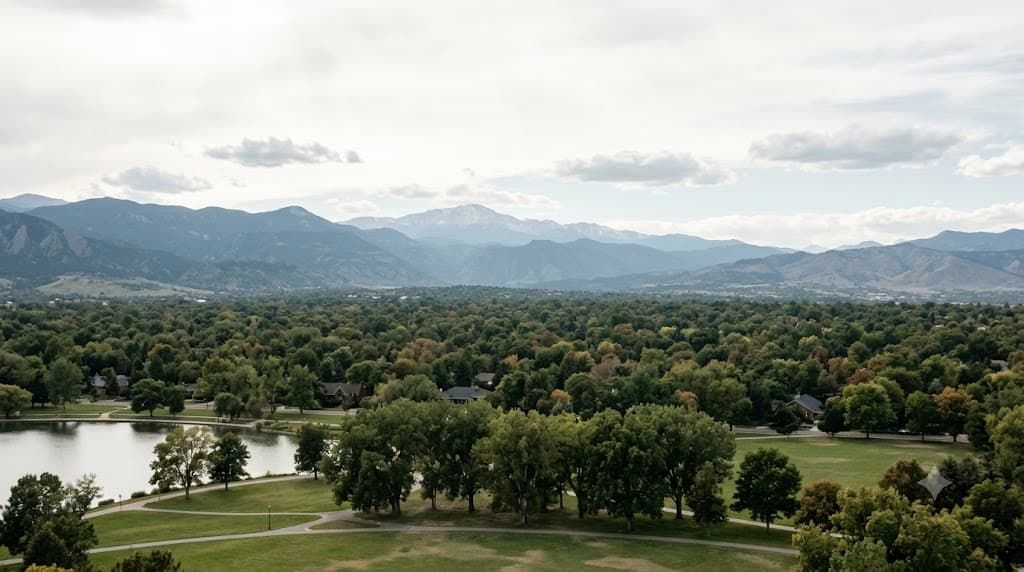
Denver · Denver Metro · Median Home Value $625,000 · Population 715,522

Denver Home Equity — $250,000 in Average Tappable Equity

Denver homeowners are sitting on record equity. Access $50K to $750K through a HELOC funded in as few as 5 days — without touching the low mortgage rate you locked in years ago. One application. I handle the placement. You get the right answer.

See Your Maximum HELOC

Slide to your home’s current value for an instant estimate.

$300K$2M+
$625,000

Maximum HELOC Available

$531,250

Based on 85% CLTV · Program maximum: $750,000

Get Your Real Equity Number →

No credit impact · 60-second full estimate

🔒No Credit Impact to Check Options640 Minimum Credit Score🏠Up to 85% CLTVFunded as Few as 5 Days💰No Cash Due at Closing🔄Your First Mortgage Rate Stays Untouched
$625,000
Median Home Value
Denver 2026
$250,000
Average Equity
Estimated tappable
715,522
Population
Denver Metro
5 Days
Funding Speed
Through CO Home Equity
Real Denver Homeowners

Denver Homeowners Who Put Their Equity to Work

Before you keep reading, look at the Denver homeowners below. Which scenario sounds closest to where you are right now? Whichever one resonates — that’s the conversation worth having.

Marcus and Elena — Park Hill ADU and debt elimination story
Park Hill

🏗️Marcus & Elena — The ADU Renovator

Marcus and Elena bought their Park Hill bungalow for $420K in 2019. Today it’s worth $685K. A $140K HELOC wiped out $38K in 22%-APR credit card debt AND built a backyard ADU that now rents for $2,100/month. Net monthly gain after the HELOC payment: $1,400 positive. Their 3.1% first mortgage never moved.

💵 $140K: HELOC🏠 ADU: + debt killed📈 $2,100/mo: rent
Jen — Highlands Victorian ADU story
Highlands

🏠Jen — The Highlands ADU Builder

I basically got paid to increase my net worth. A $175K HELOC built a 600-sf ADU behind my Victorian. Traveling nurses rent it at $2,400/month, and the ADU added $180K to my home’s appraised value.

💵 $175K: HELOC🏠 600-sf: ADU📈 $2,400/mo: rent
David — Central Park aerospace engineer turned Denver investor
Central Park

🏡David — The Duplex Investor

My HELOC turned one property into two income streams. I drew $125K for a GVR duplex down payment. The duplex nets $900/month after the mortgage, and my interest-only HELOC payment is $875. I still have $75K available for the next one.

💵 $125K: draw🏡 GVR: duplex💰 $825/mo: net
The Ramirez family — Wash Park to Breckenridge mountain home story
Wash Park

🏔️The Ramirez Family — Mountain Home, Done

We’d been talking about buying in the mountains for five years. The HELOC made it real in five days. $200K from our Wash Park equity became a Breckenridge condo that rents 22 weeks a year at $350/night — $54K annual STR income. The family gets the other 30 weeks.

💵 $200K: draw🏔️ Breck: condo📈 $54K/yr: STR

These are illustrative examples based on real Denver funding scenarios.

Bobby Friel — CO Home Equity Founder, NMLS# 332039

“Most Denver homeowners have a number in their head — the renovation, the investment property, the debt they’d eliminate if they could. My job is to turn that number into a funded HELOC in 5 days. I already know which lender prices your Denver situation best. One application. One conversation. One right answer.”

— Bobby Friel, CO Home Equity · Founder · NMLS# 332039

Denver Homeowner Equity

$250,000+

The average Denver homeowner’s tappable equity.The question isn’t whether you have it — it’s what you’re going to do with it.

Neighborhood Guide

Denver Neighborhood Equity Map — Where Your Home Fits

Denver’s neighborhoods carry distinct equity profiles and HELOC strategies. Find where your home fits below.

NeighborhoodMedian ValueTypical Equity RangeTop HELOC UseKey
Cherry Creek$1.2M$350K–$500K+Portfolio diversification
Wash Park$1.1M$300K–$450KLuxury renovation
Highlands / LoHi$850K$200K–$320KMountain home down payment
Park Hill$685K$150K–$250KADU construction
RiNo$720K$150K–$280KInvestment property
Central Park$650K$130K–$220KBasement finish
Cap Hill / Cheesman$480K$80K–$150KRental portfolio building
Green Valley Ranch$475K$70K–$130KAdditional rental acquisition
Sunnyside$650K$140K–$240KRenovation ROI

Denver Neighborhoods — What Your Equity Looks Like by Street

When you think about your home, you probably don’t think in metro-wide averages — you think in terms of your block, your street, your neighbors’ recent sales. Here’s the neighborhood-level picture.

RiNo (River North Art District)

$550K–$900K

Denver’s fastest-appreciating neighborhood has transformed from an industrial warehouse district into a tech-and-creative hub anchored by breweries, galleries, and coworking spaces. Condos and townhomes dominate the inventory, with many purchased by young professionals who locked in sub-4% rates during 2020–2022.

These owners now sit on $150K to $300K in equity after just a few years of ownership. RiNo’s continued gentrification and proximity to downtown make it one of Denver’s strongest HELOC candidates — values here are still climbing as new mixed-use developments draw more employers and residents.

Park Hill

$600K–$1M

One of Denver’s most established neighborhoods, Park Hill offers tree-lined streets, strong community identity, and a diverse housing stock ranging from 1920s bungalows to mid-century ranches. Appreciation here has been steady and strong, driven by families attracted to the neighborhood’s schools, parks, and walkable character.

Homeowners who bought in Park Hill five or more years ago are often sitting on $200K to $400K in equity. The neighborhood’s stability and consistent demand make it an ideal HELOC scenario — lenders view Park Hill collateral favorably because values are supported by deep, organic demand rather than speculative buying.

Washington Park (Wash Park)

$750K–$1.5M

Wash Park is Denver’s premium established neighborhood — a walkable enclave of Tudors, Craftsmans, and new-build luxury homes surrounding one of the city’s most beloved parks. Restaurants, boutiques, and fitness studios line South Gaylord Street and Old South Pearl.

With homes regularly trading above $1M, Wash Park homeowners hold some of Denver’s largest equity positions. Many owners here use HELOCs to fund high-end renovations that further increase property value, or as down payments on mountain vacation homes in Breckenridge or Steamboat Springs.

Highlands / LoHi

$650K–$1.2M

The Highlands and Lower Highlands (LoHi) have become Denver’s trendiest dining and nightlife destination, blending Victorian cottages with sleek modern townhomes and rooftop-deck condos. Appreciation in the Highlands has been among the strongest in the metro over the past decade, driven by walkability, restaurant culture, and proximity to downtown via the Highland Bridge. Homeowners here benefit from a unique architectural mix where a $700K renovated Victorian can sit next to a $1.1M new-build — both generating strong equity returns.

Capitol Hill / Cheesman Park

$350K–$650K

Capitol Hill and Cheesman Park offer Denver’s most accessible urban living, with condos and historic apartment conversions dominating the market at $350K to $650K. This is Denver’s walkability epicenter — restaurants, bars, Cheesman Park, and the Denver Botanic Gardens are all within walking distance. For investors, Cap Hill represents a compelling rental play: condo equity can be tapped via HELOC to fund down payments on additional rental units in the same neighborhood, building a portfolio in one of Denver’s highest-demand rental markets.

Central Park (Stapleton)

$500K–$800K

Denver’s largest master-planned community has matured into a family-focused neighborhood with newer construction, excellent schools, parks, pools, and a thriving town center. Central Park homes were built primarily between 2005 and 2020, meaning many owners locked in low rates and have watched values climb steadily. The neighborhood’s family-oriented amenities drive consistent demand, and its proximity to DIA makes it popular with frequent travelers and aerospace professionals working at nearby facilities.

Green Valley Ranch / DIA Corridor

$400K–$550K

Green Valley Ranch and the broader DIA corridor represent Denver’s most affordable entry point with the strongest rental yield potential. Airport proximity, the A-Line commuter rail, and billions in planned development around DIA’s Pena Boulevard are driving both appreciation and rental demand. Investors use HELOCs on GVR properties to fund additional rental acquisitions in the same corridor — a strategy that rides Denver’s eastward growth trajectory and the ongoing infrastructure investment that will reshape this part of the city over the next decade.

Cherry Creek

$800K–$2M+

Cherry Creek is Denver’s luxury shopping and lifestyle district, home to the Cherry Creek Shopping Center, high-end boutiques, and some of the finest dining in the metro. The neighborhood combines upscale condos in Cherry Creek North with estate homes south of the creek.

With properties regularly exceeding $1.5M, Cherry Creek homeowners hold the largest equity positions in Denver proper. HELOC draws here commonly fund portfolio diversification, luxury renovations, or down payments on second mountain properties — using substantial equity without disrupting first-mortgage rates that may be locked well below current market levels.

Sunnyside

$500K–$800K

Sunnyside has quietly become one of Denver’s strongest appreciation stories — a former working-class neighborhood transformed by its proximity to the Highlands and LoHi. Original bungalows purchased for $300K in 2015 are now worth $650K+. The mix of longtime homeowners and new renovation projects creates a neighborhood where equity positions are substantial and growing.

HELOC-funded renovations here generate some of the highest ROI in Denver because the neighborhood’s trajectory is still climbing — updated homes command a premium that unrenovated properties can’t match.

Put Your Equity to Work

Denver-Specific Equity Strategies

Denver’s market dynamics create equity opportunities worth considering. Here are the strategies Denver homeowners are using most in 2026.

ADU Construction — Denver’s Biggest Equity Play

Denver passed progressive ADU (Accessory Dwelling Unit) regulations that allow homeowners to build secondary units on most residential lots citywide. This is a huge opportunity for equity strategy. Building an ADU costs $150K to $250K using HELOC funds, but the finished unit can generate $1,500 to $2,500 per month in rental income while adding $100K or more to your property’s appraised value.

In neighborhoods like Park Hill, Highlands, and Central Park, ADUs effectively pay for themselves within five to seven years while simultaneously increasing your total equity position. The HELOC interest used for ADU construction may also be tax-deductible since it improves the home securing the loan.

Investment Property Down Payments

Denver’s strong rental market makes the city ideal for portfolio building using HELOC equity. A $150K HELOC draw from your primary residence provides a 25% down payment on a $600K rental in neighborhoods like Green Valley Ranch, Montbello, or the DIA corridor where rental yields are strongest.

Denver’s sustained population growth from in-migration means rental demand continues to outpace supply, supporting strong occupancy rates and rising rents across the metro. Many Denver homeowners I work with have used a single HELOC to acquire two or three rental properties, creating passive income streams that more than offset the HELOC interest cost.

Mountain Home Purchase

Denver sits 60 to 90 minutes from Colorado’s world-class ski resorts, and many Denver homeowners dream of owning a mountain retreat. A HELOC on your Denver home provides the down payment for a cabin in Breckenridge, a condo in Vail, or a retreat in Steamboat Springs — without the complexity or higher rates of a second-home mortgage.

Because you only pay interest on the amount you draw, this strategy gives you flexible access to mountain living while keeping your Denver financial structure intact. The mountain property can even generate short-term rental income during peak ski and summer seasons, offsetting your HELOC payments.

Strategic Renovation in Appreciating Neighborhoods

In rapidly appreciating Denver neighborhoods like RiNo, Highlands, and Sunnyside, a well-targeted renovation can generate returns that far exceed the cost of the HELOC capital. A $75K kitchen and bathroom remodel in a Highlands Victorian can add $100K or more to the home’s value.

A $50K basement finish in Central Park creates additional livable square footage that appraisers value highly. Denver’s tight housing inventory means renovated homes command significant premiums over unrenovated comparable properties — and HELOC interest for home improvements is potentially tax-deductible, making this one of the most financially efficient uses of home equity.

Ready to Put Your Denver Equity to Work?

Checking your options does not affect your credit score. No obligation. Personalized to your address.

What You Should Know

Questions Worth Asking Before You Tap Your Denver Equity

🔒 Did you know you can keep your low first mortgage rate AND access your Denver equity?

Most Denver homeowners think they have to choose — refinance the entire mortgage or do nothing at all. The HELOC sits behind your first mortgage as a separate line of credit. Your 3.1%, 3.5%, or 3.9% rate stays exactly where it is. The HELOC is independent. One product gives you cash access. The other preserves your rate. You don’t choose — you get both.

What’s been keeping you from acting on the Denver equity you already have?

Every month you wait has a real cost. The credit card interest accumulates. The renovation gets more expensive as material prices climb. The investment opportunity passes to someone else. HELOC rates move with the Fed automatically — when rates drop, your rate drops too without refinancing. You don’t have to wait for the perfect moment. You have to start before the cost of waiting exceeds the cost of acting.

📊 Want to know exactly what you can afford before you commit to anything?

A HELOC is a second lien with a predictable monthly payment. I run the full affordability analysis BEFORE you commit, not after. If the math doesn’t work for your Denver family, I’ll tell you and we won’t move forward. I’d rather walk away from a transaction than put a Denver family in a payment they can’t actually afford. Your numbers, your decision, no pressure.

💰 What if no cash was due at closing?

On a HELOC, origination is built into the loan, not charged upfront — nothing due out of pocket at the closing table. Compare that to a cash-out refinance at $8,000 to $15,000 in closing costs paid at the table on a Denver property. The math isn’t even close. Plus there’s no escrow, no reserves, and no prepayment penalties. You can pay it down faster and save on interest whenever you want.

🏠 When was the last time you actually checked what your Denver home is worth?

Most Denver homeowners haven’t run the numbers in 2 to 3 years. The median Denver home has gained meaningful value during that window. If you bought before 2023, you almost certainly have more accessible equity than you realize. Our 60-second calculator tells you instantly — no obligation, no credit pull, just the real number.

🎯 When you think about the next 12 months, what’s the one decision that would unlock everything else?

For some Denver homeowners, it’s the renovation that adds real resale value. For others, it’s the investment property down payment that launches a rental portfolio. For others, it’s the debt elimination that frees up thousands in monthly cash flow. Whatever it is for you — that’s the conversation worth having before another month passes.

Real Numbers

What a Denver HELOC Actually Costs — and What It Could Fund

When you think about a HELOC, you probably focus on what it costs. But the more important question is: what could it fund? Here are real Denver HELOC ranges and what they typically unlock for borrowers in your situation.

HELOC AmountEstimated Monthly PaymentClosing CostsWhat This Could FundKey
$50,000~$350–$450No cash at closingDebt consolidation, Denver business capital, tuition
$100,000~$700–$900No cash at closingLight renovations, Denver investment property down payment
$150,000~$1,050–$1,350No cash at closingKitchen upgrade, Denver ADU partial funding, mountain home down payment
$200,000~$1,400–$1,800No cash at closingMajor Denver remodel, full ADU build, business launch capital
$300,000~$2,100–$2,700No cash at closingMulti-property Denver strategy, complete debt elimination
$500,000~$3,500–$4,500No cash at closingDenver + mountain portfolio, luxury renovation build-out

Estimated monthly payments shown are for illustration purposes only based on current market rate ranges. Your actual rate and payment depend on credit score, equity position, draw amount, and loan term. Autopay discount of 0.25% is available. No prepayment penalties — pay it down faster and save on interest whenever you want.

Looking at this table, what’s the number that catches your eye? More importantly — what’s the Denver use case next to it that you’ve been thinking about for a while?

Bobby Friel — CO Home Equity Founder

“The numbers on the table above matter less than what you’d actually do with the money. When you picture your life 12 months from now with the right HELOC in place — what’s different?”

— Bobby Friel, CO Home Equity · Founder · NMLS# 332039

Our Process

How Bobby Builds Your Denver Equity Strategy

How would it feel to know exactly what your Denver equity options look like before you ever talked to a lender? Here’s how I work.

🏠
01

Tell Me Your Denver Situation

Fill out a short form — your Denver property, your mortgage, and what you’re trying to accomplish. No credit impact. I read every submission personally.

📊
02

I Pull Your Numbers

Before we ever talk, I’ve already run your Denver property data, your equity position, and your CLTV at different scenarios. I come to our conversation with answers, not questions.

🗺️
03

We Build Your Strategy Together

A 15–30 minute video call where I walk you through your real options — not a sales pitch, a financial plan. What you qualify for, what it costs, and whether a HELOC is even the right move for your Denver situation. If it’s not, I’ll tell you.

🏦
04

I Match You With the Right Lender

One application. I match your Denver profile to the lender that prices your specific situation best — CLTV, terms, funding speed. You never call a bank. You never need to call a bank — I’ve already done that work.

05

Funded — As Few as 5 Days

E-notary signing from your Denver kitchen table. Funds deposited directly. Most borrowers are funded within 5 business days. Your existing mortgage rate stays untouched.

Checking your options does not affect your credit score.

Avoid These Pitfalls

5 HELOC Mistakes Denver Homeowners Make

I see these errors repeatedly. Each one costs Denver homeowners real money — and every one is avoidable.

1

Not Using Denver’s ADU Ordinance

Denver allows ADUs citywide but most homeowners don’t realize it. An ADU funded by a HELOC can generate $1,500–$2,500/month while adding $100K+ in value. Leaving this opportunity on the table is leaving money on the table.

2

Trusting Your Zestimate

Zillow estimates can be off by 5–15% in Denver neighborhoods with mixed housing stock. I pull verified comparable sales data for your specific block. The difference between a $620K and $680K appraisal could mean $48,000 more in accessible equity.

3

Defaulting to Your Bank Without Exploring Your Options

Most Denver homeowners default to their existing bank without realizing there’s a more strategic path. Your bank has one product shelf and one rate sheet. My job is to know which lender in our network prices your specific Denver profile best — and that answer changes week to week based on lender appetite and pipeline capacity. One conversation with me replaces hours of your own research.

4

Waiting for Rates to Drop

Variable HELOCs automatically decrease when the Fed cuts. Opening now means you get immediate access AND benefit from every future cut. Waiting six months costs you six months of opportunity — and a HELOC opened today captures every 2026 cut automatically.

5

Skipping the Insurance Review

Denver’s hail corridor means your roof could be one storm away from a $15,000 claim. If your coverage is based on your 2019 home value, you’re underinsured by potentially $100,000+. Every HELOC requires proof of insurance — use that moment to get a proper review.

Compare Your Options

HELOC vs. Home Equity Loan vs. Cash-Out Refinance — Denver Edition

Three ways to access your Denver home equity. For most Denver homeowners who locked in low rates between 2020 and 2022, the HELOC wins decisively.

Feature HELOCRecommended🏠 Home Equity Loan🔄 Cash-Out Refi
💵 How funds are receivedRevolving credit line — draw as neededOne-time lump sumOne-time lump sum
🔒 Existing mortgage impactNone — stays completely untouchedNone — stays untouchedReplaced entirely at new (higher) rate
📈 Interest rate typeVariable (or fixed-rate option)Fixed rateFixed rate (on entire balance)
⚡ Funding speed5 days (CO Home Equity)14–30 days30–45 days
🔄 FlexibilityHigh — draw, repay, re-borrowLow — one-time disbursement onlyLow — one-time disbursement only
💰 Cash due at closingNone — origination built into the loanModerate (2–5%)2–5% of entire loan amount paid at the table
💳 Pay interest onOnly the amount you drawFull loan balance from day oneEntire new mortgage balance
🎯 Best Denver use caseRenovations, flexible capital, ongoing needsOne-time, known Denver expenseOnly if upgrading from a high rate

For Denver homeowners who secured mortgage rates below 4% between 2020 and 2022, a HELOC preserves that rate advantage while unlocking flexible equity access. A cash-out refinance would replace your low rate with today’s higher rates across your entire loan balance — costing thousands more per year.

What Most Denver Lenders Don’t Tell You

Every Fed rate cut drops your HELOC rate automatically.

No refinance. No reapply. No waiting. With 2–3 cuts expected in 2026, what would it mean to lock in access today and watch your rate improve on its own?

HELOC Education

How a Denver HELOC Actually Works

Most Denver homeowners understand they have equity. Most don’t understand how a HELOC actually works mechanically — and that misunderstanding is why so many leave money on the table or make the wrong financial choice. Let me walk you through it the way I would on a phone call.

When you draw from a HELOC, you’re not borrowing the entire credit limit at once. You’re borrowing exactly what you need, when you need it. Take $50,000 today for a kitchen remodel. Leave the remaining $150,000 sitting available for the next opportunity. Your interest is only charged on what you’ve actually drawn. That’s why a HELOC is fundamentally different from a fixed home equity loan or a cash-out refinance — both of which deliver a lump sum and start charging interest on the entire amount immediately. Which model fits your actual cash needs better?

Your first mortgage stays completely untouched. The HELOC is a second lien — a separate loan that sits behind your existing mortgage. If you locked in 2.75%, 3.25%, or 3.9% during the 2020 to 2022 window, that rate doesn’t change. Same payment. Same term. The HELOC doesn’t touch it. How important is preserving that rate to your overall Denver financial picture?

Draw Periods by Term Length

10-year HELOC

3-year draw

7-year repayment

15-year HELOC

4-year draw

11-year repayment

20-year HELOC

4-year draw

16-year repayment

30-year HELOC

5-year draw

25-year repayment

Variable rate tied to prime plus margin. Most HELOC rates are variable, moving with the prime rate. When the Fed cuts rates, your payment drops automatically. No refinancing. No reapplying. With 2 to 3 Fed cuts expected in 2026, variable rates are working in Denver borrowers’ favor right now. Have you considered what your monthly payment looks like if rates drop another 0.50% over the next 12 months?

100% initial draw available. You can draw your full credit limit at closing if needed. Additional draws have a $500 minimum up to your total credit limit. No prepayment penalties — pay it down faster and save on interest. No escrows or reserves required.

Not sure how much equity you have? Our guide on how to calculate your Colorado home equity walks through the math step by step. For a deeper look at HELOC mechanics, see how a HELOC works.

Qualification Guide

Denver HELOC Requirements — What You Need to Qualify

Before you wonder if you’d qualify, here’s the straight answer on what it takes. These are the actual numbers — and most Denver homeowners qualify more easily than they think.

Credit Score

640 minimum for primary residences through our lending network. 680 minimum for second homes and investment properties.

Best rates are reserved for 740+ borrowers. If you’re at 620, there are specific steps that can get you to 640 in 30–45 days. I’ll show you exactly what to do.

🏠

Loan-to-Value (CLTV)

Up to 85% CLTV on qualified primary residences. Your combined first mortgage + HELOC cannot exceed 85% of your home’s value. On a $625,000 Denver home, that math can unlock six figures of accessible equity. HELOCs over $400K require 760+ FICO and 75% max CLTV.

📊

Debt-to-Income (DTI)

Up to 50% DTI — more generous than most Denver banks, which cap at 43%. Your total monthly debt payments including the new HELOC must stay below 50% of gross monthly income. Child support and alimony count as qualifying income.

📄

Additional Requirements

Proof of income (W-2s, tax returns, pay stubs). Active homeowners insurance with 100% replacement cost. No 30-day lates in previous 12 months. 5-year seasoning since BK, foreclosure, short sale, or deed-in-lieu. Property types: SFR, PUD, townhomes, duplexes, condos, 3–4 unit.

Equity Risk Intelligence

Denver Neighborhood Alerts — Protect Your Equity Before You Access It

Smart equity access starts with knowing the risks specific to your Denver neighborhood. Here’s what to watch for.

Park Hill & Older Neighborhoods

Homes built before 1960 often have original clay sewer lines. A proactive $12,000–$15,000 sewer line replacement prevents a $40,000+ emergency backup. Smart HELOC use that protects your equity foundation.

Highlands & LoHi

New construction next door can boost OR hurt your value depending on quality. If a developer builds a $1.2M modern next to your $700K cottage, renovating to match the streetscape can capture $150K+ in appreciation.

Green Valley Ranch & DIA Corridor

The 61st & Pena development and Aerotropolis plan will reshape this area over the next decade. Properties within 2 miles of planned transit stations are appreciating fastest — lock in equity access now before values jump further.

Central Park

HOA special assessments are hitting some sections hard as original infrastructure ages. Check your HOA reserve study before drawing equity — an upcoming $10K special assessment changes your financial picture.

Denver homeowners insurance review — protect your home and equity
Protect Your Denver Home

Your HELOC Requires Insurance — When Was the Last Time You Actually Compared?

When was the last time you actually compared your homeowners insurance against current Denver market rates? Your HELOC lender will require proof of active homeowners insurance with 100% replacement cost coverage before funding. Most Denver homeowners haven’t reviewed their policy since they bought the home — and given how much Denver home values have surged, most are either underinsured or overpaying significantly.

Colorado homeowners face real exposure: hail in the Front Range, wildfire in the foothills and mountain zones, severe wind across the plains. A single storm can cause $10,000 to $30,000 in roof and exterior damage to a typical home.

Through our partnership with Direct Insurance Services, we compare 30+ carriers to find Denver homeowners the right coverage at the best possible rate — with specific expertise in Colorado-specific risk factors and high-value home endorsements.

Colorado-specific coverage for Denver exposures
Replacement cost updated to reflect 2026 home values
Compare 30+ carriers in one free review
Removes insurance delays from your HELOC funding timeline
Average savings: $400–$800/year on premiums
Common Questions

Denver HELOC — Frequently Asked Questions

Everything Denver homeowners need to know about accessing their home equity, answered in plain language.

Most Denver homeowners can access up to 80-85% of their home's appraised value minus their existing mortgage balance. With a median home value of $625,000 and strong appreciation across neighborhoods like Wash Park, Cherry Creek, and Highlands, many Denver homeowners qualify for $100K to $300K or more. Through CO Home Equity, you can access up to $750,000. Use our free equity calculator for a personalized estimate based on your Denver address.
Denver's progressive ADU ordinance actually creates a compelling reason to get a HELOC. The city now allows accessory dwelling units on most residential lots citywide, and building an ADU typically costs $150K to $250K. A HELOC provides the construction capital, and once the ADU is complete, it can generate $1,500 to $2,500 per month in rental income while adding $100K or more to your property value. The ADU essentially pays for the HELOC over time.
Traditional Denver banks and credit unions take 30 to 45 days to process a HELOC. Through CO Home Equity, Bobby personally reviews every Denver application and comes to your conversation with answers, not questions. Funded in as few as 5 days. The entire process is 100% online — application to funding happens from your kitchen table. This speed advantage matters especially in Denver's competitive market where renovation contractors and investment deals move quickly.
No. A HELOC is a completely separate loan — a second lien on your Denver property. Your existing first mortgage stays exactly as it is: same rate, same payment, same terms. If you locked in a 3% rate when you bought your Park Hill bungalow or Wash Park Tudor, that rate remains untouched. This is the primary advantage over a cash-out refinance, which would replace your entire mortgage at today's higher rates.
Cherry Creek leads with homes valued at $800K to $2M+, followed by Wash Park ($750K to $1.5M), Highlands/LoHi ($650K to $1.2M), and Park Hill ($600K to $1M). However, even more affordable neighborhoods like Green Valley Ranch ($400K to $550K) and Capitol Hill ($350K to $650K) have seen significant appreciation, creating meaningful equity positions. Your tappable equity depends on your purchase price, current value, and remaining mortgage balance.
Your HELOC lender requires proof of active homeowners insurance before funding. In Denver, this is critical because the metro sits in one of the most active hail corridors in the United States. Denver properties experience more hail damage claims than almost any other major metro. If your home has an older roof or your coverage hasn't been updated since your home appreciated, you may be underinsured. We recommend reviewing your policy through Direct Insurance Services before applying.
Absolutely — this is one of the most popular uses among Denver homeowners. A HELOC on your Denver home can provide the down payment for a mountain cabin in Breckenridge, a condo in Vail, or a retreat near Steamboat Springs. Because HELOC rates are typically lower than second-home mortgage rates, and because you only pay interest on what you draw, this strategy gives Denver homeowners flexible access to mountain living without selling their primary residence.
HELOC interest may be tax-deductible if you use the funds to buy, build, or substantially improve the home that secures the loan — per IRS rules. For Denver homeowners, this means using HELOC funds for a kitchen remodel, basement finish, or ADU construction would likely qualify. Using funds for debt consolidation or a mountain home purchase would not. Colorado does not have additional state-level deductions for HELOC interest. Always consult a tax professional for advice specific to your situation.

Still have questions about Denver HELOCs? I’m here to help.

Market Deep Dive

Denver Real Estate Market Overview

Denver is not just Colorado’s capital — it is the economic, cultural, and real estate anchor for the entire state. With a population of 715,522 in the city proper and over 2.9 million across the metro area, Denver drives the housing market dynamics that ripple out to every Front Range community from Fort Collins to Colorado Springs.

For homeowners, this means Denver equity positions are backed by one of the most diversified and resilient local economies in the American West.

The Denver housing market has been shaped by a decade of sustained in-migration. Remote workers from California, Texas, New York, and other coastal states have relocated to Denver in record numbers, drawn by the combination of outdoor lifestyle, lower relative cost of living, and a booming tech-and-aerospace job market.

Employers like Lockheed Martin, Ball Aerospace, UCHealth, Arrow Electronics, and a growing cluster of tech startups and satellite offices have created a professional workforce that earns well above the national median. This demand-side pressure, combined with limited housing inventory and Denver’s geographic constraints between the foothills and the eastern plains, has pushed home values steadily higher.

Between 2015 and 2022, Denver home values nearly doubled in many neighborhoods. Homeowners who purchased during this window — especially those who locked in mortgage rates below 4% between 2020 and 2022 — now hold substantial equity positions.

At $625,000 median home value and $250,000 in average tappable equity, Denver represents the single largest concentration of accessible home wealth in Colorado. A HELOC allows these homeowners to put that equity to work without surrendering their low first-mortgage rates through a costly cash-out refinance.

Denver’s economy continues to diversify beyond its traditional energy and aerospace roots. The city has emerged as a national hub for fintech, cybersecurity, health technology, and renewable energy companies.

The National Western Center redevelopment, the continued expansion of the Denver Tech Center, and massive infrastructure investments around Denver International Airport signal decades of continued growth. For HELOC borrowers, this economic resilience means your Denver property — your collateral — is supported by structural forces that extend well beyond any single industry cycle.

Bobby Friel — CO Home Equity Founder

“If you locked in a sub-4% rate during 2020 to 2022 and you’re sitting on $250,000+ in Denver equity, what’s actually been preventing you from acting on it? Every month that passes, you’re paying the cost of inaction. If we could solve your Denver situation in 5 days, would that be worth a conversation?”

— Bobby Friel, CO Home Equity · Founder · NMLS# 332039

Denver’s Home Values Have Done the Hard Work. Now Put Your Equity to Work.

The average Denver homeowner holds $250,000+ in tappable equity. The question isn’t whether you have it — it’s what you’re going to do with it. One application. I handle the placement. Your Denver equity, working for you.

No credit impact to get started. Funded in as few as 5 days.