Home Equity in Eagle-Vail — HELOC and Home Equity Loans From a Local Lender
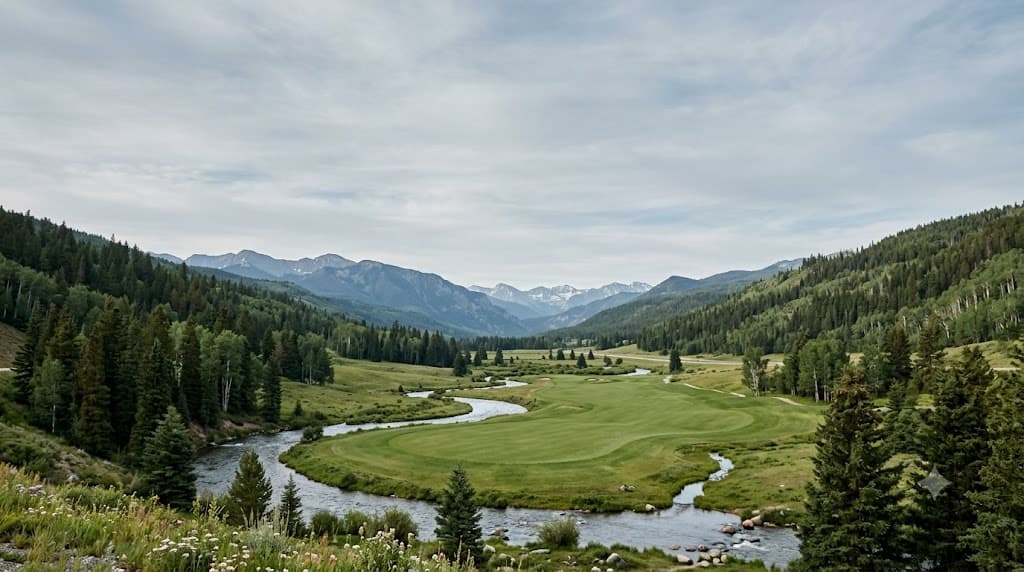
A golf-course neighborhood laid out in the seventies between two resorts, belonging to neither, with the interstate running straight through the middle of it. Duplexes on the fairways, townhomes by the river, homes on the bench above the clubhouse — and a mortgage under most of them that has been building equity for a long time. The file here opens on the deed: one for the whole building, or one for your half of it.

See Your Maximum HELOC
Slide to your home’s current value for an instant estimate.
Maximum HELOC Available
$750,000
Program maximum reached
Based on 85% CLTV · Program maximum: $750,000
Want your real number? Subtract your existing mortgage balance from this — or let our full calculator do it for you.
No credit impact · 60-second full estimate
Three Ways to Reach Your Equity
Think of the three the way this neighborhood thinks about a duplex. Two of them sit beside your mortgage — separate deed, shared wall, nobody's living room disturbed. The third takes the wall out, and the mortgage with it.
HELOC
Beside the mortgage, drawn when needed
Its own lien, its own rhythm
A line on the home, fixed- or variable-rate, that shares the title with your mortgage and never touches it — there for the re-roof and, later, the kitchen, drawn under whichever rules your program sets.
Home Equity Loan
Beside the mortgage, funded once
A second loan with its own front door
For a cost you already know — a bid, a buyout, a balance — paid out once and repaid on its own set schedule, beside a first mortgage it never merges with.
Cash-Out Refinance
Through the wall
One new mortgage in place of the old
It reaches the equity only by paying off the mortgage you hold with one written now. That trade makes sense when the old loan had run its course; for most owners here, it hasn't.
The Neighborhood Between Two Resorts
Market Snapshot
Eagle-Vail, CO
- County
- Eagle County
Eagle-Vail — EagleVail, as its district now spells it — was laid out on a cattle ranch just below Dowd Junction, its district approved by a unanimous vote in 1973, and built around a golf course: a course that plays as river holes on the bottom and mountain holes above, with a historic red barn on the second hole. It is unincorporated Eagle County, which surprises owners who see "Avon" on their mail. A metropolitan district operates the golf, the pool, the pavilion, the parks, and the trails, and runs the winter skier shuttle; a property owners association holds the covenants and the design review. Between them they are as close to a town as Eagle-Vail gets, and the neighborhood they run is lived in through mud season — ski patrollers, nurses, and contractors on the same streets as families who come for the winter.
The housing is built out. Duplexes are the signature product — fairway duplexes, hillside duplexes, river duplexes — alongside single-family homes on the Whiskey Hill bench above the clubhouse, townhome and condo filings from later decades, and river lots with their own stretch of the Eagle. The school in the old high-school building, the strip along the highway where the valley gets its cars fixed and its bikes tuned, the fairways that can serve as a wildfire safety zone: a service neighborhood three exits from Vail and a few miles from Beaver Creek. The equity underneath it has been accruing since the first lots sold, much of it beside first mortgages nobody should be in a hurry to replace.
The Duplex Question Every Lender Asks Here
An Eagle-Vail duplex can be deeded two ways, and the difference runs through the whole file. Some are one parcel holding both units — a single deed, a single loan, one owner. Many are split: two separately deeded halves under a party-wall agreement or a two-unit condominium regime. The split changes the comps, the insurance form, and sometimes the lender — a half under a condo regime is usually placed with a lender that reviews projects, and so are many of the townhome filings here. Which one you hold isn't an obstacle; it's the opening entry in the file. The same goes for occupancy: Eagle-Vail holds year-round households and second-home owners on the same cul-de-sacs, and the file records which one you are without judgment. A second home carries the stricter rules — less of the value reachable, fewer willing lenders, more paper. A primary residence gets the wider programs. In both cases the mortgage you signed when you bought here doesn't move.

Eagle-Vail is where a lot of the valley's year-round people live — the ones who fix everyone else's houses and get to their own last. Here's my question for anyone who owns half a duplex here: the other half of your building is carrying the same equity yours is. Has anyone on your side of the wall ever asked it to do anything?
— Bobby Friel, NMLS# 332039
How It Works With One Local Lender
Which side of the wall, which side of the interstate
Whole duplex or split half, townhome or condo regime, river or bench, primary or second home — that's page one, and it picks the lenders.
Comps from your side of Eagle Road
The bench sells to a different buyer than the fairway, and the fairway to a different buyer than the river — the appraisal has to know which one bought your street.
Placed by product
One application, credit checked softly through prequalification and pulled hard only at the full application. Drawn over time or funded whole, fixed or variable — a split half under a condo regime goes to a lender that reviews projects; a single-family home has the widest field, and a whole duplex on one deed sits close behind it.
Funded before the next project starts
Funding in as few as 5 days once the file is complete — and complete here means the party-wall agreement, the district and association statements, and the policy on the roof.
The Mistakes Eagle-Vail Owners Make
Mistake 01
Not knowing which duplex you own
Owners say "duplex" and lenders hear a whole building on one deed, a fee-simple half with a party wall, or a condo unit that happens to share a wall — and each one comps, insures, and qualifies differently. Look at the deed before we talk. It answers the question in one line, and that line decides which lenders ever see the file.
Mistake 02
Counting the district as dues
The metro district isn't an association — it's a taxing government, and its levy sits inside your property-tax bill, where underwriting reads it whether anyone mentions it or not. The association's dues, and a sub-association's where one exists, arrive separately and count as well. Have the tax bill and each dues statement on hand for the first call; none of it is a problem, and all of it has to be in the file.
Mistake 03
Still under a shake roof
The fire district's own assessment has noted a significant share of shake-shingle roofs here, and carriers price that on lots that back to national forest. Eagle-Vail has earned Firewise recognition and the fairways can serve as a safety zone — good facts for the file — but the roof is one of the first things an underwriter reads on the policy. The declarations page and the roof's age belong in the first call, and if a re-roof is on the plan, say so: a line is a sensible way to pay for the roof a carrier would rather see.
Your Eagle-Vail Equity Questions, Answered
The Neighborhood in the Middle Has Equity of Its Own.
One conversation with a lender a few exits away — your duplex or your single-family, your side of the interstate, your number. No cash at signing, no charge for the call, and the mortgage you have goes on exactly as it was.