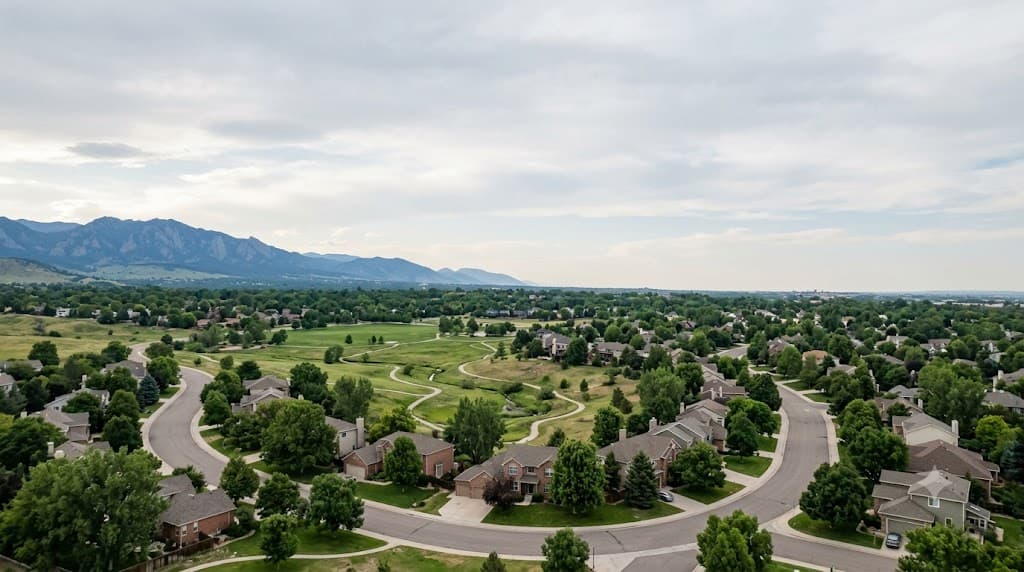
Centennial Reverse Mortgage — Let Your Equity Take Care of You
Centennial homeowners 55+ can access their home equity with no monthly mortgage payments. Stay in your home. Keep your title. Use the funds however you choose. Property taxes, homeowners insurance, and home maintenance remain your responsibility.
Could a Reverse Mortgage Work for You?
3 quick questions. See your recommended program instantly.
No credit impact · No obligation · Adult children welcome
This is a preliminary estimate for educational purposes only. Your actual eligibility and accessible equity depend on your age, property type, current interest rates, and program-specific factors. Bobby runs your complete numbers — no cost, no obligation.
*No monthly mortgage payment required. Borrower must continue paying property taxes, homeowners insurance, HOA dues (if applicable), and maintain the home. Failure to meet these obligations may result in loan default.
Let's Clear the Air About Reverse Mortgages in Centennial
If you're reading this page, you've probably heard something negative about reverse mortgages. Maybe a neighbor told you “they take your house.” Maybe you saw a confusing TV commercial. Maybe your kids are worried.
Here's the truth: A reverse mortgage is a federally regulated loan — not a scam, not a gimmick, and nobody takes your house. You keep full ownership and title. You stay in your home as long as you want. And your heirs inherit the property when the time comes — they simply pay off the loan balance or sell the home and keep the difference.
The stigma comes from the 1990s, when reverse mortgages had fewer consumer protections. Today, HUD-approved counseling is mandatory, non-recourse protection is built in (meaning you or your heirs can never owe more than the home's value), and the products are regulated by the Federal Housing Administration.
One thing I always make clear upfront: a reverse mortgage eliminates your monthly mortgage payment, but it does not eliminate your responsibilities as a homeowner. You still pay property taxes, homeowners insurance, and maintenance. These are the same obligations you have now — the difference is you're no longer making a mortgage payment on top of them.
I wouldn't offer them if I didn't believe in them. And I wouldn't build an entire practice around them if they weren't genuinely good for Centennial seniors.
“The fear is almost always worse than the reality. Once we run the numbers together, the path forward gets clear.”
Bobby Friel
CO Home Equity · Founder · NMLS# 332039

$0/month
What your monthly mortgage payment becomes with a Centennial reverse mortgage.
Property taxes, insurance, and home maintenance remain your responsibility. But imagine what eliminating your largest monthly bill would mean for your retirement.
Two Types of Reverse Mortgage — Which Fits Your Centennial Home?
HECM — For Most Centennial Homes
FHA-Insured Reverse Mortgage- •Age: 62+
- •Loan limit: Up to $1,249,125 (2026 FHA limit)
- •FHA-insured with non-recourse protection
- •Disbursement: lump sum, monthly payments, line of credit, or combination
- •Line of credit grows over time (unused portion increases)
- •HUD-approved counseling required
- •Mortgage insurance premium: 0.50% annually
- •Ongoing obligations: Property taxes, insurance, maintenance
Best for: Centennial homeowners with home values under $1.25M who want federal protections and flexible disbursement options.
Jumbo — For High-Value Properties
Proprietary Reverse Mortgage- •Age: 55+ in Colorado
- •Loan limit: Up to $4,000,000
- •No FHA mortgage insurance premiums — saves thousands
- •No origination fees on certain programs
- •Non-recourse protection (same as HECM)
- •Line of credit option available
- •Ongoing obligations: Property taxes, insurance, maintenance
Best for: Select high-value Centennial properties above the $1.25M HECM limit, or homeowners age 55–61.
| Factor | 🏛️ HECM | 🏔️ Jumbo |
|---|---|---|
| Minimum age | 62 | 55+ in Colorado |
| Max loan amount | $1,249,125 | $4,000,000 |
| Mortgage insurance | Yes (0.50%/year) | No |
| Origination fees | Yes | No (on certain programs) |
| FHA insured | Yes | No (privately funded) |
| Non-recourse | Yes | Yes |
| Monthly mortgage payments | None required | None required |
| Counseling required | Yes (HUD-approved) | Yes |
| Ongoing obligations | Property taxes, insurance, maintenance | Property taxes, insurance, maintenance |
| Best for Centennial | Most homes in the area | Select high-value properties or age 55–61 |
Not sure which fits your Centennial home? That's what the equity review is for.
Schedule Your Equity ReviewCentennial Seniors Who Put Their Equity to Work
Look at the Centennial homeowners below. Each one found a different path through their reverse mortgage. Which situation sounds closest to yours?

Making Retirement Work on a Fixed Income
Howard, age 70, retired from engineering three years ago. His Heritage Place home is worth $540K — paid off for years. His pension and Social Security total $3,400/month, but rising healthcare costs and property taxes left little room for the retirement he planned. A HECM gave him a $215K line of credit. He draws $1,800/month to supplement his income — funding travel, hobbies, and a comfortable lifestyle without financial anxiety.

Making Their Home Safe for the Next Chapter
Roger and Elaine, both 74, have lived in Southglenn since 2010. Their $560K home is paid off entirely. They want to stay but the two-story layout needs modifications — a walk-in shower, grab bars throughout, wider doorways, and a stair lift. A HECM gave them $90K upfront for the renovations plus a $150K line of credit as a financial safety net for future medical and living expenses.

Protecting Investments During Market Volatility
Gerald, age 72, has a $690K Piney Creek home — paid off for years — and a solid investment portfolio. During market downturns, he was forced to sell investments at losses to cover living expenses. A HECM gave him a $275K line of credit. Now during market dips, he draws from the credit line instead of liquidating investments — letting his portfolio recover. In good years, he pauses draws and lets the credit line grow.

Right-Sizing Without Leaving Arapahoe County
Phil and Nancy, both 73, lived in a 3,600 sq ft Walnut Hills home worth $660K. The yard work, stairs, and maintenance became too much. They sold and used a HECM for Purchase to buy a $530K patio home in Foxridge — putting down roughly 50% with no monthly mortgage payments. They freed up $250K+ in cash while staying near their doctors, friends, and Cherry Creek State Park.
These are illustrative examples based on typical Centennial scenarios. Actual amounts depend on age, home value, interest rates, and program-specific factors. All programs require ongoing payment of property taxes, homeowners insurance, and home maintenance.

“The stigma around reverse mortgages comes from a product that no longer exists. Today's reverse mortgage is federally regulated, has non-recourse protection, and lets you stay in your home for life. When was the last time someone actually explained how it works — not what you've heard, but how it's regulated today?”
Bobby Friel · CO Home Equity
Questions Worth Asking Yourself
Have you explored what your Centennial home equity could do for your retirement — without selling your home?
Your home has been building wealth for decades. A reverse mortgage lets you access that wealth while you continue living in it. No monthly mortgage payment. No giving up your title. The equity you built works for you instead of sitting idle.
When was the last time someone explained how a reverse mortgage actually works today?
Forget what you heard in the 1990s. Today's reverse mortgages are FHA-regulated with mandatory counseling, non-recourse protection, and your heirs inherit the property. The product has changed. The conversation should too.
What would eliminating your monthly mortgage payment mean for your monthly budget?
The average Colorado mortgage payment is $2,200–$2,800/month. Eliminating that — while keeping your home — frees up significant cash for healthcare, travel, helping grandchildren, or simply reducing financial stress. Property taxes and insurance continue, but without the mortgage, your monthly picture changes dramatically.
If your Centennial home is worth over $1M, has anyone told you about jumbo reverse mortgages?
Standard HECM reverse mortgages cap at $1,249,125. Centennial homes often exceed that in premium neighborhoods. Jumbo proprietary programs access up to $4M with no FHA mortgage insurance premiums. If your bank said you don't qualify, they were looking at the wrong program.
Have your adult children been part of this conversation? We welcome them on every call.
Reverse mortgage decisions often involve the whole family. Adult children have questions about inheritance, about whether the home is "at risk," about what happens long-term. Bobby welcomes them on every consultation call. Transparency builds trust — and this decision should have everyone's confidence.
What's the one financial concern that keeps coming back — and what would solving it look like?
For some Centennial seniors, it's the monthly payment stress. For others, it's funding in-home care. For others, it's helping grandchildren or preserving investments during a market downturn. Whatever keeps you up at night — that's the conversation worth having.
What a Centennial Reverse Mortgage Actually Looks Like
| Home Value | Product | Approx. Accessible Equity | Monthly Payment | Mortgage Insurance |
|---|---|---|---|---|
| $500,000 | HECM | $200K–$275K | $0/mo* | 0.50%/year |
| $750,000 | HECM | $300K–$400K | $0/mo* | 0.50%/year |
| $1,000,000 | HECM | $475K–$575K | $0/mo* | 0.50%/year |
| $1,250,000 | HECM (at limit) | $550K–$650K | $0/mo* | 0.50%/year |
| $1,500,000 | Jumbo | $650K–$850K | $0/mo* | None |
| $2,000,000 | Jumbo | $850K–$1.1M | $0/mo* | None |
| $3,000,000 | Jumbo | $1.2M–$1.6M | $0/mo* | None |
| $4,000,000 | Jumbo | $1.6M–$2.2M | $0/mo* | None |
*No monthly mortgage payment required. Borrower must continue paying property taxes, homeowners insurance, HOA dues (if applicable), and home maintenance. Accessible equity depends on age, interest rates, and property type. These are approximate ranges based on current market conditions.
Which row matches your Centennial home value? The accessible equity column tells you what's potentially available — Bobby confirms your real number in a free review.
55+
The minimum age for jumbo reverse mortgage programs in Colorado.
If you've been told you're too young at 55, 56, or 58 — that was based on HECM rules. Jumbo programs start at 55. The conversation may be different than you think.
What Centennial Seniors Get Wrong About Reverse Mortgages
“The bank takes your house”
No. You keep full ownership and title — exactly the same as any other mortgage. The lender places a lien, just like your original mortgage did. You live in your home as long as you want. The loan is repaid when you move, sell, or pass away — and your heirs inherit the property.
“My kids won’t inherit anything”
Your heirs inherit the home. They can pay off the loan balance and keep the property, or sell the home and keep the difference between the sale price and the loan balance. And with non-recourse protection, they’ll never owe more than the home is worth — even if the loan balance exceeds the value.
“I’ll owe more than my home is worth”
Non-recourse protection means you or your heirs can never owe more than the home’s fair market value at the time of repayment. If the loan balance grows beyond the home’s value, the FHA insurance (on HECMs) or the lender (on jumbo loans) absorbs the difference. You’re protected.
“I’m not old enough — you have to be 62”
For a standard HECM, yes — 62 is the minimum. But jumbo proprietary reverse mortgages are available to Colorado homeowners as young as 55. If you’re between 55 and 61 with a high-value home, this may be your best option.
“My Centennial home is too expensive for a reverse mortgage”
Standard HECMs cap at $1,249,125. That’s exactly why jumbo reverse mortgages exist — with limits up to $4M. Your Centennial home isn’t too expensive. Your bank’s product may just be too small.
“I won’t have any ongoing costs”
A reverse mortgage eliminates your monthly mortgage payment, but property taxes, homeowners insurance, HOA dues, and home maintenance remain your responsibility. Bobby reviews these obligations with every borrower before proceeding — and your lender may set aside a portion of loan proceeds to help cover taxes and insurance.
“I should wait until I really need the money”
Waiting can actually reduce what you qualify for. Interest rates change, home values fluctuate, and your age at application directly affects your principal limit — older borrowers qualify for more. A HECM line of credit also grows over time when unused, so opening one now creates a larger safety net later. Many financial planners recommend establishing the line of credit early as a retirement planning tool.
“My bank already told me I don’t qualify”
Banks typically offer one product — their own. If your home exceeds $1.25M, a bank offering only HECMs would tell you the loan limit doesn’t cover your value. If you’re 55–61, a bank offering only HECMs would tell you you’re too young. A broker like Bobby compares HECM and jumbo programs across multiple lenders to find the right fit.
How Bobby Handles Your Centennial Reverse Mortgage
📞Free Consultation
Tell me your situation. Age, home value, goals. No pressure, no commitment. Your adult children are welcome to join.
📊I Run Your Numbers
HECM vs Jumbo comparison with YOUR specific Centennial home. Accessible equity, ongoing obligations, tax and insurance estimates.
🎓HUD Counseling
Federal law requires independent counseling before a reverse mortgage closes. I help you schedule it and prepare you for what to expect.
🏦I Match You to the Right Program
HECM or Jumbo. Lump sum, line of credit, monthly payments, or combination. I place your file with the lender that fits your situation best.
✅Funded — Your Equity Works for You
Closing is simple. Funds arrive. Your monthly mortgage payment stops. Property taxes, insurance, and maintenance continue as normal.
Do You Qualify for a Centennial Reverse Mortgage?
Age
55+ for jumbo proprietary programs. 62+ for standard HECM. If your spouse is younger, special rules may apply — Bobby walks you through the specifics.
Home Equity
Substantial equity required — generally 50%+ equity for the best terms. The more equity you have, the more you can access. Paid-off homes qualify for the highest amounts.
Property
Must be your primary residence in acceptable condition. Single-family homes, condos, townhomes, and 2–4 unit properties are eligible. The property must meet minimum standards.
Ongoing Obligations
Must demonstrate ability to pay property taxes, homeowners insurance, and HOA dues. Lender may require a “set-aside” from loan proceeds to cover these. Bobby reviews this with every borrower.
Centennial Neighborhoods — Reverse Mortgage Equity Access
| Neighborhood | Median Value | Equity Range | Top Use Case |
|---|---|---|---|
| Southglenn | $550K | $240K+ | Aging in place & home mods |
| Walnut Hills | $650K | $310K+ | Portfolio protection |
| Foxridge | $620K | $280K+ | Downsizing & HECM for Purchase |
| Piney Creek | $680K | $330K+ | Investment strategy |
| Heritage Place | $530K | $220K+ | Supplemental income |
Approximate ranges based on age 70, current rates, and estimated equity. Your free equity review shows exact numbers.
Centennial Neighborhoods — What Seniors Can Access
Southglenn
$450K – $680K
Centered around the redeveloped Streets at SouthGlenn mixed-use district, this neighborhood offers walkable access to shopping, dining, and entertainment. Many homes here were built in the 1970s and 1980s — original owners and long-time residents hold $240K+ in equity. The area's established character and central location make it attractive for seniors who value convenience and community.
Walnut Hills
$520K – $780K
A well-established neighborhood with mature trees, larger lots, and a quiet residential character. Walnut Hills homes were built primarily in the 1980s and 1990s, and many long-time owners are sitting on $310K+ in equity. The neighborhood's proximity to Cherry Creek State Park and Arapahoe Road amenities adds to its appeal for aging in place.
Foxridge
$500K – $750K
A mature, family-oriented neighborhood with well-maintained homes and strong HOA governance. Foxridge sits near Cherry Creek State Park, offering trail access and outdoor recreation without leaving the neighborhood. Equity positions here are solid — typically $280K or more — providing meaningful HECM access for supplemental income or home modifications.
Piney Creek
$550K – $850K
Centennial's premium established neighborhood with larger homes, mature landscaping, and a country-club atmosphere. Piney Creek homeowners hold some of the city's strongest equity positions — $330K or more — making it one of the most productive HECM neighborhoods in Arapahoe County. Many retirees here use reverse mortgages to preserve investment portfolios while covering rising carrying costs.
These are approximate ranges based on age 70, current rates, and estimated equity. Your actual numbers depend on your specific age, home value, and existing mortgage balance. The equity review is free.
Centennial Risk Intelligence for Reverse Mortgage Borrowers
Aging Home Infrastructure
Many Centennial homes are 35–50 years old. Original sewer lines, electrical panels, and HVAC systems may need replacement in the coming decade. Budget $15K–$40K for major infrastructure updates and consider using a portion of your HECM credit line as a reserve for these inevitable expenses.
Hail & Storm Damage
Arapahoe County is in Colorado's Front Range hail corridor. Centennial properties experience frequent hail events that can cause $10K–$25K+ in roof and exterior damage. Maintain continuous homeowners insurance with adequate hail coverage — your reverse mortgage requires it, and being underinsured can create a financial crisis.
Property Tax Reassessments
Arapahoe County conducts regular property reassessments that can produce significant tax increases. Centennial homeowners have seen 6–12% jumps in single reassessment cycles. Since property taxes are a mandatory ongoing expense during a reverse mortgage, model conservative annual increases when planning your credit line usage.
HOA Special Assessments
Several Centennial neighborhoods with aging common areas and infrastructure are facing or will face special assessments for repairs. These one-time charges of $3K–$15K+ per unit are mandatory. Maintain a HECM credit line reserve specifically for unpredictable costs like these.
How Centennial Seniors Use Reverse Mortgage Equity
Supplemental Retirement Income
Centennial's proximity to the Denver Tech Center means many retirees here are former corporate professionals with pensions and 401(k) plans — but rising healthcare costs, property taxes, and insurance can still create a gap. A HECM line of credit provides tax-free monthly draws of $1,500–$2,500+ to bridge that gap without triggering taxable withdrawals from retirement accounts.
Aging in Place Modifications
Many Centennial homes were built in the 1970s–1990s with split-level and two-story layouts that challenge mobility as homeowners age. HECM funds finance walk-in showers, stair lifts, grab bars, wider doorways, and main-floor bedroom conversions.
Investment Portfolio Protection
Instead of selling investments during market downturns to cover living expenses, Centennial homeowners can draw from a HECM line of credit during bear markets and pause draws during recovery. This "standby reverse mortgage" strategy has been shown in academic research to significantly improve portfolio longevity — protecting the wealth you spent decades building.
HECM for Purchase — Downsize Within Centennial
Sell your larger Centennial home and use a HECM for Purchase to buy a smaller, single-story property — putting down approximately 50% with no monthly mortgage payments. This frees up significant cash while keeping you in the Arapahoe County community you know.
Centennial Reverse Mortgage Mistakes to Avoid
Assuming older homes won't appraise competitively
Many Centennial homes were built in the 1970s and 1980s with original finishes. Homeowners sometimes delay reverse mortgages thinking they need to renovate first. But appraisers focus on location, lot size, structural condition, and comparable sales — not cosmetic updates. Your unrenovated Centennial ranch may appraise higher than you expect, and you can use HECM funds for updates afterward.
Not establishing a credit line before you need it
The unused portion of a HECM line of credit grows over time. A Centennial homeowner who establishes a $240K credit line at age 65 could have $350K+ available by age 80 — even without drawing a dollar. Waiting until a financial emergency means missing years of compounding growth on your available credit.
Overlooking the "standby reverse mortgage" strategy
Many Centennial retirees have investment portfolios but don't realize a HECM can protect those investments. By establishing a credit line and drawing from it during market downturns — instead of selling investments at losses — you give your portfolio time to recover. This strategy alone can extend portfolio life by 5–10 years.
Confusing reverse mortgages with the products from decades ago
Today's HECM program is federally insured, heavily regulated, and includes mandatory HUD counseling, non-recourse protection, and spousal safeguards that didn't exist 20 years ago. Many Centennial seniors dismiss the option based on outdated perceptions. A 30-minute conversation with Bobby reveals how different modern reverse mortgages really are.

Your Reverse Mortgage Requires Insurance — When Was the Last Time You Actually Compared?
Your reverse mortgage lender requires active homeowners insurance with 100% replacement cost coverage. Centennial sits in Colorado’s Front Range hail corridor — the most active in the country. If your coverage is based on outdated valuations, you may be significantly underinsured.
Before your reverse mortgage closes, we run a full insurance review through our partners at Direct Insurance Services — not just to satisfy your lender's requirements, but to make sure there are no coverage gaps and confirm you have the best premium costs. This saves headaches and money.
Centennial Housing Market — What It Means for Reverse Mortgages
Centennial is a mature, established city of over 108,000 residents in Arapahoe County, strategically located in the heart of the south Denver metro. Incorporated in 2001, Centennial encompasses well-established neighborhoods that were built primarily between the 1970s and 2000s — meaning many original homeowners are now in their 60s, 70s, and 80s with decades of equity accumulation.
With a median home value of $600,000 and average tappable equity of $245K, Centennial represents one of the south metro's most concentrated reverse mortgage opportunities. The city's central location — bordered by Highlands Ranch, Aurora, Littleton, and the Denver Tech Center — provides easy access to major medical facilities, shopping, and transportation corridors that are essential for aging in place.
Centennial's housing stock is diverse, ranging from 1970s ranches and split-levels in Heritage Place to premium homes in Piney Creek and Walnut Hills. This variety means HECM access ranges from $210K in entry-level neighborhoods to $340K+ in premium areas — with most homes falling comfortably within the HECM limit.
The city's proximity to Cherry Creek State Park, its strong community identity, and its mature neighborhood infrastructure make Centennial one of Arapahoe County's best locations for seniors who want to age in place with financial flexibility. Bobby provides free equity reviews tailored to your specific Centennial neighborhood and situation.
Centennial Reverse Mortgage Questions — Answered

Bobby's Take on Reverse Mortgages in Centennial
Reverse mortgages are the most misunderstood product in the mortgage industry — and arguably the most underutilized. Centennial seniors are sitting on significant home equity. With a median home value of $600,000, the average homeowner over 60 holds equity that could meaningfully change their retirement picture.
The stigma is outdated. It comes from a product that existed 25 years ago. Today's reverse mortgages are federally regulated, require independent counseling, offer non-recourse protection, and let you stay in your home for life. Have you taken the time to see how the product actually works today — not what you've heard from someone who hasn't looked at it since the 1990s?
And I'm always transparent about one thing: a reverse mortgage is not free money. Your property taxes, insurance, and maintenance don't go away. What goes away is the mortgage payment — and for most Centennial seniors I work with, that's the single biggest line item in their monthly budget.
I welcome adult children on every call. This is a family decision, and transparency builds confidence. If you've been thinking about it — or if your children have been asking questions — the conversation is free. What's the one financial concern that keeps coming back for you? That's what we should talk about.
More Ways to Access Your Centennial Equity
Reverse Mortgages in Nearby Communities

Your Centennial Home Has Been Taking Care of Your Family for Decades. Now Let It Take Care of You.
Schedule a free, no-obligation equity review. Bobby walks you through your options — HECM, Jumbo, or whether a reverse mortgage is even right for your situation. Your adult children are welcome on the call.
No monthly mortgage payment required. Borrower must continue paying property taxes, homeowners insurance, and home maintenance.
Bobby Friel · NMLS# 332039 · Friel-Good Mortgage, Inc. · NMLS# 1901977