Lakewood · Jefferson County

Lakewood Reverse Mortgage — Let Your Equity Take Care of You

Lakewood sits in the standard program's sweet spot, where the hard part isn't qualifying — it's believing there's no catch.

AGE 62+
Standard HECM, FHA-insured
AGE 55+
Jumbo programs, Colorado
NON-RECOURSE
Never owe more than the home
KEEP TITLE
You stay on the deed, for life
Let's Clear the Air

Most of What You've Heard About Reverse Mortgages Is Out of Date

The stigma comes from a product that existed a generation ago. Today's reverse mortgage is federally regulated, requires independent HUD-approved counseling, carries non-recourse protection, and lets you stay in your home for life. You keep your title. The bank does not own your house.

In Lakewood, plenty of retirement-age homeowners are sitting on a lifetime of equity that is doing nothing for them. A reverse mortgage unlocks that equity without a monthly mortgage payment — while your property taxes, insurance, and maintenance continue as your responsibility.

It is not right for everyone, and I will tell you when it isn't. But it is worth understanding how it actually works today — not what you heard from someone who last looked at it in the 1990s.

See who it suits — and who it doesn't
Bobby Friel, CO Home Equity

No monthly payment, and you keep the house for life? A careful Lakewood owner — someone who has watched their property tax, their insurance after every hail summer, and their grocery bill all climb at once — hears that and immediately starts hunting for the catch, because a lifetime of experience says a thing that sounds that good has a trapdoor. The straight answer is that the cost is real but ordinary: interest accrues on what you borrow, the balance grows, and it is settled from the home's value later. No trapdoor — just a loan whose payment is deferred instead of monthly.

— Bobby Friel · CO Home Equity · Founder

CALIBRATED QUESTION

What would you need to see, line by line, before "no monthly payment" stopped sounding like the setup for a catch?

Two Programs, One Decision

Proprietary Reverse Mortgages Start at 55. The FHA-Insured HECM Starts at 62.

Minimum age

Standard HECM

62+
  • Minimum age: 62
  • Federal insurance: FHA-insured (HECM)
  • Loan limit: The federal HECM limit
  • Line of credit: Unused portion grows over time
  • Best for: Homes within the federal limit

The Colorado difference

Jumbo / Proprietary

55+
  • Minimum age: 55 — a seven-year head start
  • Federal insurance: None — no FHA premium
  • Loan limit: Substantially higher than a HECM
  • Structure: Proprietary and non-recourse
  • Best for: Higher-value Colorado homes
FactorStandard HECMJumbo / Proprietary
Minimum age6255
Federal insuranceFHA-insuredNone (proprietary)
Maximum loanFederal HECM limitSubstantially higher
Mortgage insurance premiumYesNo
Non-recourse protectionYesYes
Independent HUD counselingRequiredRequired
You keep your titleYesYes
Monthly mortgage paymentNone required*None required*
Growing line of creditYesVaries by program
Best fitHomes within the federal limitHigher-value Colorado homes
SEE WHAT YOU CAN ACCESS

Start With Your Own Numbers

Enter your home value, mortgage balance, and age. Your equity and the programs you may be eligible for update as you type — no email, no gate.

$
$

Your equity

$600,000

Programs you may be eligible for

Both a standard HECM (FHA-insured) and jumbo proprietary programs may be available. Which one fits depends on your home value and goals.

Homeowners in your range typically access a meaningful portion of their equity — the exact figure depends on age, current rates, and the program. I run your real numbers on the first call, at no cost.

Get Your Real Numbers

An estimate, not an offer. Actual eligibility and accessible equity depend on your age, property type, current rates, and program factors. Property taxes, homeowners insurance, and home maintenance remain your responsibility.

The Straight Answer

Who a Reverse Mortgage Is For — and Who It Isn't

A good fit

It May Fit If…

  • You are 55 or older

    Jumbo proprietary programs start at 55; a standard HECM starts at 62.

  • You hold significant equity

    The more equity you have built, the more a reverse mortgage can do for you.

  • You plan to stay in your home

    The costs are front-loaded, so this fits people who intend to stay for years, not months.

  • You want to end a monthly mortgage payment

    For most of the people I work with, that is the largest line in the monthly budget.

  • You can keep up taxes, insurance, and upkeep

    These remain your responsibility — the program does not cover them.

Not for everyone

It Probably Doesn't If…

  • You plan to move soon

    If you will sell within a couple of years, the up-front costs rarely make sense.

  • You want to leave the home free and clear

    Heirs inherit the home and the balance against it — they can keep or sell, but there is a balance.

  • You are already behind on taxes or insurance

    These obligations continue, and falling behind on them can trigger default.

  • A younger family member is affected

    If someone under the program age lives with you, their situation needs careful review first.

  • Another option simply fits better

    Sometimes a HELOC, a sale, or doing nothing is the right answer. I will tell you.

I have told people not to do this. It costs me the file and I would rather lose the file than put someone in the wrong product. If that is you, I will say so on the first call.

By Neighborhood

Lakewood Equity, Block by Block

Green Mountain

HECM territory

Green Mountain filled its slopes with ranches, split-levels, and bi-levels through the 1960s and 70s, and a remarkable share of those buyers — or their kids — are still there, with the open space trails of the mountain itself out the back door. It's one of the metro's most natural aging-in-place neighborhoods, and its home values sit comfortably in standard HECM range.

Morse Park

HECM territory

Morse Park is north-central Lakewood's brick-ranch heartland, built in the 1950s on generous lots around the twenty-acre park that names it. The ownership skews older and longer-tenured than almost anywhere else in the city, which means paid-down mortgages, five decades of appreciation, and the most straightforward HECM profile Lakewood offers.

Applewood Knolls

HECM territory

Applewood Knolls is the Lakewood portion of the broader Applewood area — custom brick ranches and mid-century homes from the 1950s and 60s on large, mature-treed lots, with a golf course nearby just over the Golden line. It trades well above the Lakewood average and well below the federal lending limit, which puts even this upscale pocket squarely in standard HECM territory.

Belmar

HECM territory

The blocks around Belmar mix postwar ranches with the townhomes and condos that arrived when Lakewood built its downtown district on the old mall site in the 2000s. It's the most walkable retirement address in the city — shops, the park, and the library district within a few blocks — at home values right around the city median.

Eiber

HECM territory

Eiber is one of Lakewood's oldest neighborhoods — 1940s and 50s cottages and small ranches along the West Colfax corridor, now served by the W Line light rail. It's the most affordable established neighborhood in the city, and for its long-tenure owners, the equity conversation is about decades of quiet appreciation on homes that never made headlines.

Solterra

HECM territory

Solterra is the newest and priciest thing in Lakewood — Mediterranean-styled custom and semi-custom homes built since the late 2000s in the Rooney Valley, with foothills views and a clubhouse its residents genuinely use. The typical home here still sits below the federal lending limit, but the upper end of the neighborhood clears it — so this is jumbo-conversation territory house by house, even though the pill on this page says otherwise for the neighborhood as a whole.

Real Stories

Lakewood Homeowners Who Put Their Equity to Work

Illustrative examples based on typical Colorado scenarios. All programs require ongoing payment of property taxes, homeowners insurance, and home maintenance.

A 1950s brick ranch on a large lot in Morse Park, Lakewood
FILE 01 · LAKEWOODTHE ROOF

Arlene, 76 — Morse Park

The hailstorm took half the roofs on Arlene's street, and her insurance settlement covered most of a new one — most. The gap landed in the same year as a special assessment and a jump in her premium, on a fixed income that had no give in it. Her HECM line of credit, opened two years earlier and untouched, absorbed all of it without a loan application, a contractor lien, or a call to her kids for help. That's the entire argument for opening the line before the storm.

76
Homeowner age
Line of credit
Structure
A split-level home on the slopes of Green Mountain, Lakewood
FILE 02 · LAKEWOODTHE PAYMENT

Vern, 68 — Green Mountain

Vern bought on Green Mountain in 1987 for the trails and stayed for everything else. A cash-out refinance in his fifties — his son's business needed a bridge, and Vern was the bridge — left him carrying a payment into a retirement that had been planned without one. The HECM cleared the balance, ended the payment, and left him hiking the same open space with a budget that finally matched the plan. His son's business made it, for the record.

68
Homeowner age
Balance cleared
Outcome
Townhomes near the Belmar shopping district in Lakewood
FILE 03 · LAKEWOODTHE WALKABLE YEARS

Joyce, 81 — Belmar

When Joyce stopped driving, her daughter assumed the next step was a move — probably to a facility near her in Arvada. Joyce had a different plan: she already lived three blocks from groceries, the park, and her pharmacy, in a townhome she'd bought when the district was new. A reverse mortgage funds the help that comes to her — cleaning, rides, the occasional aide — instead of moving her to the help. Four years on, the plan is still working.

81
Homeowner age
Support funded
Outcome
A Mediterranean-styled custom home with foothills views in Solterra, Lakewood
FILE 04 · LAKEWOODTHE HOUSE THAT QUALIFIED EARLY

Craig and Dana, 60 and 58 — Solterra

Craig and Dana built in Solterra in their forties, at the top of the neighborhood, and by the time Craig's company offered the early retirement package, the house had grown into one of the few in Lakewood valued past the federal program's reach. That's what made the difference at their ages: a standard HECM was still years away, but a jumbo proprietary program was available now, against a house that genuinely fit it. The package got accepted. The commute got deleted.

60 & 58
Homeowner ages
Jumbo proprietary
Program

Your Lakewood Equity Review

One conversation — your numbers, your timeline, and a straight answer on whether this fits.

Bobby Friel, CO Home Equity

An heir who has been quietly counting on Green Mountain's appreciation can feel the floor shift when a reverse mortgage enters the story late, because in their mind the house was already spoken for. What they usually do not know until it is explained is that they still inherit the home and everything it is worth above the loan balance — the reverse mortgage changes the timing of when some equity is used, not whether there is any left. That is a much easier thing to hear across a table now than to discover in a settlement later.

— Bobby Friel · CO Home Equity · Founder

CALIBRATED QUESTION

How would your family weigh this differently if they understood it as changing the timing of the equity, not erasing it?

Ways to Use It

What Lakewood Homeowners Do With Their Equity

01

Strategy 01

Open the line before the storm

Lakewood's insurance and repair surprises arrive on hail schedules, not budget schedules. A HECM credit line opened early grows untouched and turns a five-figure roof gap into a transfer instead of a crisis.

02

Strategy 02

Erase the refinance that followed you

A lot of Lakewood homeowners carry a cash-out refinance from their fifties into retirement. A reverse mortgage clears it at closing and removes the payment — the budget line that was never supposed to still be there.

03

Strategy 03

Fund staying put, walkably

In Belmar and the neighborhoods around it, aging in place actually works — services are close enough to come to you. Home equity can pay for that help for years at a fraction of what a facility costs, in the home you already chose.

04

Strategy 04

Bridge an early retirement offer

When the package lands at 58 and the pension starts at 65, home equity can carry the middle — through a jumbo program where the home's value supports it, or a planned HECM at 62 where it doesn't. The offer shouldn't die waiting on a birthday.

Avoid These

Common Lakewood Reverse Mortgage Mistakes

01

Mistake 01

Reading the neighborhood instead of the appraisal

Lakewood homeowners in Solterra and Bear Creek sometimes assume they're jumbo clients, and homeowners in Morse Park sometimes assume they're too modest to bother. Both calls belong to the appraisal. Get the number before you pick the program.

02

Mistake 02

Letting the insurance lapse to save the premium

Keeping the home insured is a condition of the loan, not a suggestion — and in hail country the temptation to shop down or drop coverage is real. A lapse threatens the whole arrangement to save a fraction of it.

03

Mistake 03

Taking the maximum draw on day one

The untouched line grows; the drawn lump sum doesn't. Homeowners who front-load the money give up the growth years — and the older, larger line — they were most likely to eventually need.

04

Mistake 04

Treating the family talk as optional

The kids find out either way. The version where they hear it from you, before closing, with the counselor's paperwork on the table, goes one way. The version where they find the statement in a drawer goes the other.

Local Intelligence

What to Watch for in Lakewood

Watch 01

Hail cycles and insurance repricing

Lakewood roofs live on borrowed time between storms, and carriers have repriced the metro's foothills edge accordingly. Expect premiums and roof deductibles to keep moving at renewal, and treat the insurance line as a growing cost, not a fixed one.

Watch 02

Wildfire exposure on the western edge

The neighborhoods against the hogback and Green Mountain open space carry genuine wildland-interface exposure, and some carriers have gotten selective about writing there. Availability, not just price, is the thing to watch at renewal time.

Watch 03

Reassessment in a converging market

Jefferson County reassessments have tracked two decades of West-metro appreciation, and long-tenure owners feel it most — the tax bill reflects the neighborhood's new prices, not the one you paid. Fixed incomes absorb that gap or restructure around it.

Watch 04

Special districts and metro-district fees

Newer communities like Solterra carry metro-district obligations layered onto the property tax bill — infrastructure debt that predates the current owners and outlasts them. Read the full tax bill, not just the county line, before budgeting the ongoing cost of staying.

The Lakewood Market

Why Lakewood Equity Is Worth Understanding

Market Snapshot

Lakewood, CO

County
Jefferson County

There's an envelope Lakewood homeowners recognize before they open it. It comes the summer after a hail season, from the insurance carrier, and it's slightly heavier than the usual correspondence — the renewal, with the new premium, and somewhere in the enclosed pages a revised roof deductible that quietly moved the goalposts. I've had that envelope slid across a Green Mountain porch railing and a folding table in a Morse Park garage, always as Exhibit A. Nobody frames it. Everybody keeps it.

That envelope explains more about reverse mortgages in Lakewood than any brochure, because it's the shape of the actual problem: not poverty, but a fixed income being asked to absorb costs that refuse to stay fixed. The tax reassessment tracks the neighborhood's new prices. The premium tracks the hail. The roof itself is sixty years old in a city where whole neighborhoods were built in the same decade and are aging in formation. The house underneath all of it, meanwhile, has become worth more than everything else the homeowner owns combined.

Lakewood's housing map makes the program question unusually interesting. Most of the city — the brick ranches of Morse Park, the split-levels climbing Green Mountain, Eiber's cottages, the blocks around Belmar — sits solidly within the standard HECM's range, and that federally insured program at 62 is the right answer for nearly everyone. But Lakewood also has a genuine high end: Solterra's custom homes in the Rooney Valley, the Bear Creek enclave against the lake park. Even there, the typical home stays under the federal program's ceiling — and this is the part intuition gets wrong — but individual homes cross it regularly. I classify by appraisal, not by neighborhood name, because in this city the neighborhood name will lie to you in both directions.

The age rules deserve the same precision. A standard HECM requires 62 — that's federal law, and no lender's enthusiasm changes it. The jumbo proprietary programs through my lending network start at 55, and they apply where the home's value runs past the standard program's reach. In Lakewood that's a real but narrow set of houses. When a 59-year-old in Solterra calls, sometimes the straight answer is a jumbo program against a house that genuinely fits one. When a 59-year-old in Applewood Knolls calls, the answer is usually a well-planned three-year wait — and I've built enough of those plans to know the waiting itself is a service worth doing right.

Some people shouldn't do this at all, and in Lakewood the clearest cases are timeline cases: the couple already eyeing a move to the grandkids in two years, the homeowner whose equity needs are modest enough that the upfront costs would eat the benefit. I've told both kinds to wait or pass. A reverse mortgage is a long-stay instrument. It rewards the homeowner who means it when they say they're not leaving.

The conversation that matters most here happens before any application: the one with the adult children, with that insurance envelope on the table, about what staying actually costs and how much of that cost the equity can actually absorb. Lakewood families tend to have it late or not at all, and the product's old reputation is usually the reason. Have it early. Bring the numbers. The counseling requirement exists precisely so that no one has to take my word — or any lender's — for any of this.

I serve Colorado statewide from my base in Edwards, and what keeps Lakewood interesting is that it refuses the easy classifications — a standard-HECM city with a custom-home fringe, an affordable postwar core aging into serious equity, and a hail map that makes the insurance line the starting point of every plan. Start with the envelope. The rest follows from there.
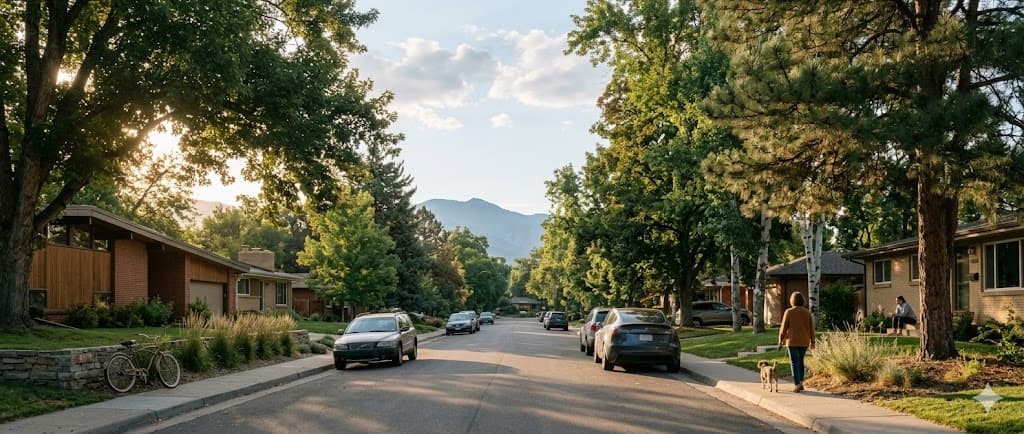
Lakewood homeowners insurance review — protect your home and equity

In partnership with

Direct Insurance Services

Protect Your Lakewood Home

Your Reverse Mortgage Requires Insurance — When Was the Last Time You Actually Compared?

Your reverse mortgage lender requires active homeowners insurance with full replacement-cost coverage. Colorado homeowners face real exposure: hail in the Front Range, wildfire in the foothills and mountain zones, severe wind across the plains. A single storm can cause serious roof and exterior damage.

Before your reverse mortgage closes, we run a full insurance review through our partners at Direct Insurance Services — not just to satisfy your lender's requirements, but to make sure there are no coverage gaps. It saves headaches and money.

Compare 30+ carriers in one free review
Colorado-specific wildfire, hail, and severe weather expertise
Ensures proper replacement cost for reverse mortgage requirements
Removes insurance delays from your funding timeline
FAQ

Lakewood Reverse Mortgage Questions — Answered

For most of Lakewood — Green Mountain, Morse Park, Eiber, Belmar, even Applewood Knolls — home values sit within the standard HECM's range, so the federally insured program at age 62 is the fit. In Solterra, Bear Creek, and a few custom pockets, individual homes run past that, which opens the jumbo proprietary programs. It's decided by the appraisal, not the neighborhood name.
Two ways. Keeping homeowners insurance current is a condition of every reverse mortgage — letting it lapse is one of the few ways to get in real trouble — and Lakewood premiums have been rising with the hail claims. Budgeting realistically for insurance is part of any plan I'll put my name on here.
Yes — title stays with you, and the home passes to your heirs like any other asset. They'll settle the loan balance from the sale or refinance it if they want to keep the house, and they keep every dollar of equity above the balance. What they never inherit is a shortfall.
Three, and they're all avoidable: stop paying property taxes, let the insurance lapse, or move out permanently while expecting the loan to just wait. Every one of those is a maintenance-of-the-loan issue, not a trap in the product. The counseling session covers them; so do I, in plainer language.
Sometimes no — and that's a real answer. Upfront costs are proportionally heavier on smaller loan amounts, so for a homeowner with modest equity needs and other options, I'll say so. For a homeowner staying ten-plus years who wants the payment gone or the credit line growing, the math usually earns its keep. The break-even is a calculation, and I'll run it with you.
When the home's value runs past what the standard federal program covers — which in Lakewood means the top of Solterra, parts of the Bear Creek enclave, and scattered custom properties. The jumbo proprietary programs through my lending network start at 55. If your home doesn't reach that tier, the smart play is mapping out the years before the standard HECM's 62, and I do a lot of that mapping.
If 'eventually' means two or three years, usually not — the closing costs deserve a longer stay to earn themselves back. If it means someday, maybe, a decade out, the calculus changes, and there's also a version where the reverse mortgage funds the downsize itself through a HECM for Purchase. Timeline first, product second.
Mandatory independent counseling before closing, financial assessments so the loans stop going to people who can't sustain the taxes and insurance, and protections for non-borrowing spouses — the exact failure that generated the worst of the old stories. The product had real problems and regulators actually responded. Skepticism is still welcome; it just deserves current facts.
Yes — the reverse mortgage retires your current balance at closing as its first job. Most of my Lakewood clients arrive with a balance; leaving with no monthly payment is usually the whole point.
Bobby Friel — CO Home Equity Founder

Bobby's Take on Reverse Mortgages in Lakewood

In Green Mountain and Belmar the equity is solid and the suspicion is reflexive: a product that promises no monthly payment and the right to stay for life sounds, to a Lakewood owner who has watched every cost around them climb, exactly like something with a hidden cost. That instinct is not a problem to overcome so much as a fair question to answer directly — and the answer is that the cost is neither hidden nor unusual. It is interest on a loan, deferred instead of billed monthly, settled from the home's value down the road.

The louder fear, the "isn't this the thing that takes people's houses," belongs to a product that was reformed out of existence. Today's standard reverse mortgage is federally regulated, requires independent HUD-approved counseling before it closes, keeps your name on the title, and carries non-recourse protection so the debt can never exceed the home's value. The Lakewood owner bracing for a trap is bracing against a version of this that federal law spent years dismantling.

Most of the city works cleanly because it sits in standard range — Morse Park, Eiber, Applewood Knolls, the established middle of town all fit the standard HECM at 62 without complication. Solterra is the one place where values push into borderline territory; for an owner there in their late fifties whose home clears the federal ceiling, the jumbo proprietary programs that start at 55 can apply, house by house. I make that call on the appraisal, not the zip code, and most of Lakewood lands on the standard side of the line.

With a cost-conscious Lakewood audience, I put this first, not last: it is not free money. A reverse mortgage is a loan against the home; the balance grows over time, and the costs of ownership — property taxes, insurance that keeps climbing with hail risk, upkeep — continue, because the house stays yours. What it lifts away is the monthly mortgage payment. Most of the owners I work with here are not looking for a windfall; they are trying to keep a rising cost of living from squeezing a fixed income, and they want the house to carry some of that weight.

The family conversation is where the "what's the catch" instinct gets resolved for good, because the adult children usually arrive with the same suspicion the parent did. Walked through it together, they see there is no trapdoor — the home still passes to them, minus a balance they understood in advance. The practice is statewide, run from Edwards, and in Lakewood the most useful thing I do is often sit a skeptical family down with the actual numbers until the thing that sounded too good to be true just looks like what it is: a loan with a deferred payment.

THE EQUITY REVIEW

Your Home Took Care of Your Family for Decades. Now Let It Take Care of You.

A free, no-obligation equity review. I walk you through your options — HECM, jumbo, or whether a reverse mortgage is even the right move for your Lakewood home. Your adult children are welcome on the call.

No monthly mortgage payment required. Borrower must continue paying property taxes, homeowners insurance, and home maintenance.

Bobby Friel · NMLS# 332039 · Friel-Good Mortgage, Inc. · NMLS# 1901977