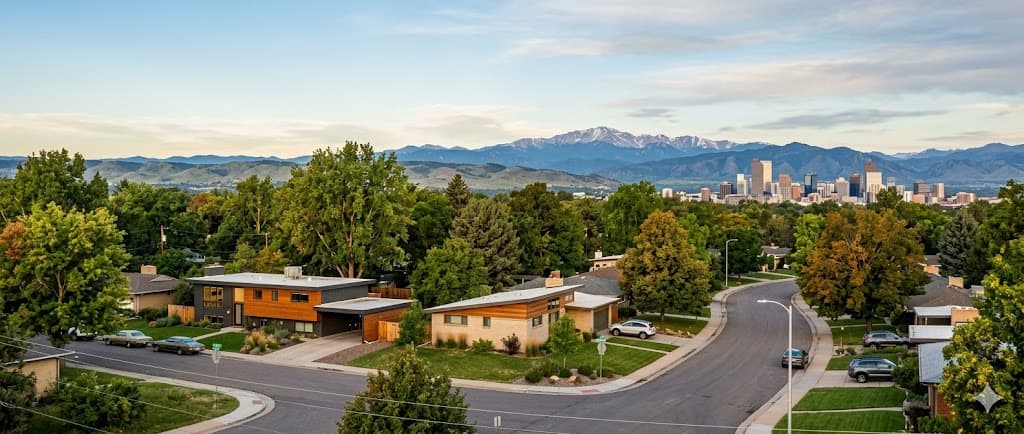
"They tore down the whole mall. My house outlasted the mall." A Hyland Greens homeowner said that to me on his back porch, and he wasn't being wistful — he was making a financial argument, and a better one than most professionals manage. He'd bought the house new in the 1970s. The mall arrived, thrived, declined, and got demolished to its slab, and the city is still building its replacement downtown on the site. Through the entire cycle, his unglamorous house on its greenbelt did exactly one thing: it held, and it grew.
That's Westminster's version of the equity story, and I've come to think it's the purest one in the metro. This city's wealth wasn't built on trophy addresses — it was built on tenure, on Countryside and Hyland Greens and Cotton Creek families who bought in the seventies and eighties and then declined every opportunity to leave. The result, fifty years on, is a city full of paid-off and nearly-paid-off homes whose owners have far more wealth in the walls than anywhere else, and pensions that were sized for a cheaper world.
In program terms, Westminster is standard-HECM territory nearly wall to wall, and I say that with data behind it rather than impressions. Even the marquee addresses — The Ranch around its country club, Legacy Ridge along the public course — hold typical values inside the federal program's range. The exceptions are individual estate properties, mostly on the fairways, where a specific house occasionally values past the standard program's coverage. Those exceptions matter to exactly one group: homeowners between 55 and 61, for whom the jumbo proprietary programs — which start at 55, where the standard HECM's federal floor is 62 — are the only door open early. If that's you, the question is answered by your appraisal, not your street name, and I'll give it to you straight either way.
The straight answer matters because this product still carries its old reputation in this city, and the reputation was earned. The homeowner quoting me the mall remembered the bad era clearly — the pressure sales, the widows caught by loans structured around one spouse. What he wanted from me wasn't reassurance; it was evidence the rules had changed. They have: independent counseling nobody can waive, financial assessment before approval, protections for the non-borrowing spouse who used to be this product's characteristic casualty. I walk through all of it, and then the federally required counselor — who doesn't work for me or any lender — walks through it again. Skepticism doesn't have to be talked out of anyone. It has to be answered, and it can be.
What the program actually does here is unglamorous and specific. It ends the tail of an old mortgage payment for the Harris Park owner who almost didn't call because she'd decided her bungalow was too modest. It covers the recovery bills Medicare trailed off from, for the Countryside owner whose savings survived her knee replacement because her equity absorbed it instead. It converts a Hyland Greens house's patience into monthly margin. None of these people got rich. All of them got room.
Who it doesn't fit, in this city as anywhere: the owner already planning the move to the kids' town, the homeowner whose need is small enough that cheaper tools cover it, and anyone who wants the decision kept from their family — that last one is a line I hold even when the numbers work. And for most Westminster homeowners still short of the standard HECM's 62, the right product is patience with a plan: position the equity, protect the insurance record, prepare the household, and let the application be the easy part when the date arrives.
I serve Colorado statewide from my base in Edwards, and Westminster's homeowners are some of my favorite people to work for, because the case here never needs decoration. Raymond's house outlasted the mall, the same way it outlasted the payment. Put plainly, the question is only whether some of that patience should start paying him back now — and that's a question with a checkable, personal, no-pressure answer.