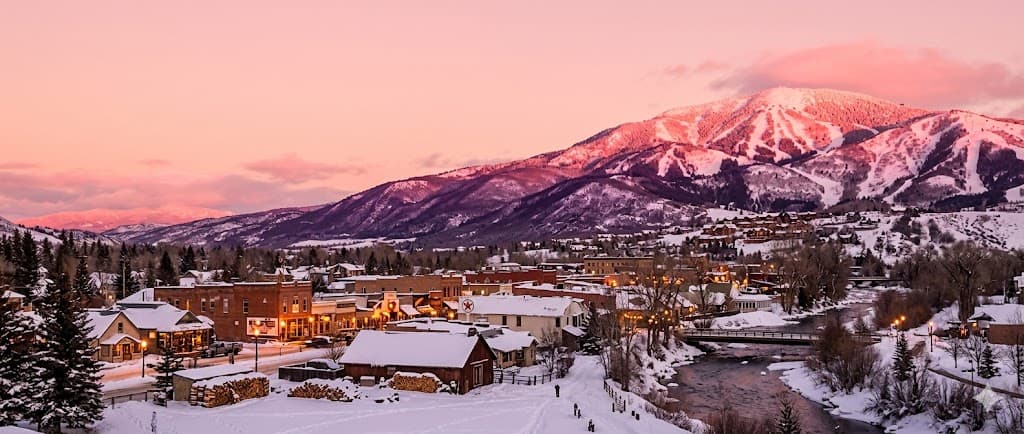
"We're ranch people. We don't borrow against the home place." The woman who said that to me had her arms crossed before the video call finished connecting, and her granddaughter — who'd arranged the call — was visibly braced. Three generations of her family ran cattle in the Yampa Valley before the Old Town house became the retirement place. She'd agreed to thirty minutes because her banker retired and her property taxes hadn't.
I've thought about her opening line more than any compliment I've received, because it holds the whole truth about Steamboat Springs in eleven words. This is a town with an actual working memory — ranching families, ski patrol pensions, schoolteachers who bought in Old Town when a teacher could — layered under a resort economy whose newer arrivals price the spreadsheets. The suspicion of debt here isn't ignorance to be corrected. It's inheritance, and it deserves better than a sales pitch.
So here is the map, sourced rather than assumed. One neighborhood inside Steamboat Springs city limits clears the federal lending limit as the norm: Sanctuary, along the golf course between downtown and the mountain. The intuition-breaker runs the other direction — the base-area Mountain Area, the part of town everyone assumes is jumbo territory, carries a typical value BELOW the federal limit, because condos dominate its inventory. Old Town and the Fish Creek Falls area are genuinely mixed, house by house. Whistler Park sits comfortably in standard HECM range. Barn Village probably runs high, but the current sales data is too thin to support the call, so I don't make it. The appraisal decides the program in this town; the view never does.
The age rules, stated with the precision my license requires: 62 is the standard HECM's federal floor, no exceptions. The jumbo proprietary programs through my lending network begin at 55, for homes valued past the standard ceiling — which in Steamboat Springs means Sanctuary and some of the upper single-family stock, not the condo core. For a couple spanning that age line in a qualifying home, the proprietary route can put both spouses on the loan as equals rather than structuring one as a footnote — which is, verbatim, what one Sanctuary client refused to be.
The town's second structural truth: a large share of housing here belongs to people who live somewhere else, and no reverse mortgage touches a second home. Primary residence is a hard requirement. That rule quietly makes this page a letter to the year-round town — the lift operators and nurses and ranchers-turned-retirees who held on while the market rose around them, and who now hold more wealth in their walls than their wages ever suggested.
What changed the arms-crossed woman's mind wasn't me. It was the structure: the federally required counseling session with someone who earns nothing from her answer, the title that never leaves her name, the absence of any payment to fall behind on, and the non-recourse rule that means her family can never inherit a shortfall. She interrogated all of it across four calls, then signed. Her revised verdict — that the home place is finally paying the pension her grandfather never had — is hers, in her words, and better than any line I could write.
I serve Colorado statewide from my base in Edwards, and the model is built for exactly this geography: video call first, documents electronically, counseling independent of me, one signing. Distance has never delayed a file, and neither has calving season. Bring the crossed arms. They're the right way to start.