The HUD counseling certificate is one page, and it has to exist before a HECM can close — a federal requirement, not a suggestion, not something I can waive even if a homeowner would rather skip it. I've watched a lot of Colorado Springs homeowners hold that certificate in their hands afterward with visible relief, like it proved something they weren't sure was true until an independent counselor, someone with no financial stake in their decision, told them so directly.
That piece of paper exists because of exactly the kind of skepticism I hear constantly in this city — reverse mortgages have a reputation, earned by real problems decades ago, and a mandatory counseling session with a HUD-approved third party is one of the industry's actual, structural responses to that history. It's not a formality I mention to sound reassuring. It's a real requirement that happens before I'm even in the room for the final decision.
Colorado Springs is a genuinely mixed city for this conversation, more than most places I work in. Most neighborhoods here — the Old North End, Rockrimmon, Old Colorado City, Patty Jewett — sit within the standard federal reverse mortgage limit, meaning the government-insured HECM is the right program for the overwhelming majority of homeowners who call me from this city. That's actually a straightforward, comfortable position to be in: the standard HECM at 62, no jumbo complexity required.
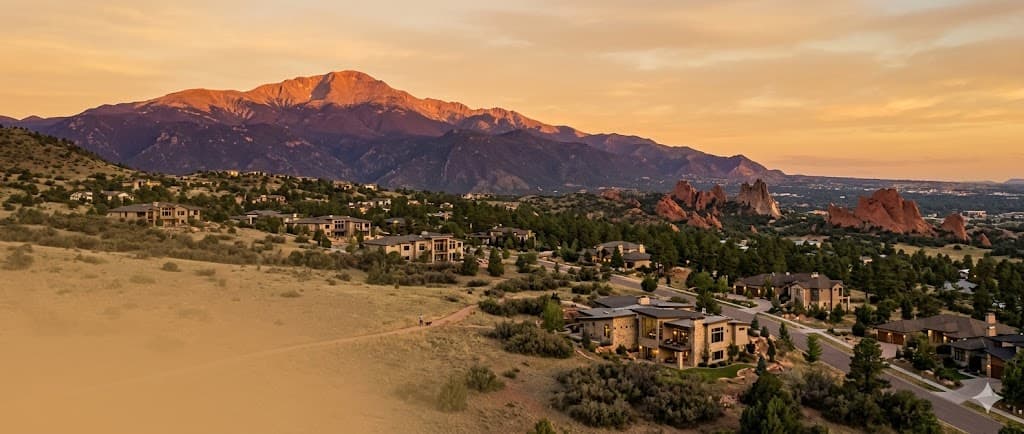
A handful of neighborhoods complicate that pattern without fully breaking it. Kissing Camels and Flying Horse both carry luxury reputations that run a little ahead of their typical numbers — most homes in both communities still sit at or under the standard limit, but each has a real, meaningful pocket of estate-tier properties that clear it. The Broadmoor neighborhood is its own case entirely — the typical home there sits within standard range, but the streets closest to the resort include real outliers that clear it by a wide margin. Colorado Springs isn't a jumbo city the way Vail or Aspen is, but it isn't a purely standard-HECM city either. The address matters.
I hold an NMLS license, which means I have to be precise about the rule that actually governs all of this: the standard HECM requires age 62, full stop, everywhere in Colorado. The jumbo proprietary programs, offered through my lending network rather than FHA, open at 55 — but they only make practical sense where a home's value clears the standard program's limit, which in this city means a real minority of homeowners, not most of them. I'd rather tell a 58-year-old Rockrimmon homeowner plainly that the standard HECM's 62 is likely a few years out than imply a jumbo program applies to a home it doesn't fit.
The other object I see a lot in this city is the property tax bill, arriving with a number that's climbed again while a homeowner's income hasn't. That's the actual driver behind most of the calls I get here — not a desire to cash out, but a fixed income that's stopped keeping pace with the ordinary cost of staying in a house that's otherwise perfectly paid for.
Not everyone who calls me should do this, and I say that plainly. Someone with a smaller mortgage balance and years of working life left has better tools. Someone planning to sell within the next year or two is better served by that conversation instead. I've told Colorado Springs homeowners directly that a reverse mortgage wasn't right for their situation, and I'd rather have that conversation than let a HUD certificate stand in for real judgment.
I serve Colorado statewide from my base in Edwards, and Colorado Springs is one of the more straightforward markets I work in for exactly the reason above — it isn't dominated by one program or one number. Most homeowners here need the standard HECM. A few need jumbo. The certificate, the tax bill, the specific address: that's what actually decides it, not which city you happen to live in.