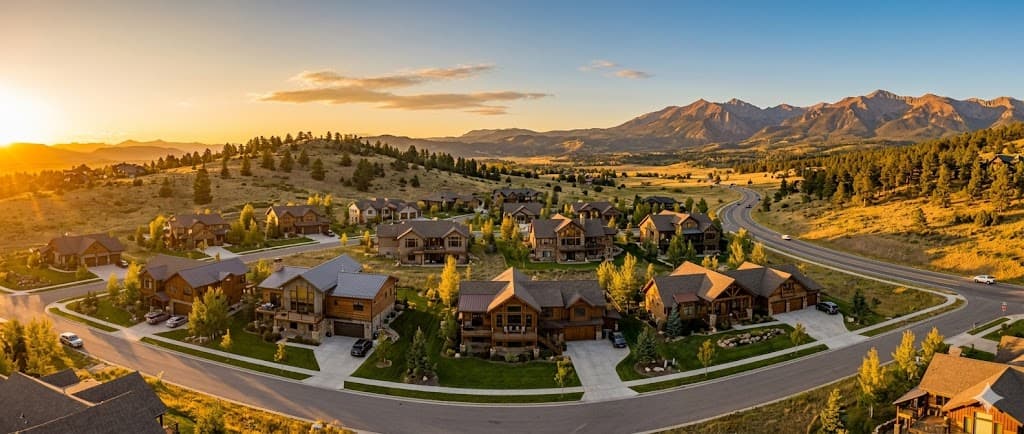
ADU Rental Income with a Colorado HELOC
Build a $150,000 ADU in your backyard. Rent it for $2,100/month. Your HELOC payment is roughly $1,120/month. That's $980/month in positive cash flow from day one — plus $120,000-$160,000 in added property value.
Look. This is the single best return-on-equity play available to Colorado homeowners right now. And most people don't realize their city already allows it.
Colorado ADU Laws — Where You Can Build
ADU regulations vary by city. Here's where things stand across the Front Range:
| City | ADU Status | Max Size | Notes |
|---|---|---|---|
| Denver | Allowed (most residential zones) | 1,000 sqft | Detached or attached. Owner occupancy required in one unit. |
| Boulder | Allowed | 850 sqft | Strong rental market near CU campus. |
| Fort Collins | Allowed (expanding) | 800 sqft | Recently expanded to more zones. |
| Colorado Springs | Allowed (recent expansion) | 800 sqft | Growing adoption, strong rental demand. |
| Aurora | Allowed in some zones | 750 sqft | Check specific zoning before planning. |
| Lakewood | Allowed | 800 sqft | Good rental demand, moderate build costs. |
| Arvada | Allowed | 800 sqft | Popular with homeowners expanding property. |
Denver is the most active ADU market in Colorado. The city has made it relatively straightforward — permits, design guidelines, and utility connections are well-established. Boulder has strong rental demand from CU students and faculty, which makes the income side of the equation very predictable.
Ready to Build? Let Me Run the ADU Numbers.
Tell me your property and I'll show you how much equity you can access, what the HELOC payment looks like, and what the rental income math works out to.
Get Your Equity BlueprintThe ADU Math — Dollar by Dollar
I run this calculation with Colorado homeowners constantly. Here are the real numbers on a typical Denver ADU:
| Item | Amount |
|---|---|
| Construction Cost (650 sqft detached) | $150,000-$185,000 |
| Permits and Design | $8,000-$15,000 |
| Utility Connections | $5,000-$12,000 |
| Total Project Cost | $163,000-$212,000 |
| Monthly Rent (Denver) | $1,800-$2,400 |
| HELOC Payment ($175K, 20yr) | ~$1,310/month |
| Monthly Cash Flow | $490-$1,090 positive |
| Annual Gross Rental Income | $21,600-$28,800 |
| Property Value Added | $120,000-$160,000 |
| Time to Breakeven (equity) | 4-6 years |
The breakeven on equity is 4-6 years — meaning the rental income fully repays the HELOC in that window. After that, the $2,100/month is pure income. And the ADU has already added $120,000-$160,000 to your property value from day one.
Here's the thing. This isn't a speculative investment. You're building on land you already own, in a market with proven rental demand, using equity you already have. The risk profile is about as low as real estate investment gets. Check current Colorado HELOC rates to see where your draw rate would land before modeling the cash flow.
$165K HELOC. ADU + Debt Payoff. $2,100/Month in New Income.
Marcus and Elena bought their Park Hill bungalow in Denver for $420,000 in 2019. By 2025 it was worth $685,000 with $348,000 on the mortgage at 3.125%.
They had two goals: build a 650-square-foot detached ADU in the backyard ($127,000 for construction, permits, and utilities) and eliminate $38,000 in credit card debt at 23% APR. Total need: $165,000.
Their bank offered a HELOC at 80% CLTV — $200,000 in accessible equity. We got them approved at 85% CLTV: $234,250 in accessible equity. They drew $165,000.
The credit card payoff saved them $950/month in minimum payments immediately. That money went toward the ADU build timeline instead of interest payments.
The ADU took 5 months to build. They listed it on a 12-month lease at $2,100/month. Rented within 2 weeks.
Their HELOC payment on the $165,000 draw: approximately $1,235/month on a 20-year term. The ADU brings in $2,100. That's $865/month in positive cash flow — $10,380/year in new income they didn't have before.
And the ADU added an estimated $145,000 to their property value. They spent $127,000 to build and gained $145,000 in equity. Plus the credit card debt is gone, saving another $8,760/year in interest.
One application. Two problems solved. Net financial improvement: over $19,000/year.
— Marcus & Elena, Park Hill CO
Why a HELOC Is the Right Way to Fund an ADU
You have a few options to fund an ADU. Most of them are bad:
Construction loan: Complex application, draws based on inspection milestones, converts to a permanent loan at closing. Way more paperwork and typically requires a full architectural plan before approval. Overkill for a backyard unit.
Cash-out refinance: Replaces your existing mortgage rate. If you're sitting on a 3.125% rate, refinancing at 7% to fund an ADU costs you $800-$1,300/month extra on the original balance — before the ADU payment. The math doesn't work.
Personal loan: Caps at $50,000-$100,000 for most borrowers, at 12-18% APR. Not enough for an ADU and too expensive even if it were.
HELOC: Draw what you need, when you need it. Fund the ADU in stages as the contractor bills you. Keep your existing mortgage untouched. Interest may be tax-deductible since you're improving your property. No prepayment penalties if rental income lets you pay it off early.
I wouldn't fund an ADU any other way. The HELOC gives you the money, the flexibility, and the math to make it profitable from month one. For more renovation strategies that build value, see our home equity renovation guide. If you prefer a fixed-rate lump sum, a home equity loan is another option — but you lose the staged draw flexibility.
ADU Design That Maximizes Rental Income
Not all ADUs rent for the same amount. I see the strongest rental numbers on units with these features:
Full kitchen. A kitchenette knocks $200-$400 off monthly rent. Spend the extra $8,000-$12,000 for a real kitchen with full-size appliances.
Separate entrance. Tenants want privacy. A dedicated entrance with its own address makes the unit feel like a standalone home, not a guest room.
In-unit washer/dryer. This is a dealbreaker for many renters. Stackable units cost $1,500-$2,500 and can add $75-$150/month to rent.
One bedroom minimum. Studios rent, but one-bedroom ADUs command $200-$400/month more. If your lot and zoning allow 650+ sqft, build a one-bedroom.
ADU TIP
Draw your HELOC in stages as the contractor invoices you. A $165,000 ADU project doesn't need $165,000 on day one. First draw might be $40,000 for foundation and framing. You only pay interest on what you've drawn — staged draws mean lower payments during construction.
Use our home equity calculator to see if your equity supports the ADU build budget.
Frequently Asked Questions
Build Income in Your Backyard
One application. I'll show you the equity available, the HELOC payment, and the rental math — all in one conversation.
Get Your Equity BlueprintDon't Overpay for Homeowners Insurance
An ADU changes your insurance requirements. You need coverage for the new structure — and if you're renting it out, you may need a landlord rider or separate landlord policy for the unit. Our insurance team handles both your primary home coverage and the ADU in one conversation. They compare 30+ carriers to make sure the added structure doesn't blow up your premium.
Bobby Friel
NMLS# 332039 · Colorado Licensed Mortgage Loan Originator
Published April 18, 2026
Keep Reading
HELOC for Home Renovation in Colorado
Fund your Colorado home renovation with a HELOC. Kitchen remodels return 65-80%. ADUs generate $2,100/month. See the real ROI numbers.
Denver HELOC — Tap Your Equity Fast
Denver homeowners sit on $625K median home values. Access your equity in as few as 5 days with up to 85% CLTV. No branch visits required.