
You've got real equity in a Colorado house. Somebody said "just get a HELOC." Somebody else said "look at a reverse mortgage." Both sounded sure.
So now you're weighing reverse mortgage vs HELOC, and you're not sure either one is safe.
I place both, and a third option in between, so I don't care which one you pick. The real question is what the money is for and how long you plan to stay.
The real question is what the money is for and how long you plan to stay.
So what's the money for? A project with an end date, or a month that keeps coming up short?
Isn't a reverse mortgage just a way to lose the house?
No. But the worry comes from somewhere real.
You keep the title. There's no monthly mortgage payment while you live there. You still pay taxes, insurance, and upkeep, and the house has to stay your home. Miss those and the loan can come due. That's where the bad stories start.
The other true thing: the balance grows. Interest gets added every month instead of paid. So there's less equity left later.
That's the trade. Not a trick. A trade. And you should hear it before anything else.
So what have you heard about reverse mortgages, and who did you hear it from?
What's the difference between a reverse mortgage and a HELOC?
One has a payment. One doesn't.
A HELOC is a regular loan. You qualify on income and credit. You draw what you need, and the monthly payment starts right away. The rate usually moves. When the draw period ends, the payment can jump.
And the bank can freeze it, cut it, or call it. Usually that happens when home values drop, which is the exact year you'd want the money.
A reverse mortgage runs the other way. You qualify mostly on age, equity, and whether you can keep up the taxes and insurance. No monthly mortgage payment while you live there. It gets repaid when you sell, move out for good, or pass away. If you set up a line of credit, it grows over time, and the lender can't freeze it because the market turned.
Same house. Same equity. Opposite shapes.
Can a retiree even qualify for a HELOC?
Sometimes. And this is where a lot of people get surprised.
A HELOC gets underwritten like any mortgage. The bank counts Social Security and a pension, but the payment still has to fit your income on paper. In a valley where the house is worth far more than the income, it often doesn't.
I've watched people with a paid-off house get turned down for a small line. Not because of the house. Because of the month.
A reverse mortgage asks a different question. Not "can you make a payment?" but "can you keep up the property charges?" For a lot of retired homeowners, that's the difference between yes and no.
Has anyone actually run your income against a HELOC payment yet?
When does a HELOC make more sense?
When you have income, the need is modest, and the timeline is short.
A roof. A bathroom. A bridge until the other house sells. You draw it, you pay it down, you're done. A reverse mortgage costs more to set up, and on a small, short need those costs eat too much of the money.
It also makes sense if you'll likely sell in a few years. The HELOC gets paid off on signing day and that's the end of it.
When does a reverse mortgage make more sense?
When the month is short and it's going to stay short.

When you plan to stay in the house a long time. When you can carry taxes, insurance, and upkeep without strain. When a HELOC would come back declined, or approved for a number that doesn't help.
It also fits the paid-off house where you don't need money today. Open the line, draw nothing, and let it grow. That's your reserve for the year the furnace quits, or the year the market drops and you'd rather not sell anything at the bottom.
If you're thinking of moving in a few years, that changes this. How long do you really see yourself in this house?
Is there something in between?
Yes. Most people haven't heard of it.
There's a home equity line built for seniors. A fixed rate, interest-only payments during the draw period, and underwriting that fits a retirement income better than a bank HELOC does. For someone who can carry a small payment and doesn't want the setup costs of a reverse mortgage, it can fit better than either one. See the HELOC for seniors page.
What has to happen before anyone signs?
Counseling, then the application. In that order.
Every reverse mortgage of this kind requires a session with a HUD-approved counselor before you apply. They're independent. They don't work for me or any lender. They walk through the costs, the obligations, and the other options, including a HELOC. Do it first. It's there to protect you, and it will make every conversation after it clearer.
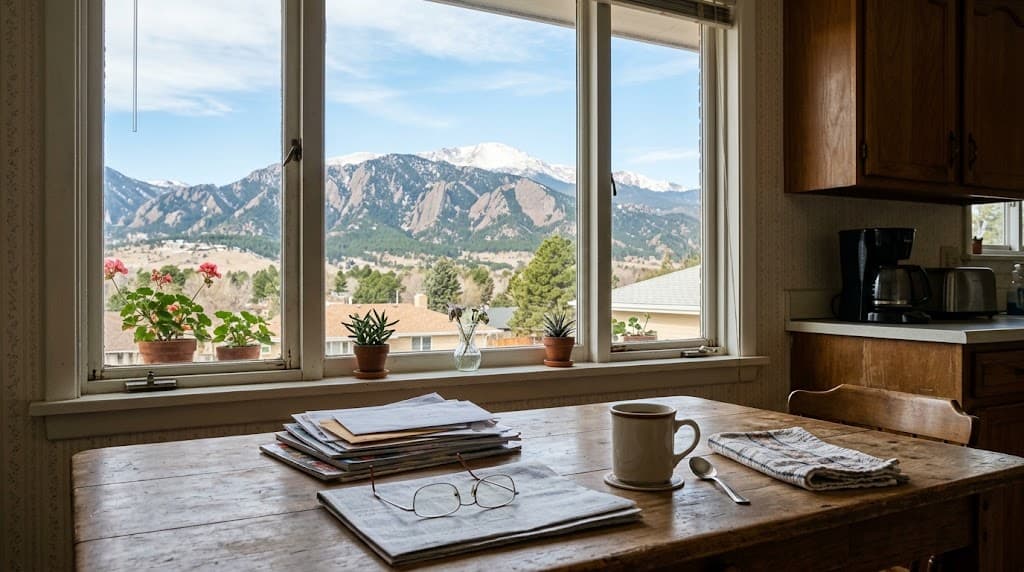
Then the kitchen table. With a reverse mortgage, the balance grows, so there's less equity left for the kids. They never owe more than the house is worth. But "less" is real. If the plan was to hand the house down free and clear, say that out loud before anyone signs anything.

A couple in Edwards, mid-sixties, house paid off, wanted money for a kitchen and a cushion after. Their bank turned down the HELOC on income. We put all three side by side. A reverse line would have worked, but the setup costs were more than the kitchen justified. The senior line fit: a fixed rate and a small interest-only payment they could carry. They did the kitchen. If the month gets tight down the road, the reverse mortgage is still there, and they already know how it works.
Anything about taxes on either loan is a question for your tax advisor.
Who else in your family should be at that table?