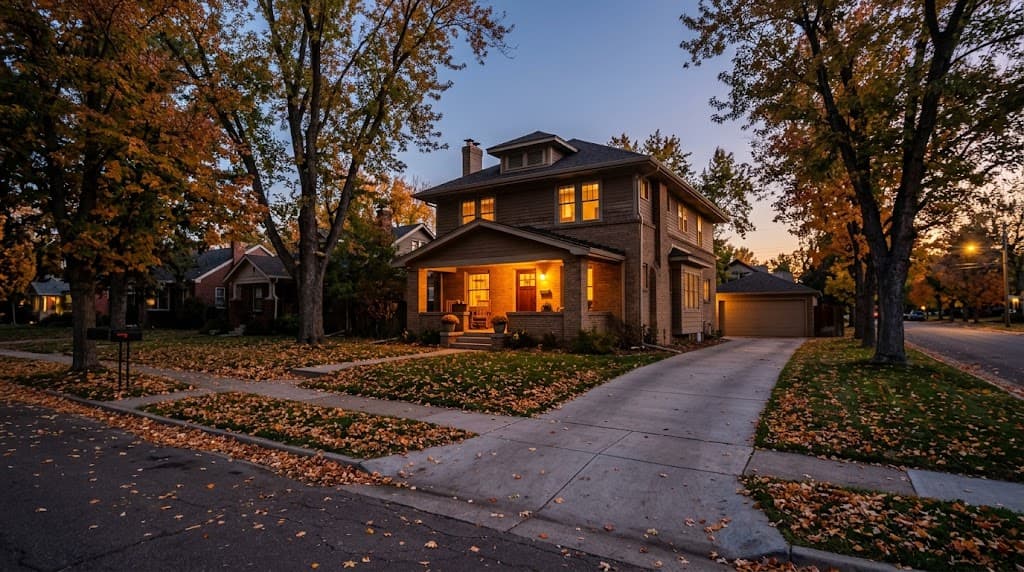

You're not really asking whether you're allowed to keep the house. You're asking whether you can. Can I afford to keep the house after divorce, on my own, once the household is one person?
I've been on the lending side for twenty years, and I've been through a divorce myself. I know what it's like to want the house and not know if wanting it is enough.
So one question first. What does your month look like with one income and the same payment?
If you haven't run that yet, most people haven't. That's where this starts.
Can I afford to keep the house after divorce on one income?
Maybe. The only way to know is to run the loan on your income alone, before the decree is written.
Not a guess from a website. A real run, where someone reads your pay stubs and tax returns the way an underwriter will and says whether the loan holds.
Most people start with the house and try to make the numbers reach it. Start from the other end. What's the monthly number you can live with after the split, with room for the things that always come up? Work back from that to the loan, then to the house.
An approval is a ceiling, not a target. A loan can qualify on paper and still leave you with nothing at the end of the month. The month you can actually carry is the one that counts.
Does child support or alimony count as income for a mortgage?
Yes, when it's ordered and documented.
Court-ordered child support and maintenance can count toward qualifying. A lender wants three things. It's written into a decree or court order. There's a record of it being paid. And it's expected to keep going for years, not months.
A handshake agreement doesn't count. Money your ex sends when they can doesn't count. It has to be on paper, the way an underwriter needs it.
It works the other way too. If you're the one paying support, that payment counts against you like a car loan would. Both sides of the decree change both sides' math.
How does buying out my ex change the payment?
It usually raises it.
Keeping the house almost always means paying your ex their share of the equity. That money comes from a loan. Either a new mortgage that pays off the old one and pulls out their share, or a second loan that sits behind the one you have now.
So the payment you'd carry isn't the old payment. It's the old balance plus the buyout, on today's terms. Or it's the old payment plus a second one.
This is where people get surprised. The house you could afford as a couple on the old loan is a different house on one income with the buyout in it.
The buyout calculator on the divorce page gives you a rough first look at the new loan and the month. It's a starting point, not an approval. How the buyout itself works, step by step, is its own post (see How to Buy Out Your Spouse's Share of the House).
What does keeping the house cost besides the mortgage?
More than people plan for.
Property taxes that felt fine on two incomes. Insurance that's gone up on homes all over Colorado. The roof that's due in a few years. The furnace. The snow and the yard that used to be someone else's job.
None of that shows up on the mortgage statement. All of it shows up in your month.
So run the whole month once, plainly. Mortgage, taxes, insurance, upkeep, and the rest of your life. If it doesn't hold, you'll hear that from me, and then we look at what does.
What would you cut first if the furnace went out in January?
What happens if the decree says I'll refinance and I can't?
Nothing good.
Here's the uncomfortable part, said once. A divorce decree does not take your ex off the mortgage. Only a refinance, a payoff, or a lender-approved assumption does that.
If the decree says you'll refinance by a certain date and your income can't carry the loan when that date comes, you're stuck. The decree may have to be reopened, or the house sold on a schedule you didn't pick. And your ex stays on a loan they thought they were done with.
That's the reason the loan gets run before the decree is written, not after. Your attorney handles the decree. I make sure the loan it describes can actually fund. Beside your attorney, not instead of them.
Should I keep the house or sell it?
I won't push you either way.
I know the house can feel like the last stable thing left, especially with kids. Same school, same street, same bedroom. That matters.
A house you can't carry is not stability. It's the same worry with a mortgage attached.
A house you can't carry is not stability.
Keep it if the split is settled, the loan holds on your income with room to breathe, and the old rate is worth holding.
Sell if one income can't hold it. Or if the equity is most of what you have and you need it to start over. Or if keeping the house means keeping the fight. Selling isn't losing. You both leave signing day with what you built.

A mom in Lakewood wanted to stay so her two kids could finish at their school. On her salary alone, the loan didn't reach. Before her attorney negotiated anything, we ran it again with the maintenance and child support written into the decree the way a lender needs them, and a second loan for the buyout instead of a full refinance. The month landed inside what she'd said she could live with. Her attorney built the decree around that number. She kept her old rate, and the kids kept their bus stop.
I hold a Colorado mortgage broker license and a Colorado real estate broker license. Whichever way this goes, it's one person on the loan and the house, working from the same numbers.
What would it take for you to feel okay about either answer?